




The Verdict
Oslo. Johanna is attacked in a park by a man in a work suit.
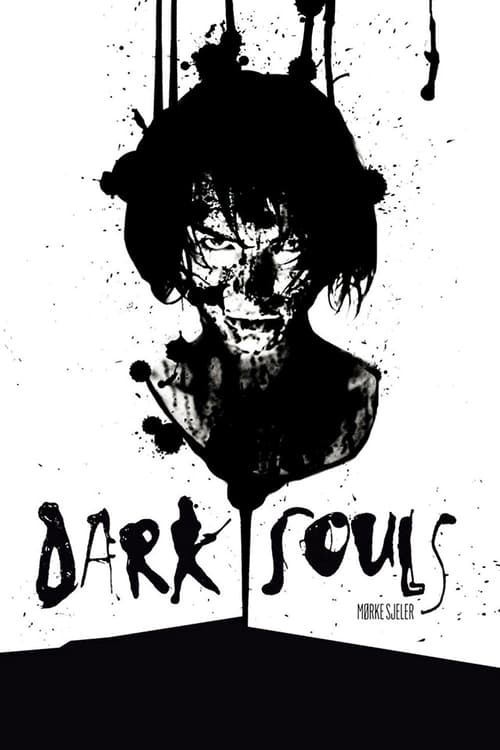
Oslo. Johanna is attacked in a park by a man in a work suit. The man wields a drill with which he pierces the girl's head, who, believed to be dead, is taken to the morgue. The girl's father is devastated by grief and begins a personal investigation to find the killer. Johanna, however, is not dead and, although she is in a semi-vegetative state, she returns home and begins to vomit a strange black substance. Meanwhile, similar cases occur in the city: men armed with an electric drill and dressed in a worker's suit go around piercing people's skulls, who then revive and regurgitate black viscous goo.
Coming from Norway, this anomalous horror film bears the signature of two directors, César Ducasse and Mathieu Péteul, and has won awards around the world. And here one wonders where the trick is, because beyond a good basic idea, "Dark Souls" is certainly not a film that leaves a pleasant memory.
Among the various Nordic horrors of recent years, which can be the beautiful "Let the Right One In" or the fun "Dead Snow", "Dark Souls" is the one that gives the most sensation of a missed opportunity. Ducasse and Péteul are two horror movie fans and this is immediately apparent, thanks to the multitude of references with which they stuff their film: from the obvious "Driller Killer" by Abel Ferrara to the incredible wink to "Bad Taste" by Peter Jackson in the finale, passing through situations that remind one here and there of Italian zombie cinema or the modern Asian ghost story. A pastiche of subjects and references that quickly lose the real sense of the operation with a screenplay that at a certain point goes off the rails with such nonchalance that it seems almost a mockery for the viewer.
The beginning of "Dark Souls" is undoubtedly promising, sufficiently strange and original to intrigue and push for viewing. The story continues with ups and downs, focusing heavily on the mystery behind the "drillers", to which is added the vegetative state of the victims combined with the black substance that fills the bodies of the drilled.
Interspersed with this curious plot are situations on the verge of ridiculousness with unbelievable characters who say and do frankly stupid things. But well, this happens often and does not ruin a film that at least manages to keep the attention quite high.
From the midpoint of the film onwards, everything degenerates. The girl's father, played by a mediocre Morten Ruda, begins to investigate the events and is so clumsy and unbelievable that he makes one smile involuntarily. His mission to follow and photograph the killer is embarrassing, as is his final adventure in the factory, although in the latter case the sense of the grotesque is intentional. It is not so much in the person of Morten Ruda, however visibly unsuited to the role, that there is something wrong, but rather in the clumsy construction of the scenes, in the narratively forced events that lead to developments in the plot. In short, the inexperience of those who wrote and directed the film is noticeable. A low-budget film that remains dignified in some aspects but collapses in others, primarily photography and sets, which sadly and squalidly echo some television products of a few years ago, such as, for example, the German "Inspector Derrick".
Then it is undeniable that some intuitions are good and the ecological subtext interesting in terms of an environmentalist reading of the story, but also the vaguely apocalyptic and clearly "tail-end" ending with which the film is provided contributes to put "Dark Souls" in a bad light.
Too bad because with clearer ideas and perhaps more resources available, "Dark Souls" could have been a really pleasant surprise... so it's only a partial good idea poorly executed.
Take away half a pumpkin from the final score.
Comments
Comments (0)

Comments