






The Verdict
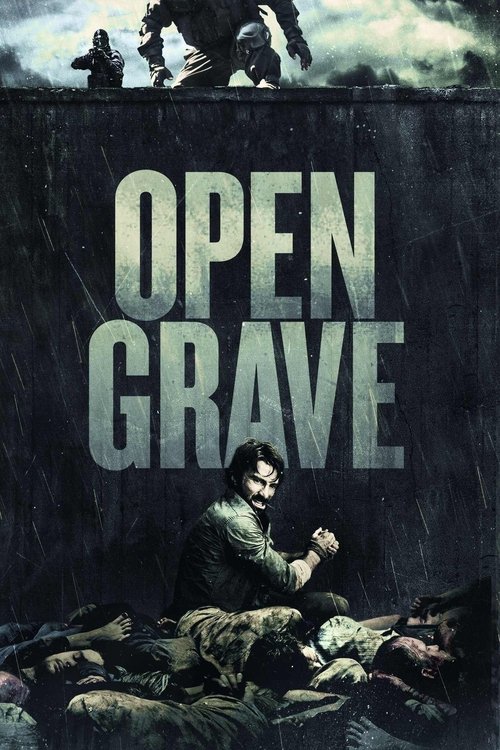
A man wakes up in a mass grave, among many corpses. The man does not know how he ended up there, nor does he remember anything about his identity.
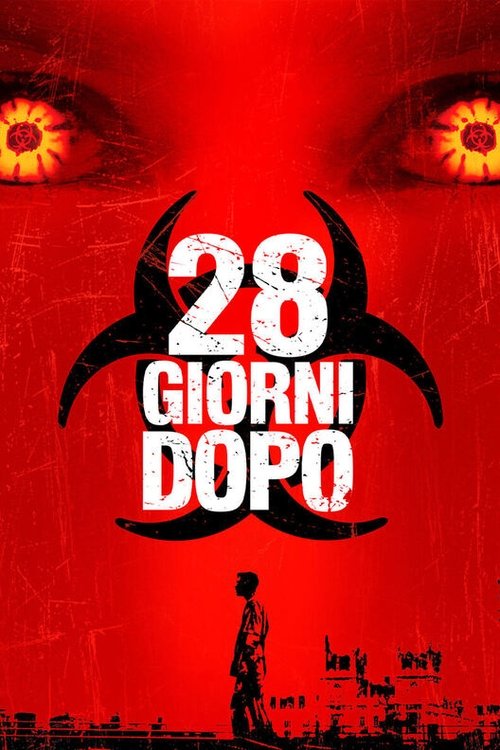
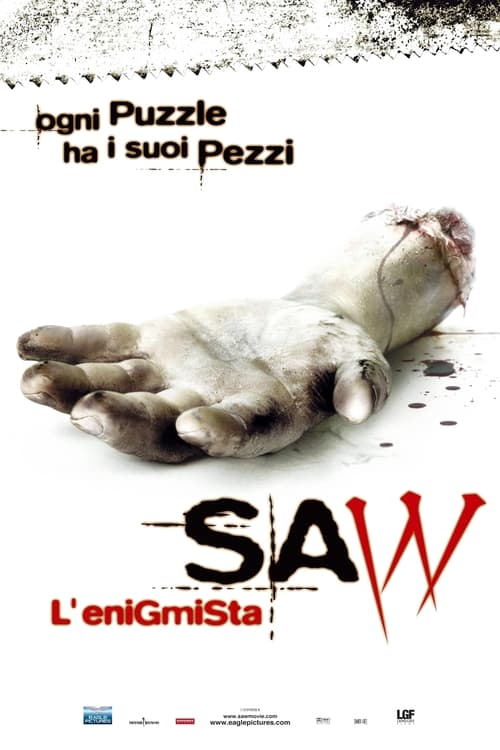
A man wakes up in a mass grave, among many corpses. The man does not know how he ended up there, nor does he remember anything about his identity. Then a woman throws him a rope and runs away. The man manages to get out of the grave, chases the woman, and arrives at a cabin in the middle of the forest where there are five other people who, like him, have woken up there without remembering anything about their past. When these people start finding scattered clues and learn that on the 18th, which is imminent, something important would happen, memories gradually begin to resurface, reconstructing a terrifying reality. In the first minutes of 'Open Grave,' there is a worrying sense of déjà-vu. A man wakes up in an inhospitable place (which this time is a suggestive open-air mass grave full of decomposing corpses) from which it is difficult to escape, has lost his memory, does not know his identity, and discovers that other people are in the same condition. Then the sense of déjà-vu grows when the characters inevitably clash with each other, between suspicions and paranoias, because someone there knows more than the others and perhaps is afraid to remember/reveal. The game of roles becomes increasingly extreme, victims and executioners perhaps get confused, and the recovery of memory becomes almost a curse, as well as an increasingly heated reason to stage a massacre. What comes to mind? What cannot be helped but think of 'The Cube' and 'Saw,' two good films that placed unknowns in the same extreme situation, each with memory gaps, key characteristics to face the situation of discomfort and secrets that then play a fundamental role in the narrative turns. But there is also a small 2006 film by Simon Brand, 'Identità sospette,' which resembles 'Open Grave' in a very accentuated way, both in the situation and in the roles and fates of the characters. In short, the first 40 minutes of this film are intriguing up to a certain point, because there is the feeling of already knowing where it will end up. And instead, it is not true! Because little by little one realizes that one has understood nothing of what happens in 'Open Grave' and the turn that this film takes in the second half is completely unexpected and succeeds, indeed, in treating in a very original way a horror genre that has been overused in recent years. Gonzalo López-Gallego, a young Spanish director who had already made a name for himself with the singular found footage 'Apollo 18,' puts his signature on 'Open Grave,' bringing to the screen a screenplay by the debutants Eddie and Chris Borey. The beauty of 'Open Grave' lies entirely in the twists, which means that the viewer must have patience, since the relative sense of déjà-vu is combined with a redundancy of events that, especially in the central part of the film, makes the viewing somewhat heavy. In fact, thinking of a 'sforbiciatina' to the frankly excessive 105 minutes of duration would not have been wrong and would have gained 'Open Grave' in rhythm and fluidity. Not bad the way some characters are built and characterized, in particular the protagonist Jonah-John Doe played by a good Sharlto Copley ('District 9,' 'Elysium') who finds himself in the uncomfortable situation of 'hero' and at the same time probable 'villain' of the story, since all the clues that immediately appear to the amnesiacs suggest him in a role too ambiguous. It must be said, however, that the behavioral dynamics that are established among the group's characters are rather known, with the inevitable irate character who soon turns into a violent threat—here played by Thomas Kretschmann, recently seen in the role of Dracula for Dario Argento—even if the whole thing is managed with harmony by the firm and coherent hand of López-Gallego. 'Open Grave' never focuses on gore nor, much less, on splatter, but the director makes the right choice to give many scenes a sense of unease, capable of making one feel uncomfortable. There is a strongly lethal atmosphere in 'Open Grave,' starting from the suggestive opening sequence with decomposing corpses and the sound of bones settling, one almost has the sensation of perceiving that stench and the dampness that the character on stage should feel. And this result is also brought about by the beautiful grayish photography of José David Montero and the scenographic care of some locations. Praiseworthy for the originality of the developments, 'Open Grave' could have gained points if the many dead points in the central part had been eliminated, so we are faced with a good work, well-made but which perhaps does not have the strength to leave its mark.
Comments
Comments (0)




Comments