













The Verdict
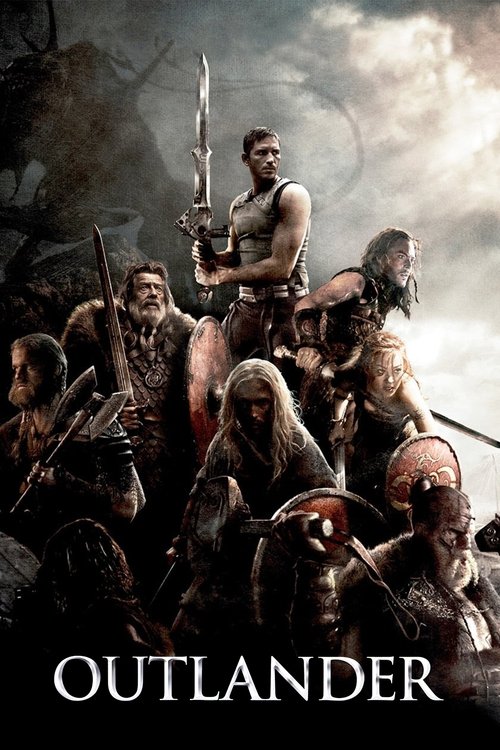
In Norway in 708 AD, amidst the Viking wars between Rotghar's legion and Gunnar's, a spaceship crashes due to a malfunction. The only survivor of the crew seems to be Kainan, who, in a state of confusion and disorientation, will be captured by Rotghar's army.
In Norway in 708 AD, amidst the Viking wars between Rotghar's legion and Gunnar's, a spaceship crashes due to a malfunction. The only survivor of the crew seems to be Kainan, who, in a state of confusion and disorientation, will be captured by Rotghar's army. But Kainan was not the only survivor of the landing; he brought with him a Moorwen, a huge space monster that begins to sow panic and death in its path. Kainan will not delay in joining his forces with those of King Rotghar and his army in order to eliminate the dangerous creature.
A failure. No other words would better define this idiocy directed by Howard McCain, this pseudo-scientific (or pseudo-historical, depending on the perspective with which the film is framed) mash-up that does nothing but steal here and there from more or less famous, more or less recent films. The result is a film that smells terribly of déjà vu from the opening credits, a new story but capable of advancing thanks to sequences already narrated, the déjà vu is continuous. Yes, because the "genius" idea behind the film was to generate a bizarre mix between two perfectly opposite genres: the historical film and the science fiction film. A good idea, sure, pity only that it is an idea as old as cinema and that therefore "Outlander" is neither the first film to make this combination its main battle horse, nor the last.
In its narrative construction, in addition to its central theme (i.e., a past that meets a future with the consequent annihilation of the present), McCain's film appears strongly indebted to both "Timeline" by Donner and "Army of Darkness" by Raimi. Pity only that the account is in no way comparable (in terms of quality) to either of the two films. In "Outlander" there is also the typical lone hero who comes from an unspecified future (or from a parallel present?) and who will not delay in being captured once arrived in "foreign land" but to then become the "hero" at the head of the king's army and destined to eliminate the threat. The clichés of the genre are all present, not one is left out, and the commonplaces as well as the banality abound: the king's daughter (already promised) who falls in love with the "foreigner", the shy and taciturn child who will learn to react thanks to the "foreigner", the entire kingdom of King Rotghar will soon begin to trust and cheer for the "foreigner" forgetting that they know nothing about his identity (he could be a perfect impostor, considering also that the story he tells does not hold up) and that it was precisely he who brought into the kingdom a malevolent monster ready to devour anyone who gets in its way. But it is not only the banality that makes the product unappetizing, but the enormous naivety that weighs on much of the film and on which it is difficult to close an eye: it arouses hilarity, in fact, to note with what simplicity and speed Kainan changes his status from prisoner to hero who must save the kingdom; as it arouses hilarity to see how the successor of King Rotghar, Wulfric, despite his status enjoys no authority, letting himself be given orders even by the foreigner. All things unthinkable and inconceivable in a society like the Viking one, a society that has always been governed by honor and by strict hierarchical values.
It has been understood that the story, as well as the construction of the script, presents more than one flaw. Never mind, not everything is lost and the fate of the film is not yet sealed: we can still hope for a handful of sufficiently spectacular scenes, a good monster capable of capturing the spectator's attention best and a technical aspect of good level.
Instead, nothing to do, once the tangle is unraveled we realize that there is really nothing to save. The pace is slow (another fault to be attributed to the screenplay), so often we fall into boredom, and even the spectacularity is reduced to the bare minimum due to many elements that converge: little care on the scenographic side, the direction alternates in a very discontinuous manner moments that are flat (Howard McCain comes from the world of television, and it shows) to others too virtuosic, there is a sometimes televisual atmosphere (at some moments there is the sensation of watching a tv serial similar to "Hercules") and the special effects, never as this time, are really not special. The monster, the fierce Moorwen, goes from being a strong element to the most glaring weakness of the film due to a really disappointing design and a massive use of particularly rough and primitive computer graphics. If the Moorwen can be remotely interesting during night attacks thanks to its phosphorescent properties, it is not when it is in the light because too anonymous and insignificant.
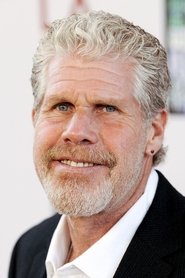
In the role of the space protagonist, we find an inexpressive Jim Caviezel who seems to struggle on the set with difficulty, as if it were his first acting experience, and who does nothing but utter banalities and express himself with clichéd phrases; among the others: Sophia Myles ("Underworld: Evolution", "The True History of Jack the Ripper"), John Hurt ("Hellboy", "V for Vendetta") and in a small role Ron Perlman ("Hellboy", "Blade 2").
"Outlander – The Last Viking" is an entertainment film that fails to entertain, which, despite the irrationality of the story, takes itself excessively seriously and is capable of even appearing squalid despite the budget not being low.
A film that will be quickly forgotten!
Comments
Comments (0)









Comments