










The Verdict
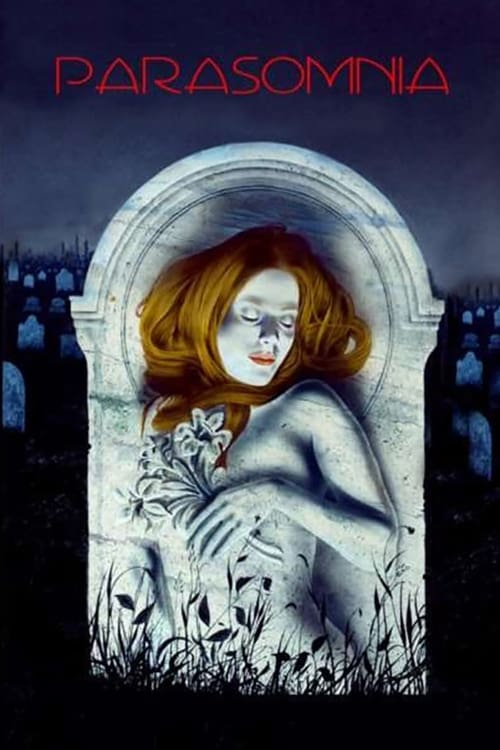
Laura Baxter suffers from a rare form of narcolepsy that causes her to fall asleep involuntarily all the time. Laura is an orphan and is kept under observation in a psychiatric clinic, the same building where Byron Volpe, a serial killer bookseller who used hypnosis to commit brutal crimes, is kept in constant isolation.
Laura Baxter suffers from a rare form of narcolepsy that causes her to fall asleep involuntarily all the time. Laura is an orphan and is kept under observation in a psychiatric clinic, the same building where Byron Volpe, a serial killer bookseller who used hypnosis to commit brutal crimes, is kept in constant isolation. Volpe has established a strong psychic bond with Laura and manages to enter her dreams, constantly immersing her in a gloomy and unsettling world. Danny is a literature student and childhood friend of Laura, who has been in love with her forever; the boy spends many hours in the clinic and when he learns that the doctors have decided to transfer the patient to another facility, Danny hatches a plan to take the girl away. Now Danny is wanted by the authorities for kidnapping and Byron Volpe, taken away from his beloved 'hobby,' tries to track down the two by manipulating Laura's mind.
The parasomnias are disorders characterized by abnormal behaviors that occur during sleep and represent the activation of physiological systems at inappropriate times during the sleep-wake cycle that trigger unusual behaviors during sleep or excessive daytime sleepiness. (American Psychiatric Association)
Starting from these scientific data, William Malone writes and directs a film in which the purely scientific aspect is of little or no interest, preferring to focus on the macabre surrealism that combines romance and splatter. "Parasomnia" thus presents itself as a certainly imperfect but fascinating work, a breath of fresh air among the increasingly standardized products that crowd the market.
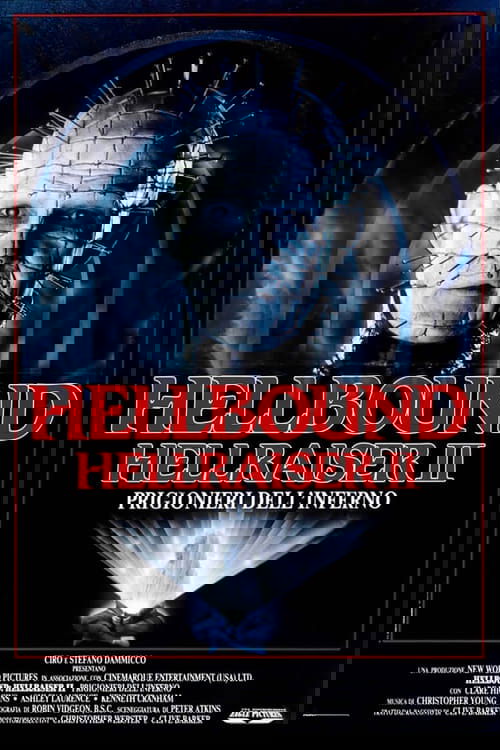
However, it is fair to point out that despite this aura of novelty, "Parasomnia" is certainly not an original film. True, the theme of hypnosis is rare in horror cinema, and if one excludes the expressionism of "The Cabinet of Dr. Caligari," the Dr. Mabuse saga, and fragments taken from Edgar Allan Poe, it is even difficult to recall titles that place this theme at the center. For the rest, Malone does nothing but re-explore 1980s horror cinema, re-proposing some of its characteristics, from the boogeyman who enters dreams to the teenage love story that goes beyond death, from some faces (Jeffrey Combs) to the amused and excessive use of violence. Even the stylistic craftsmanship of the film recalls a certain postmodern classicism, made of "normal" editing and photography, far from the videoclippara aesthetics that today predominate in certain genre cinema. Only the dream world in which the protagonist moves might betray the intentions a bit, an eerie desolate land made of spinning mirrors in computer graphics that someone has associated with the surreal excesses of "The Cell" but that would not be out of place even if compared to the barkerian hell of "Hellraiser II: Hellbound," thus managing to close the circle.
"Parasomnia" still has on its side an exciting story and good rhythm, with main characters well defined and capable of capturing the sense of identification of the viewer. Only the big bad Byron Volpe comes out as an anonymous and certainly not memorable figure, a boogeyman that comes across as a blend of Freddy Krueger and Hannibal Lecter, taking from the first the ability to act in dreams and from the second the culture and intelligence (but not the charisma). However, it must be said that Patrick Kilpatric ("Terminator: The Sarah Connor Chronicles"; "Minority Report") does his best to characterize his character, from the hallucinated look to the mesmerizing manner, up to the unexplained religious attire.
William Malone is an old fox of horror.
A genre screenwriter and director since the 1980s, Malone made his debut with the fantasy-horror films "Scared to Death" and "Creature," then honed his skills directing episodes of cult series such as "Freddy's Nightmare," "Tales from the Crypt," and "Beyond Limits," up to his cinematic rediscovery with important productions such as "The Mystery of the Haunted Mansion" and "Fear.com." At this point, Malone, before embarking on the personal adventure of "Parasomnia," is consecrated "Master of Horror" and directs an episode of the first season of the aforementioned TV series, "Pact with the Devil," from which he curiously recycles even the monstrous creature that appears in the dreams of the protagonist of "Parasomnia." As already mentioned, Malone plays at evoking 1980s atmospheres and places in his film an abundant dose of splatter and a series of suggestive ideas that would have pleased Tim Burton.
In short, "Parasomnia" will certainly not be a must-see film, but it still proves to be a very valid alternative to the usual clones of families of psychotic rednecks and enigmatic shaved heads; a well-conducted horror that is not without good ideas.
Comments
Comments (0)





Comments