








The Verdict
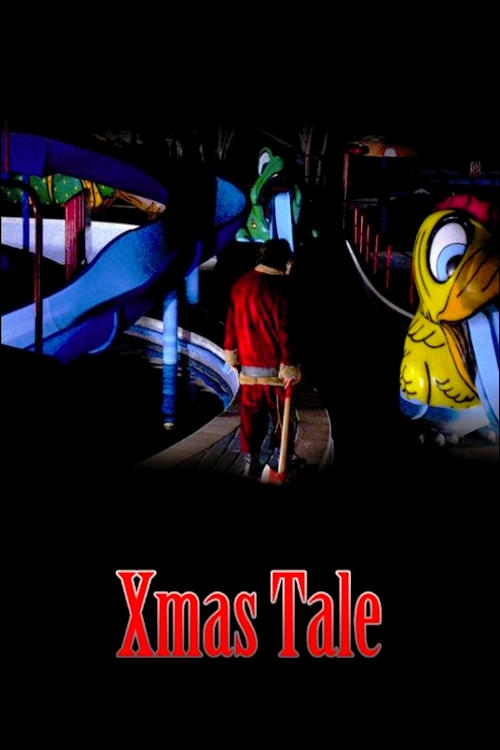
1980s, near Christmas. A group of children find a woman dressed as Santa Claus in a hole in the woods and recognize her as the author of a robbery that the news was talking about.
1980s, near Christmas. A group of children find a woman dressed as Santa Claus in a hole in the woods and recognize her as the author of a robbery that the news was talking about. The woman, who says her name is Rebecca, is injured and asks the children to help her get out, but the little pests decide to blackmail her: they will call for help only if she gives them the robbery loot. The woman does not compromise and the children keep her locked in the hole. Only Moni, the only girl in the group, seems to have compassion for the prisoner.
"Peliculas para no dormir" is a series of six TV films produced by the Spanish Telecinco in association with Julio Fernandez's Filmax.
The six films, with an average duration of just over an hour each, can be considered the Spanish response to the American "Masters of Horror", since they bring to the screen a handful of short horror stories directed by well-known directors in the genre.
The six directors involved are: Alex De La Iglesia, Jaume Balagueró, Enrique Urbizu, Paco Plaza, Chicho Ibanez Serrador and Mateo Gil.
The title of this series can be considered a citation of a Spanish TV series that aired sporadically from 1964 to 1982 with a total of 31 episodes: "Historias para no dormir".
"Cuento de Navidad" is the first of the six films that make up the series "Peliculas para no dormir" to be filmed, but the third to be aired on Spanish Telecinco. The film in question has behind the camera one of the current "masters of horror" from the Iberian Peninsula, namely Paco Plaza, director of the disappointing "I delitti della luna piena" and the interesting "Second Name", as well as a partner of Jaume Balagueró, with whom he directed both "[Rec]".
Plaza directs with "Cuento de Navidad" a nice and funny homage to horror for kids from a few years ago, a successful mix of quotes and original situations that really manage to contextualize the work in the productive decade of the 1980s. The kids who make up the gang of protagonists seem like the "bastard" version of the likable protagonists of the cult "I Goonies"; "bastard" because Plaza and his screenwriter Luis Berdejo ("[Rec]"; "Imago Mortis") realistically manage to describe the protagonists as real little pests capable of doing harm for the sole desire of having fun, curiously linked to the economic arrivism typical of the adult age. This time, then, the kids are described for what they often are, that is, capable of doing harm without the awareness of their actions. And the variety of characters that fills the group is equally successful and verisimilar, placing at the top the "alpha males" capable of conditioning the actions of the entire group, the typical kids with more character authority who pose as leaders and guide the actions that degenerate the situation; alongside them are the more fragile boy and ready to follow the example and orders of the leaders, and then the more understanding and "mature" girl, a dissenting voice who would act on her own initiative but is hindered by the compactness of the rest of the "pack".
The explicit or implicit quotes are numerous, ranging from the insistent homage to "Karate Kid - Part II", of which one of the children is literally obsessed, to the more hidden one to "The Tombs of the Blind Resurrected" (the poster is displayed in the room of one of the protagonists), passing through the nominal references to "Star Wars", "Visitors" and "A-Team". Then, the film within the film that appears at the beginning is a fun and amused homage in a parodic key to the Spanish (but let's say also European) films that dealt with zombies and vampires and that filled the video stores of fifteen/twenty years ago (and then the schedules of local TVs), a Fu-Manchu grafted into the films of Jorge Grau. The atmosphere and aesthetics of the 1980s are perfectly rendered and in some points and for certain narrative developments there is a strong feeling of dealing with one of the many stories of "Tales from the Crypt", both for the theme of "an eye for an eye, a tooth for a tooth" that often animated the stories of the Crypt Keeper, and for the zombiesque iconography that animates the second part of the film. Precisely the abrupt and perhaps gratuitous genre shift that "Cuento de Navidad" undergoes in the second part could be an easy target for criticism. In fact, the kids' comedy that suddenly becomes a horror based on vengeful zombies seems like a device thrown in a bit "easy" to justify the inclusion of this film in the series "Peliculas para no dormir", but in the end the film has a certain underlying cohesion and the game can be considered successful.
A special mention to the diabolical "Mother Christmas", who in the second part of the film becomes a terrifying threat worthy of a spot among the icons of contemporary horror.
Curiosity. In the role of Moni, the only girl in the group, we find Ivana Baquero, who the following year will be the protagonist of the beautiful "Il labirinto del fauno".
Comments
Comments (0)




Comments