
![[REC] poster](https://image.tmdb.org/t/p/w500/cA4EJPDUCcbpI6gteKYGZlHRZl5.jpg)














Le Verdict
La journaliste télévisuelle Angela Vidal est déterminée à documenter, avec son cameraman Pablo, la vie des pompiers de Barcelone en service pendant les heures nocturnes. Les pompiers reçoivent un appel d'un immeuble du centre où il semble qu'un accident soit arrivé à une vieille dame.
La journaliste télévisuelle Angela Vidal est déterminée à documenter, avec son cameraman Pablo, la vie des pompiers de Barcelone en service pendant les heures nocturnes. Les pompiers reçoivent un appel d'un immeuble du centre où il semble qu'un accident soit arrivé à une vieille dame. La journaliste les accompagne, mais elle se retrouve bientôt à documenter une situation d'horreur pure : dans l'immeuble, une contagion se propage, transformant les infectés en fous furieux et assoiffés de sang. L'autorité sanitaire bloque toutes les voies de fuite pour contenir la contagion, donc pour les habitants de l'immeuble, la journaliste, son collègue et les pompiers, l'objectif unique est de survivre.
Le cinéma d'horreur tente de se renouveler. Au-delà des thèmes et des sujets abordés, qui empruntent des chemins sûrs et fouillent souvent les grands succès du passé, ce sont le langage utilisé et la mise en scène qui cherchent l'élément de nouveauté. Il semble que le cinéma d'horreur des dernières années ait trouvé cette nouveauté dans l'ostentation morbide de l'horreur et dans la pornographie du visible : montrer tout, toujours et dans le détail le plus sanglant, au point d'expliciter la condition du spectateur dans celle du voyeur, évolution naturelle-exacerbation de l'homo videns postmoderne. On a commencé par la recherche du choc émotionnel en touchant les limites de la tolérance visuelle du spectateur grâce à la soumission à des spectacles de boucherie variée qui ont offert à l'horror fan le torture porn comme "Saw" et "Hostel", jusqu'au révisionnisme extrême de vieux mythes de la première postmodernité relus avec une abondance d'hémoglobine, comme cela s'est produit dans les divers remakes-préquelles de "Massacre à la tronçonneuse" et "Halloween".
Mais le véritable point de non-retour de cette tendance est tout autre et peut être appelé "réalité horreur". Nous sommes face à un nouveau langage, à une technique visuelle et narrative qui transporte le spectateur à l'intérieur du film et fait coïncider son œil avec l'œil du protagoniste et en même temps avec l'œil de la caméra. L'implication est totale et le film, plus qu'un passe-temps à consommer avec une pure fonction de détente, devient une expérience qui transporte et rend le spectateur actif participant à la narration.
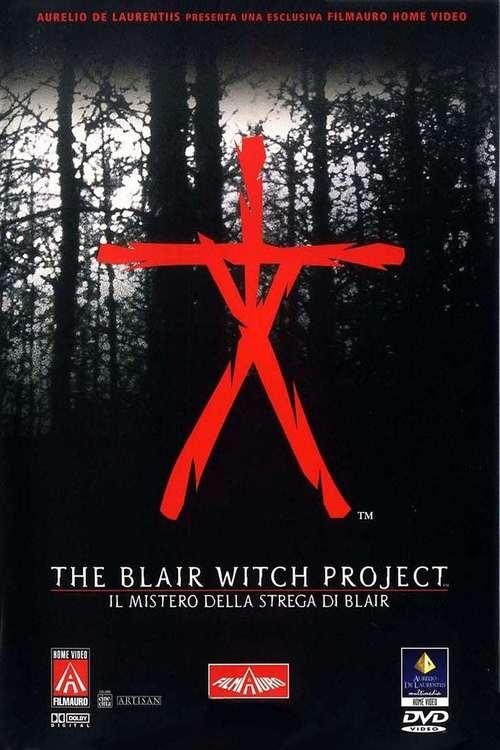
Le premier exemple de réalité horreur peut être considéré comme "The Blair Witch Project" bien que nous soyons ici dans un cas emblématique où la morbidité de la vision est associée à la frustration de la non-vision : on décide de suggérer et jamais de montrer, de laisser tout à l'interprétation libre et à la suggestion du spectateur, c'est en pratique au voyeur et à sa sensibilité d'attribuer un sens aux images plus ou moins inquiétantes qui peuplent l'écran. Malgré le grand succès mondial, la technique d'ici baptisée "à la Blair Witch" n'a pas été beaucoup fréquentée par les cinéastes et on l'a vue sporadiquement dans des productions à petit budget comme l'américain "The St. Francisville Experiment", le japonais "Noroi" et l'italien "Road to L.". Ensuite, ce fut le tour de l'Espagne et arriva "[REC]", produit par la Filmax de Julio Fernandez et réalisé par Jaume Balagueró ("Fragile") et Paco Plaza ("Les meurtres de la pleine lune").
Chez nous, "[REC]" a été distribué après "Cloverfield", le monster movie produit par J.J. Abrams qui en réalité est postérieur au film espagnol. Les deux films, bien qu'assimilables par le langage utilisé, sont très différents l'un de l'autre et poursuivent également des objectifs différents.
Si "Cloverfield" mettait l'accent sur l'évocation de peurs réelles auxquelles ont été témoins les citoyens new-yorkais et utilisait des technologies de dernière génération comme les vidéophones et l'esthétique de YouTube, "[REC]" se concentre davantage sur la réalité de la télévision, utilisant le langage du service télévisuel et arrivant plus directement à l'estomac du spectateur. Il n'y a pas beaucoup de place pour la réflexion socio-politique, donc, mais on tente la voie du cinéma de genre plus direct et sanglant, capable de faire peur presque à l'ancienne manière, sans négliger une critique intrinsèque de l'actuel système des médias. Ainsi, "[REC]", bien qu'étant un reality horreur à l'état pur, trahit légèrement sa classe d'appartenance, résultant plus artificiel et "faux", si l'on veut cinématographique. La tension est constamment à son comble et l'implication du spectateur est décidément très élevée, mais on remarque un certain soin pour les cadrages, toujours très attentifs à montrer tout et bien, et des développements narratifs qui explicitent l'existence d'un scénario de "vrai" film, entrant ainsi en contradiction avec le prétexte réaliste de l'ensemble de l'œuvre.
Ce qui émerge clairement du film de Balagueró et Plaza est une critique manifeste du sensationnalisme des services journalistiques, allant ainsi se moquer de l'hypocrisie de la moderne télévision vérité qui fait fureur sur les chaînes télévisées du monde entier. Le désir de filmer à tout prix l'horreur dans le simple but de faire un scoop est ici poussé à l'extrême, se traduisant par le discours du montrer tout de la manière la plus morbide et explicite possible. Une télévision asservie par la réalité qui se traduit par une réalité asservie par la télévision, "Tous doivent savoir ce qui se passe" uni à "Filme Pablo... Tu as filmé ?... Tu l'as ?".
Les deux réalisateurs espagnols mènent l'œuvre avec un grand sens du rythme et ne ménagent pas les coups de théâtre et les moments de terreur authentique. Les quinze dernières minutes de "[REC]" sont en effet un véritable coup de poing à l'estomac et un tueur pour les cardiaques, car, grâce à une esthétique de jeu vidéo de survie horreur, elles parviennent à transmettre un sentiment d'anxiété impressionnant et mettent en scène des images suggestives et hautement macabres. Le sang est également montré à flots à l'écran et la fureur des infectés, accompagnée de cris de rage et de douleur, fait dresser les cheveux sur la tête.
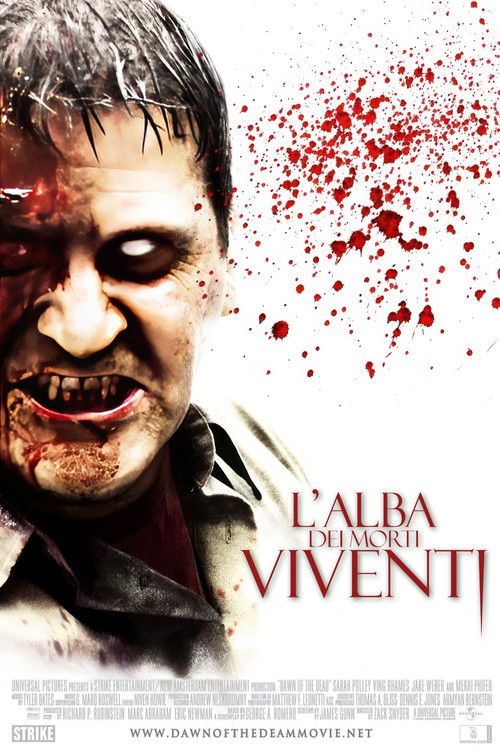
Il faut dire que "[REC]" est très dérivatif et n'offre pas grand-chose de vraiment nouveau, il y a beaucoup de "Démons 2", de "28 jours plus tard", de "L'aube des morts vivants" ; en fin de compte, dans "[REC]" l'important n'est pas ce qui est dit, mais comment c'est dit, et je ne fais pas seulement référence à la technique de la caméra à la main "à la Blair Witch", mais au véritable sens de la peur que Balagueró et Plaza ont réussi à transmettre en utilisant des expédients vieux comme le cinéma et des situations déjà vues ; en fin de compte, regarder ce film est un peu comme faire un tour sur des montagnes russes.
Tant de chapeau aux deux réalisateurs, tant de chapeau au genre fier de sa nature, tant de chapeau à "[REC]", l'un des films les plus franchement terrorisants des dernières années.
Commentaires
Commentaires (0)

![[Rec] 2 affiche](https://image.tmdb.org/t/p/w500/4JG5WKfIGD6r7hdbqJVr2WKIxEe.jpg)



















Commentaires