









The Verdict
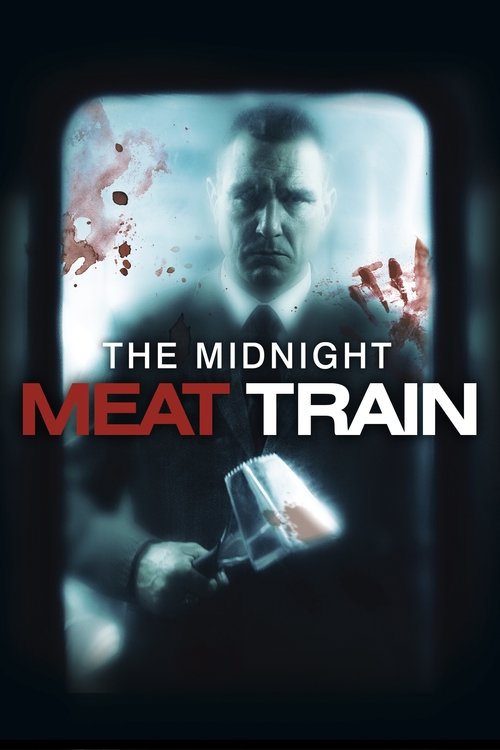
Photographer Leon Kauffman is looking for a particular subject that can get him into the good graces of talent scout Susan Hoff. So, while photographing the city's nightlife, Leon encounters Mahogany, a taciturn butcher who every night boards a subway car with his tool bag.
Photographer Leon Kauffman is looking for a particular subject that can get him into the good graces of talent scout Susan Hoff. So, while photographing the city's nightlife, Leon encounters Mahogany, a taciturn butcher who every night boards a subway car with his tool bag. The photographer begins to believe that the butcher is behind a series of mysterious disappearances that have been plaguing the city's underground for years. Driven mainly by the desire to photograph his suspect in action, Leon starts following Mahogany. Unfortunately, Leon's suspicions are well-founded, and now his own life and that of his girlfriend Maya are in danger.
Despite Clive Barker's vast literary work, few of the Liverpool writer's novels and stories have become films; in fact, aside from the golden goose called "Hellraiser," the Barkerian creatures that have ended up on the big screen can be counted on the fingers of one hand. Recognizing the potential in Barker's works, Lionsgate has finally decided to bring one of his most famous stories, "Midnight Meat Train," contained in "Infernalia," to the cinema, which is the first of the well-known "Books of Blood."
"The Midnight Meat Train," which in Italy was magically transformed into "Next Stop: Hell" (compliments to our distributors... execution-worthy title!), had a troubled genesis and distribution reality. After the immediate abandonment in the director's chair by Patrick Tatopoulos ("Underworld 3: The Rise of the Lycans"), the baton passed into the hands of the Japanese Ryuhei Kitamura, author of the cult action zombie "Versus" and the cinecomic "Azumi," although some unfounded and somewhat malicious rumors claim that Clive Barker himself put his paw in the directing seat, having personally followed the entire production of the film.
"Next Stop: Hell" had little visibility in U.S. theaters, quickly ending up on the shelves of video stores, a fate that directly affected the Italian market and which greatly annoyed Barker. Indeed, it is a shame to see a film of good quality like this ghettoized by its own creators, capable of capturing the viewer's attention thanks to an original story and a considerable number of high-impact scenes. In fact, the plot follows the classic descent into hell of a human being who, as horror has accustomed us, is not just metaphorical, but does so with a touch of originality that sets this film apart from the canonical satanic genre. This time we find ourselves in the vicinity of the serial killer thriller—though it's difficult to label this film precisely—with a gruesome and untraceable killer who butchers his victims with the same brutal naturalness with which he cuts up beef quarters in the bovine slaughterhouse where he works. But the unusual thing is mainly the place where our mastodontic multiple murderer acts: the subway cars! Mahogany waits with Forrest Gump-like patience (and indeed a joke in the film alludes to the famous character played by Tom Hanks) for the cars to be almost empty and then begins the massacre, using the upper handholds of the cars as protrusions on which to hang his prey and work on them, just as one does in a butcher shop. The face and body of the psychopath are played by the Englishman Vinnie Jones ("X-Men: The Last Stand"; "Snatch"), who perfectly embodies the insensitive and granite Mahogany, a "villain" strange in his mysterious mechanicalness and at the same time familiar to the viewer for his physical prowess, a characteristic belonging to many famous serial killers of the big screen.
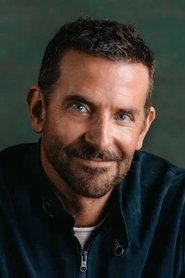
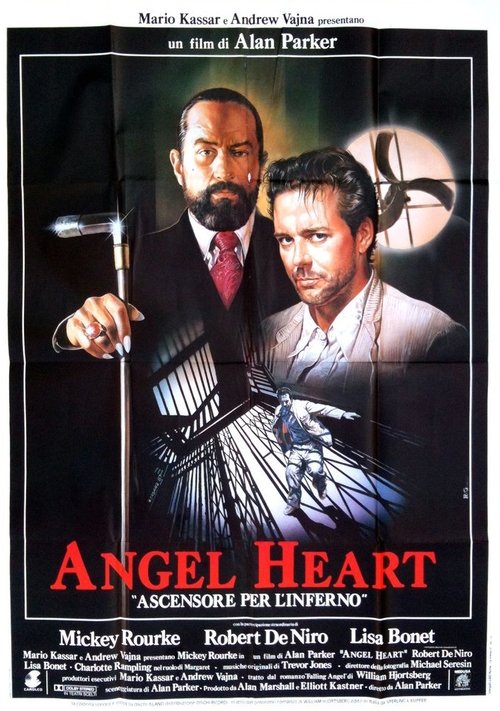
Jones' excellent performance is not, however, replicated by the protagonist of the story, a Bradley Cooper ("The Hangover"; "The Rocker") not very convincing in the role of the photographer Leon. The problem is not so much in Cooper's acting, a discreet professional, but in the lack of adherence to the character to whom he fails to give that touch of morbid allure that he acquires in the second half of the story. Because beyond a hunt for the serial killer, "Next Stop: Hell" is also a sort of intimate noir that winks at "Angel Heart" and the classic Barkerian mythology: Leon, from curious and ambitious, becomes a slave to perversion and obsessed with the truth, transforms his good boy air into putrid essence of a junkie—though not using drugs—and this change becomes a direct protagonist also of his girlfriend (played by Leslie Bibb) and his best friend (a wasted Roger Bart). Naturally, the evolution of the story does not spare surprises that, however, with a bit of imagination, could largely be predicted.
The screenplay by Jeff Buhler ("Insanitarium," of which he is also the director) at times creaks, revealing some holes here and there, and has the effect of leaving some doubts in the viewer; moreover, the development of the story, especially in the central part, seems unnecessarily drawn out, somewhat weighing down the viewing. Nothing serious, however, since "Next Stop: Hell" has so many virtues that they manage to overshadow the defects. In addition to the already mentioned goodness of the story and Jones' excellent performance, Kitamura's beautiful direction should be added, which, mindful of his past, offers us a series of virtuoso finds in the staging of the murders that are really exciting, alternated with other moments of calm and meticulousness for the details that give an overall original and pleasant result. The excellent photography by Jonathan Sela should also be mentioned, which functionally juxtaposes the dark and dirty environments of the metropolitan underworld with the austerity of the neon lights that illuminate the subway cars.
Another positive characteristic of this film is the extreme brutality of some scenes, at times really disturbing, and the abundance—almost excessive—of bloodshed, sometimes achieved with computer graphics that in a couple of scenes can also be intrusive.
So, a great film, carrier of evident defects surely avoidable but also of many virtues that make it a product to be absolutely recovered.
It deserves half a pumpkin more.
Comments
Comments (0)






Comments