

















The Verdict
Santi is a turbulent teenager suffering from a rare disease that forces him to stay away from sunlight. Santi lives alone with his young mother and attends evening school courses, but following the advice of the specialist treating him, he moves with his mother to a village in the north, nestled in a valley and surrounded by forests, where the sun shines for only a few hours a day.
Santi is a turbulent teenager suffering from a rare disease that forces him to stay away from sunlight. Santi lives alone with his young mother and attends evening school courses, but following the advice of the specialist treating him, he moves with his mother to a village in the north, nestled in a valley and surrounded by forests, where the sun shines for only a few hours a day. Upon arriving at the new home, the boy has to deal with the difficulty of adapting to a new place and, above all, with the relational problems caused by his particular health situation. As if that weren't enough, strange murders begin to occur in the woods, seemingly committed by a non-human being that drains its victims of blood; suspicions fueled by superstitions immediately fall on Santi.
Spain is undoubtedly one of the most varied and valid horror realities in the current global cinematic landscape. Thanks to Julio Fernandez and his Filmax, who at the beginning of the 2000s revitalized Spanish horror, allowing new 'masters of horror' like Jaume Balagueró and Paco Plaza to be discovered, and thanks to Guillermo Del Toro and his contribution—both as a producer and director—to bring visibility and artistic credibility to the fantastic genre.
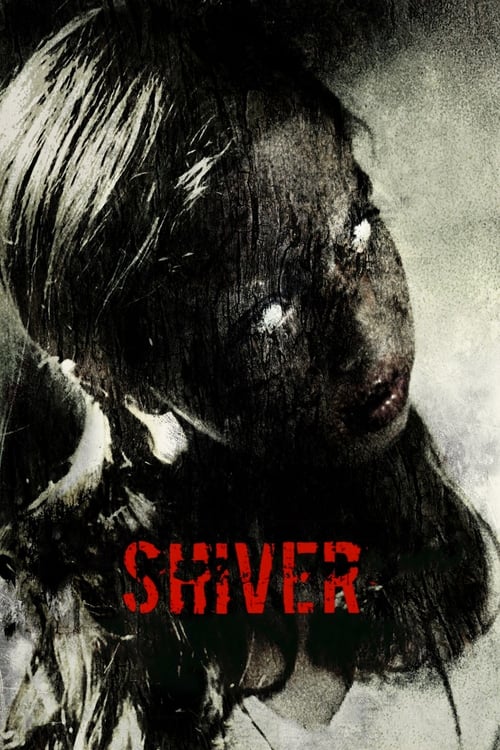
Of course, as in any relatively broad landscape, as the number of productions grows, so does the possibility of finding cinematic flops that tend to refute any qualitative exaltation of this or that cinema. Fortunately, Spain has so far 'limited the damage,' at least regarding works that have had a more substantial distribution, but there have been disappointments, such as 'Eskalofrío,' retitled in English as 'Shiver.'
Isidro Ortiz's film, who became known with 'Fausto 5.0,' is a particular work, a very conventional film with clear influences from American cinema that also attempts to follow a personal and potentially interesting path. Unfortunately, however, 'Shiver' is a continuous 'I want but I can't' and is undoubtedly damaged by a subject that has no idea where it wants to go.
The premises built by this film are excellent. The prologue, with the nightmare of young Santi obsessed with his condition as a photophobic, making him similar to a vampire, is one of those that gives hope. But it's almost the entire initial phase that convinces, thanks to a rarefied atmosphere and the exploration of the problematic condition of the boy, ghettoized by his peers as well as by himself due to his difference. When the murders begin, the situation shifts towards pure horror, also casting suspicion of schizophrenia on Santi, a path immediately abandoned with the entrance of the monstrous being. And here the problems begin.
The high concept that seemed to be the basis of 'Shiver' transforms, the initial introspective path is abandoned in favor of easy scares and some brutality, which this time seems out of place and inserted only to capture the viewer's attention. Paradoxically, with the entrance of the monster and the development of the action, the film becomes more boring, repetitive, and unfolds in continuous and long nighttime walks in the woods. As the conclusion approaches and the mystery is revealed, the film collapses completely, and we realize how thin and perhaps not well-defined the subject was, worsened by a screenplay written by 12 hands (!) that gives a sense of general confusion and indecision to the story. The explanations with a pseudo-final twist are too far-fetched and not at all credible, so that at the end of the viewing, one has the conviction that perhaps it would have been better to proceed with a mechanism of total omission of explanations, leaving the mystery undefined.
On the other hand, the packaging of the product is excellent, with beautiful and suggestive cinematography (by Joseph M. Civit) that enhances the natural locations, immersing the forests and city streets in dark and cold tones. The cast's performance is also good, with the mother Mar Sodupe ('Atomik Circus') surpassing the son Junio Valverde ('The Devil's Backbone').
Certainly watchable and commercial enough to appeal to the masses, 'Shiver' has too many writing flaws to be fully appreciated and ultimately gives the feeling of a missed opportunity.
Comments
Comments (0)
Comments