




















The Verdict
Sharon Da Silva has grown up, she is almost 18 years old, lives with her father, and is forced to constantly change her name and city because she is pursued by members of the Order of Valtiel, the sect from which she was taken by her mother Rose in the town of Silent Hill. Sharon is now Heather Mason and remembers nothing of her past, despite terrifying nightmares suggesting the name Silent Hill.
Sharon Da Silva has grown up, she is almost 18 years old, lives with her father, and is forced to constantly change her name and city because she is pursued by members of the Order of Valtiel, the sect from which she was taken by her mother Rose in the town of Silent Hill. Sharon is now Heather Mason and remembers nothing of her past, despite terrifying nightmares suggesting the name Silent Hill. When her father Henry is kidnapped by some members of the Order, Heather finds written in blood on the living room wall "Come to Silent Hill" and begins to piece together the memories of her past. Determined to find her father, the girl sets out towards the mysterious city, accompanied by her classmate Vincent.
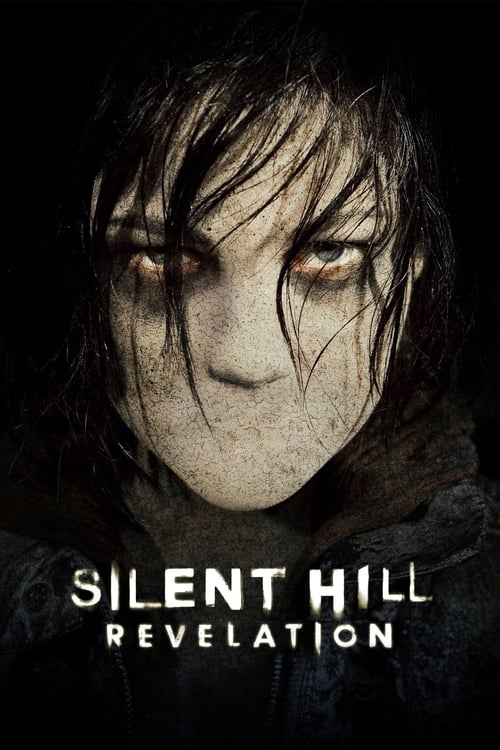
After six years since the release of the first film, the now film saga of "Silent Hill" is enriched with a second chapter, which is proposed as a direct sequel to Christopher Gans' film as well as a rather faithful adaptation of the third chapter of the video game saga.
"Silent Hill" was born as a console video game, developed by Konami and released in 1999. Five official sequels, two spin-offs, and a series of "collateral" multimedia experiences ranging from comics to novels, up to films, have been added to the first game. What Christopher Gans managed to do in 2006 was a small miracle because not only did he direct what is today almost unanimously considered the best cinematic adaptation of a video game, but he also managed to create a beautiful and suggestive film that carried within it the macabre and funereal atmosphere of the town of Silent Hill. There was great anticipation, therefore, on the part of fans for this sequel, but it must be said that "Silent Hill: Revelation" does not manage to replicate the quality of the previous film and appears as a more blatantly commercial and gamer-oriented product compared to its predecessor, although it remains pleasant overall.
To bring this sequel to life, Michael J. Bassett was chosen as director and screenwriter, who in the past had already demonstrated his affinity with Silent Hill atmospheres, themes, and creatures with "Deathwatch - The Trench of Death" and "Solomon Kane." What Bassett lacks, and consequently "Silent Hill: Revelation," is an adequate writing ability, since this sequel shows a rather amateurish screenplay in which the characters are poorly characterized, the dialogues are elementary, and the events are too dense to be explained exhaustively in just 95 minutes, creating an inevitable and annoying accelerator effect. Moreover, there are too many explanations (especially in the first part), intended to make the story clear even to those who have not seen the previous film, with the consequence that the story is still not clear for the "uninitiated" and those who are well acquainted with "Silent Hill" and its universe will frequently have a cumbersome "summary" effect placed at some inopportune moments.
Having clarified this macroscopic defect, we find ourselves facing a film that will certainly make many fans of the video game happy because the faithfulness and affection with which Bassett approaches the subject is exemplary. If Gans played with the atmosphere of the ghostly town of West Virginia in its "real" dimension, hence fog and ash snowfalls, Bassett prefers to explore the dimension of the nightmare into which Silent Hill plunges when the siren sounds. We will therefore have an abundance of scenes set in the rotten Silent Hill, full of monstrous creatures and various aberrations, with the great quality of capturing that feeling of morbid and unhealthy nature that the games managed to extract from these locations that seem to have come out of Bosch, Goya, or Blake's paintings. Deformed human limbs and faces everywhere, rot, rust, and dirt in every corner as well as chains and hooks dangling in rooms with a sadomasochistic flavor. In "Silent Hill: Revelation," one can also notice a particular predilection for beings and suggestions typical of Clive Barker's imagination to a much greater extent than in the video games. Beings with flesh torn by hooks and chains that decorate the environments, deformed monsters, and creatures that closely resemble the cenobites of the "Hellraiser" saga are abundant in this film.
The adherence to the third game of the video game saga is almost total, from the story to the characters, although filmic needs have forced some initial changes to connect this film to the previous one. However, almost everything is there, from the characters (Detective Cartland, Leonard Wolf, the wicked Claudia) to the places (the shopping mall, the psychiatric hospital, the amusement park) and even the objects (Robbie the rabbit, the seal of Metatron). Among the creatures, in addition to the already known Pyramid Head (who here has a more relevant role than in the previous film) and the nurses (protagonists of one of the best scenes), there is a great variety of creatures, among which stands out a spider composed of parts of mannequins, protagonist of one of the most successful scenes.
In the cast, Adelaide Clemens stands out as the protagonist, Sean Bean - who plays the father again - and Carrie-Ann Moss, the Trinity of "Matrix," who here embodies the wicked Claudia Wolf. In a cameo, Radha Mitchell and Deborah Kara Unger reappear in the roles they had in the previous film, and a gigantic Malcom McDowell does not miss in a small but significant part.
"Silent Hill: Revelation" was shot in 3D and uses this technology well to bring the titular town to life, constantly enveloped in fog and sprinkled with ash. The 3D of this film plays very well with depth (exemplary is the use of falling ash and the ghostly corridors of buildings) and with relief effects, including creatures and objects that pop out of the screen.
In conclusion, "Silent Hill: Revelation" is far inferior to the original and does not have many good cinematic qualities to appeal to a "broad" and demanding audience; rather, it seeks the spectator especially among video game players who know the franchise's mythology well and manages to transport it effectively and faithfully into the town that gives the film its title.
Double surprise at the end that draws from "Silent Hill: Origins" and "Silent Hill: Downpour."
Comments
Comments (0)









Comments