How "Terrifier 3" Redefines Horror Cinema and Mirrors Societal Anxieties
Introduction
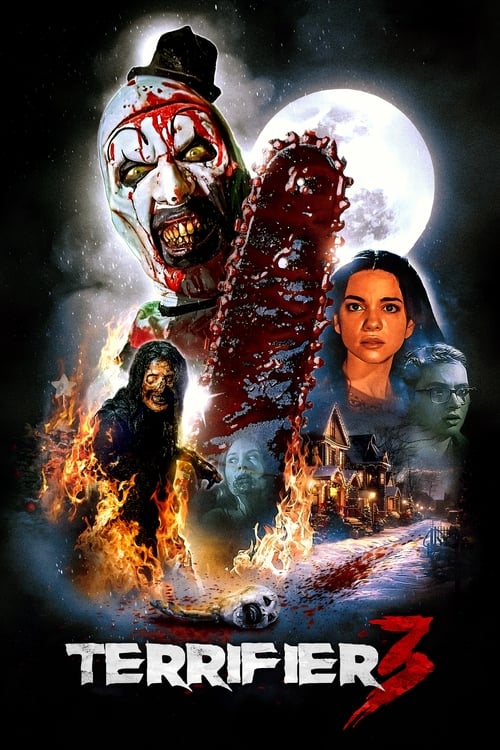
In a cinematic landscape often dominated by high-budget blockbusters and familiar franchises, "Terrifier 3" emerges as a remarkable exception. Directed by Damien Leone, this low-budget horror film has defied industry expectations by grossing over $82 million worldwide against a modest $2 million budget. Beyond its financial success, the film offers a profound exploration of psychological fears, societal tensions, and subtle political commentary, redefining the potential of horror cinema in the 21st century.
A Subversion of Holiday Traditions
Set against the ironically cheerful backdrop of Christmas Eve, "Terrifier 3" subverts traditional holiday themes by delving into the darkest corners of human fear. The malevolent antagonist, Art the Clown - portrayed with chilling intensity by David Howard Thornton - embodies unpredictability and chaos. His reign of terror over Miles County isn't just a series of gruesome events; it's a relentless assault on the notions of safety, normalcy, and the comfort typically associated with the holiday season.
Psychological Exploration
At its core, the film is a psychological study of fear and human responses to extreme situations. It taps into Carl Jung's concept of the "shadow self," compelling both characters and viewers to confront the darker aspects of their psyche. Art the Clown is not merely a villain; he represents repressed anxieties and the chaotic potential within society. The notably subdued reactions of audiences - such as the silent screening experiences I experienced in CinemaCity in Romania - highlight the film's ability to reach deep into the subconscious, evoking a primal response that transcends typical cinematic experiences.
Social Commentary and Contemporary Relevance
"Terrifier 3" serves as a mirror reflecting contemporary societal fears. In an era marked by global uncertainties and the erosion of traditional safety nets, the film's disruption of the holiday idyll resonates powerfully. It challenges the illusion of security in familiar settings, suggesting that chaos can intrude upon life without warning. This theme is particularly poignant given current global anxieties related to political polarization, social unrest, and the fragility of societal structures.
Subtle Political Undertones
The movie subtly weaves in commentary on the divisiveness and unpredictability that have characterized recent political landscapes, particularly echoing sentiments reminiscent of calls to "make it great again." Even it might be a bit of a stretch interpretation it lands very well and align in reality we are today. Art the Clown's embodiment of chaos and his assault on societal norms can be interpreted as an allegory for the breakdown of traditional structures and the rise of polarizing forces. His relentless terror reflects the disruption of established conventions, forcing communities to grapple with unprecedented challenges - a parallel to the societal upheavals experienced during turbulent political times.
The narrative also examines leadership and authority. The inability of societal institutions within the film to contain or comprehend the terror inflicted by Art the Clown mirrors real-world frustrations with ineffective governance in the face of crises. This reflection invites contemplation on how societies become vulnerable when trust in leadership erodes.
Note: The interpretations presented regarding the political undertones, are my personal opinions and reflections. Don't get to excited! :)
David Howard Thornton's Masterful Performance
Thornton's portrayal of Art the Clown elevates the character from a mere slasher antagonist to a symbol of deeper psychological, social, and political fears. His ability to convey menace without dialogue relies on physicality and expressive nuance, creating a sinister charisma that is both repulsive and captivating. This performance is instrumental in making the film's thematic explorations resonate so profoundly with audiences.
The Appeal of Extreme Horror
The film's financial success, despite - or perhaps because of - its extreme gore and brutality, speaks to a cultural fascination with boundary-pushing content. "Terrifier 3" taps into the audience's desire for cathartic experiences, offering a space to explore intense emotions and confront the darker facets of humanity. This attraction to extreme horror can be seen as a form of collective processing of fear and uncertainty, providing both an escape from and a reflection of real-world tensions.
Implications for the Film Industry
"Terrifier 3" challenges conventional wisdom in the film industry regarding the profitability and impact of low-budget productions. Its success demonstrates that audiences are hungry for content that is innovative, thought-provoking, and willing to push boundaries. The film exemplifies how strategic storytelling and thematic depth can overcome financial limitations, suggesting a shift in how success can be achieved in cinema.
For filmmakers and industry professionals, "Terrifier 3" serves as a case study in leveraging genre conventions to explore complex themes while engaging audiences on multiple levels. It highlights the potential for horror films to transcend entertainment, becoming vehicles for social commentary and philosophical inquiry.
Conclusion
"Terrifier 3" is more than a horror film; it's a bold artistic statement that challenges viewers psychologically, socially, and potentially politically . Damien Leone has crafted a work that is unflinching in its depiction of terror yet rich with depth and relevance. The movie invites audiences not only to experience fear but to question its origins and implications within the context of contemporary society.
As the film continues to captivate and unsettle viewers worldwide, it redefines the potential of horror cinema in the 21st century. "Terrifier 3" stands as a testament to the power of storytelling that is unafraid to delve into the complexities of existence, reflecting and challenging the societal and political currents of our times.
"Terrifier 4" is just inevitable!






























Comments