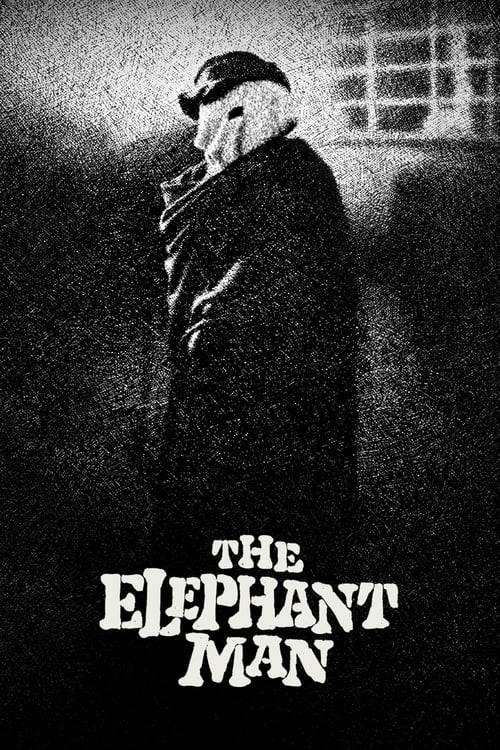





The Elephant Man backdrop
The Elephant Man poster

THE ELEPHANT MAN

1980 • US HMDB
October 9, 1980

A Victorian surgeon rescues a heavily disfigured man being mistreated by his "owner" as a side-show freak. Behind his monstrous façade, there is revealed a person of great intelligence and sensitivity. Based on the true story of Joseph Merrick (called John Merrick in the film), a severely deformed man in 19th century London.

Directors

Cast

Comments

Crew

Production: Jonathan Sanger (Producer)Stuart Cornfeld (Executive Producer)Mel Brooks (Producer)
Screenplay: David Lynch (Screenplay)Eric Bergren (Screenplay)Christopher De Vore (Screenplay)
Music: John Morris (Original Music Composer)
Cinematography: Freddie Francis (Director of Photography)

REVIEWS (1)

Marco Castellini

•
John Merrick, a man born horribly deformed, is exploited by a ruthless man as a freak show attraction. Doctor Frederick Treves happens to witness one of his "performances", takes pity on him, and decides to free him, buying him from his exploiter. John is then settled in a hospital lodging where the same doctor works, but he is later kidnapped and returned to his exploiter. He manages to free himself again, but when he returns to the hospital there is nothing more that can be done for him; his already precarious physical condition has worsened further and leads to his death. An emotional masterpiece based on a true story and photographed in a brilliant black and white by Freddie Francis. More than a horror film, it is a dramatic film, with an excellent cast (in which an excellent Anthony Hopkins stands out) directed by the eccentric Lynch, who this time does not allow himself any particular "eccentricity". A moving film, at times heartbreaking, that sends a clear message: the true horror is not the external one, represented by the horrible features of the Elephant Man, but the much more terrible one that lurks in the hearts of people. Poor John goes from being a slave to a miserable and ruthless exploiter, to a subject for scientists, to becoming a plaything for nobles and rulers, with little or no respect for his human nature. The film received eight Oscar nominations but won none, although certainly a prize would have been deserved by the excellent performance of John Hurt as the unfortunate John Merrick alias Elephant Man, considering the "effort" of acting under heavy layers of makeup.

Comments

Where to Watch

Stream

MUBI MUBI
MUBI Amazon Channel MUBI Amazon Channel
Raro Video Amazon Channel Raro Video Amazon Channel

Rent

Apple TV Apple TV
Amazon Video Amazon Video
Google Play Movies Google Play Movies
Timvision Timvision

Buy

Apple TV Apple TV
Amazon Video Amazon Video
Google Play Movies Google Play Movies
Timvision Timvision

COMMUNITY REVIEWS (2)

Wuchak

Wuchak

7 /10

The ultimate outcast

In 1884 London, a doctor (Anthony Hopkins) meets Joseph Merrick, aka The Elephant Man (wrongly called John Merrick in the film) who was being exploited as a freak show attraction. Treves (Hopkins) tries to help Merrick (John Hurt) for the last six years of the latter’s life wherein he becomes cultured, but he inevitably remains an object of curiosity, to high society as well as low society. Anne Bancroft plays a winsome entertainer who is warm toward Merrick.

Directed by David Lynch and shot in B&W, “The Elephant Man” (1980) is a melancholic biographical movie, and understandably so, but Merrick’s story is worth checking out despite the fact that it inspires pity. It calls into question the concept of beauty: Natural beauty is something one is born with and did nothing to acquire, but so is physical unattractiveness. Then there’s inner beauty. The charismatic actress (Bancroft) displays both. Of course there’s also inner ugliness, like the carnival huckster.

A myth developed about Merrick’s disfigurement that his mother was raped by an elephant, probably started by sideshow hawkers. The opening conveys this in an artistic manner, but it’s not to be taken literally, which is why it’s surreal. Meanwhile the factory scenes with the pipes and corresponding dangers exhibit the reality for workers in Victorian times.

The score by John Morris is noteworthy with one piece being ripped-off for the moving parts of “Platoon” (1986), e.g. Elias’ melodramatic death scene.

The film runs 2 hours, 4 minutes, and was shot entirely in London and nearby Shepperton Studios, just west of the city.

GRADE: B

CinemaSerf

CinemaSerf

8 /10

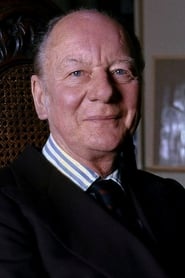
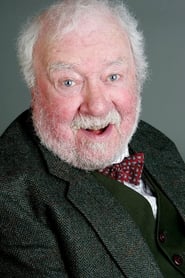
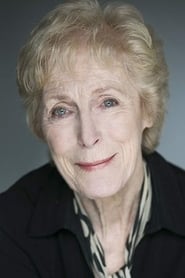
Saw this, recently up-converted to 4K at the London Film Festival and, apart from the clear improvements to the quality and detail of the image, I was reminded of just how good it is. Anthony Hopkins and Anne Bancroft play their roles with engaging sincerity - very ably supported by Sir John Gielgud and Dame Wendy Hiller. Prosthetics aside, John Hurt captures both the despair and optimism of Merrick with empathetic style; and Freddie Jones is just downright evil as "Bytes". His son Toby was at the screening and I couldn't help but wonder when he watched this portrayal by his father whether the pride in the performance must have been tempered by a disgust in the character, itself!! This film doesn't seem to do the rounds very often, nowadays, but it holds up very well after almost 40 years and is really a gem.

Reviews provided by TMDB