















The Verdict
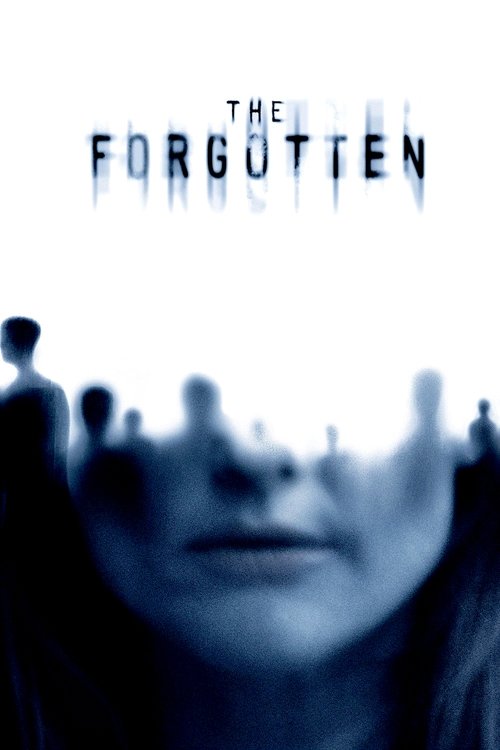
New York, today. Telly Beretta is an unhappy woman: her son has been dead for more than a year, but she still can't get over the pain of the loss.
New York, today. Telly Beretta is an unhappy woman: her son has been dead for more than a year, but she still can't get over the pain of the loss. Despite being under the care of a psychiatrist, the memories are undermining her entire existence, especially her relationship with her husband, until one day she starts suffering from strange amnesias and discovers that her child has disappeared from all the photos in the house.... At first, she blames her husband, but then she realizes that, in reality, everyone, including her analyst, is convinced that she has a distorted vision of the past: it seems that Terry never had a child, and that she is in treatment to cure her tormenting hallucinations... When the end credits appear on the screen, one already wants to forget this film: the usual clichés of the "supernatural thriller with a psychological background that turns into science fiction" genre are all there, trite and overused: the protagonist who alone intuits the reality but is taken for crazy, the secret service agents belonging to a more secret section than the others, the alert police lieutenant who should put the protagonist in jail but who intuits that there is something underneath and goes against the federals (more for mesh reasons than anything else: "In New York, the law is me!"), the psychoanalyst you can't trust, the impalpable supernatural presences, the government conspiracies with aliens in cahoots to perform experiments on humans... everything as usual, in short. The result is an episode of "X-Files" mixed with one of those psychological thrillers that should scare but actually make you sleepy: a predictable script, improbable situations, dialogues ridiculous at certain points and evident screenplay errors (the conspirators are able to manipulate minds, space, and time: they are practically omnipotent, but what do they do? When they need to modify a room, they put new wallpaper! And they don't even do the job well...). The only way to keep the viewer's tension high are the boring white noises, which in the theater are deafening, thus ensuring the viewer's jump (better, the bounce). In reality, these tricks have been used and abused in recent years, and now they are cloying; not even the presence of a great actress like Julianne Moore, capable of giving in many moments an objectively remarkable performance, manages to lift the film from the abyss of boredom. Well-chosen is also the character of the father, a former alcoholic hockey player, and, apart from the caricature policemen (the usual federals who answer "national security" to everything, seen and reviewed), the film cannot be considered badly interpreted: but when the subject is bad, every positive effort is nullified. In fact, the film is based on the atavistic fears of the average American: being controlled from above (famous the controversies over spy satellites that would record American citizens), being constantly intercepted, manipulated by superior forces against which it is impossible to oppose, various or government or alien or in society with participation of both... many films have addressed these themes in the last thirty years... one more could have been spared! In conclusion, a really mediocre, boring, predictable film, with only one interesting sequence (the accident, although totally unrealistic... the airbags do not open and the impact should have at least stunned the occupants, who instead leave as if nothing were) and pervaded by a bothersome sense of déjà vu, in short, absolutely to be avoided if possible.
Comments
Comments (0)








Comments