




















The Verdict
Allison is an American girl who has settled in Tokyo, where she attends an international high school and is often a victim of her more cunning and emancipated peers. One day, after leaving school, Vanessa and Miyuki take Allison to an abandoned and dangerous house following a fire, considered haunted.
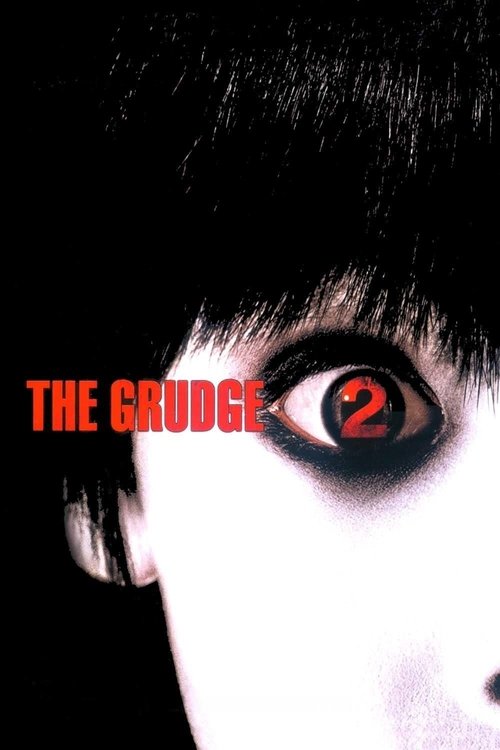
Allison is an American girl who has settled in Tokyo, where she attends an international high school and is often a victim of her more cunning and emancipated peers. One day, after leaving school, Vanessa and Miyuki take Allison to an abandoned and dangerous house following a fire, considered haunted. From the moment the three girls step into that house, they will be victims of horrible visions. Karen, the girl who set fire to the house where her boyfriend also died, is still locked up in Tokyo's psychiatric hospital. Aubrey, Karen's sister, arrives in Tokyo to take care of her sister, but Karen's sudden suicide prompts her to investigate the causes of her act. Trish moves into her husband's house, where she will also meet his children from a previous marriage. From the beginning, strange events start happening in the building where they live, piquing the curiosity of Jake, the younger son. Just two years after the great success of "The Grudge," the American remake of the Japanese "Ju-On," which also inaugurated the production path of the Ghost House founded by Sam Raimi, comes the inevitable "The Grudge 2." More than a remake of the sequel ("Ju-On 2," naturally), "The Grudge 2" is a true sequel to the remake, meaning it completely deviates from its predecessor No. 2 produced in Japan and follows its own path, connecting directly where "The Grudge" ended. In the direction, we always find Takashi Shimizu, the man who probably set the world record for having directed the same film the most times (the films about resentment/curse are all his: from the very first TV prototypes, to the two Japanese chapters for cinema, up to the two American chapters!), a surely gifted director (just look at his films outside the Resentment cycle), but totally kept on a leash by the production to give life to a routine product of very little interest. "The Grudge 2" is nothing! In 95 minutes, scenes that make you shiver are continuously staged, without caring at all about the plot (which is very tangled) or a minimum verisimilitude of the facts narrated. The three stories proposed (one of which - that of the three students - is taken verbatim from the Japanese "Ju-On" for cinema) are unnecessarily complicated due to the lack of temporal linearity and often struggle to connect with each other, creating only confusion and serving simply as a function of the numerous ghost appearances. Appreciable is the decision to provide the knowledgeable viewer with some details about the childhood of the boogeyman (or rather, boogeywoman!) Kayako, although the part in question turns out to be an end in itself and completely disconnected from the main plot. Surely the strong point of "The Grudge 2" are the ghost appearances; unfortunately, however, with the exception of two or three really well-aimed sequences (the most notable being the appearance in the photo development room), the vast majority limits itself to the predictable re-proposal of the usual situations in which the sudden appearance of the ghost is accompanied by an equally sudden sound jump that has the sole purpose of making the viewer jump out of their seat. The cast is another weak point of the film: Sarah Michelle Gellar (here, as in the previous film, in the role of Karen) leaves the scene in the first fifteen minutes, passing the baton to the bad Amber Tamblyn (the series "Joan of Arcadia" and "The Ring"), an actress capable of giving us only an expression that oscillates between the sulky and the surprised. The rest of the cast is not, however, of good level and only the interesting faces of Arielle Kebbel ("Be Cool" and "Aquamarine") and Jennifer Beals ("Four Rooms" and "La Giuria") can be saved, respectively in the roles of Allison and Trish. Surely "The Grudge 2" will find its admirers, probably among those who appreciated the previous chapter, but it is certainly the weakest link in the entire saga, despite the presence of some well-aimed moments of tension. At this point, given the poor box office returns that "The Grudge 2" is obtaining, we hope that the saga of Resentment ends here, but the arrival of a third chapter of Japanese production (obviously always directed by Shimizu) cannot make us consider totally safe.
Comments
Comments (0)










Comments