











The Verdict
Ray, his girlfriend Jenny, and his friend Tim wander through the woods and come across two campers sunbathing nude by the lake. Ray spies on them and catches them in intimate acts, deciding to kill them and hide their bodies.
Ray, his girlfriend Jenny, and his friend Tim wander through the woods and come across two campers sunbathing nude by the lake. Ray spies on them and catches them in intimate acts, deciding to kill them and hide their bodies. One dies instantly, the other, injured, manages to escape. Four years later, the surviving girl, who had been in a coma, dies. The culprit was never caught, although the police had always suspected Ray. The boy spends his days between the Starlight Motel, a family-run establishment, drug-fueled parties, and his numerous attempts at conquest, some failed — like Sally, the new cleaning girl at the motel — others successful — like the case of the fascinating Kathrine. One day, however, Ray realizes that his friends are betraying him and the women he thought were at his feet are rejecting him: for the boy, a descent into increasingly hallucinated and violent madness will begin.
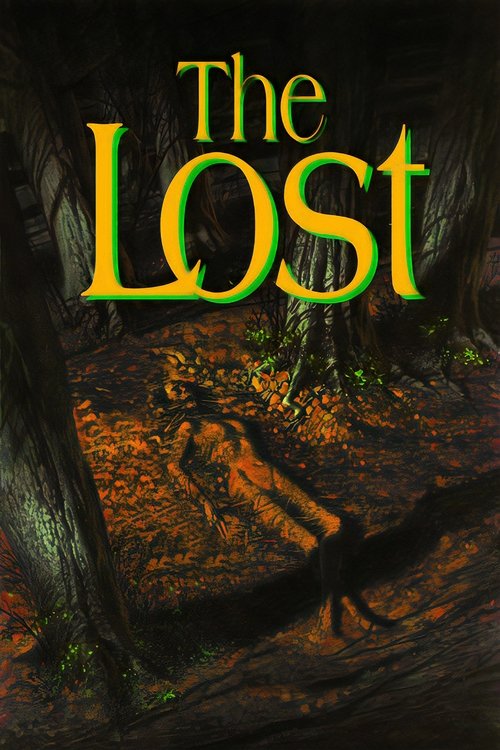
Cinema is discovering Jack Ketchum. Active since the very early '80s, Ketchum has an impressive literary resume, primarily consisting of horror and pulp stories and novels particularly suited to current cinematic times. In 2006, the first cinematic adaptation of a novel by the American writer arrives courtesy of Chris Sivertson: "The Lost."
Produced by Lucky McKee (who later adapted Ketchum personally with "Red" and "The Woman"), "The Lost" is inspired by a novel published in 2001 that features the obsession of a boy with sex. An obviously deviant and violent obsession that gives rise to a saraband of horrors that are at times truly crazy and disturbing. Chris Sivertson's merit lies in having succeeded in replicating the same horrors, the same obsessions on screen, without stinting on the disturbing and amoral charge that shrouds the original work. "The Lost" is a raw film, at times even strange, certainly different from an often asphyxiating landscape that tends to represent serial killers in a stereotypical or unrealistic way. "The Lost" primarily talks about sex, the monomania of a mediocre boy who would even screw a hole in the wall to give vent to his impulses. Ray Pye is a disturbed boy — and this is not up for discussion — but the way his perversion is described and developed builds around him an aura of originality not always found elsewhere. Ray is an egocentric hedonist, he wears makeup to look more attractive and always wants to know what others think of him, moreover, to seem taller, he stuffs his boots with crushed beer cans and doesn't care if he sometimes limps from the discomfort, as there's always a fanciful excuse to justify his walk. Ray is the center of the universe for his friends, subjugated by a leader as crazy as he is authoritarian and charismatic and not surprisingly the magnificent finale cites the massacre at Cielo Drive committed by Charles Manson's followers, thus creating a precise cultural reference to the figure of the mad Ray Pye.
Ray's women, as the boy prefers to define them, are described and depicted with the right different characterization to make them complementary and compensatory figures of Ray's jagged personality. There's the weak and submissive girl who is tied to the tormentor by a relationship that has been built over the years, there's the emancipated girl who immediately rejects and fights him, and finally there's the refined girl who seeks (and partly finds) in him the way out from a life that is at times cruel. Three different women who exercise a particular and obsessive fascination on Ray. At the moment when the power that Ray exercises, or rather believes he exercises, over his women shows the strain, the boy's schizophrenia emerges in a forceful way and the announced massacre is shown in all its mocking crudeness.
"The Lost" is strengthened by a truly memorable beginning and end: through the musical accompaniment of Crispian St. Peters' classic "Pied Piper" (later covered by Gianni Pettinari with "Bandiera Gialla," more familiar to us Italians) we witness the beginning of all the evils and the conclusion of a story of tragic madness. The chance encounter with a completely naked girl in the woods, perhaps a lesbian, as the horrified Ray himself accuses her, sets off the slaughter that will find a delirious closure in a disturbing copycat of the famous Mansonian massacre against Sharon Tate. In between all this, there are talks, perhaps too many, that serve to outline Ray's daily life and his obsessions, his fellow citizens, and American provincial life that in an unsettling timelessness should recall the '80s.
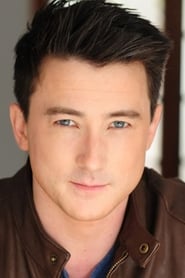
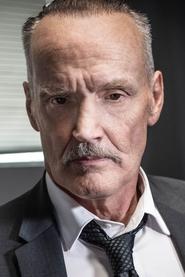
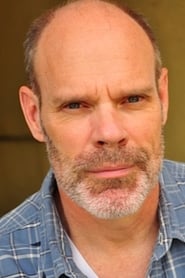
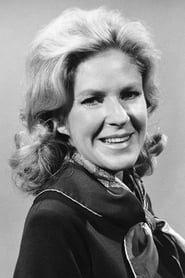
In Sivertson's screenplay, everything works a bit, starting with the description of all the characters, meticulously and realistically portrayed even in minor roles. But what gives depth to the characters also contributes the host of excellent actors called upon to portray them: from Marc Senter ("The Name of My Assassin"; "Cabin Fever 2"), who plays the mad Ray, to the three girls in his life: Shay Astar (Jennifer), Megan Henning (Sally), and Robin Sydney (Kathrine). No less are Michael Bowen ("Kill Bill"), who plays the daring detective Schilling, and Ed Lauter ("Seabiscuit") who is Sally's mature "boyfriend." In a cameo, the unforgettable Dee Wallace of "Howling."
"The Lost" is a beautiful fresco of bored American youth and a treatise on sexual obsession. Raw and excellently made and performed, in one word, unmissable.
Comments
Comments (0)




Comments