








The Verdict
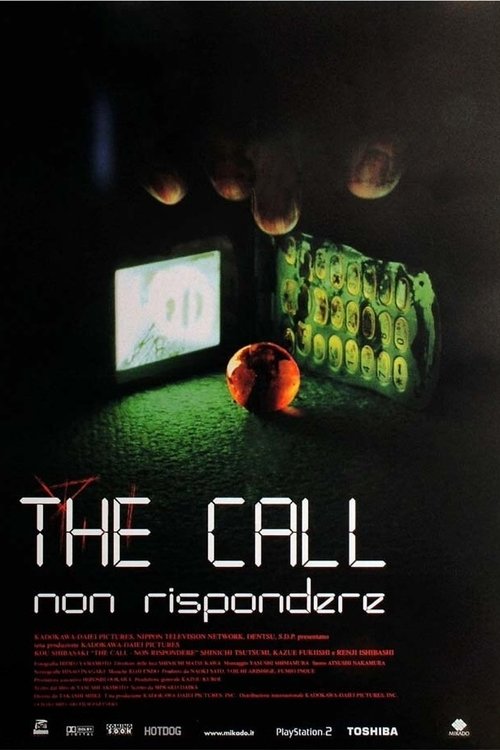
Professor Takayama, struck by Sadako's curse, is found dead in his apartment. His friend Mitsuo Andou performs the autopsy on his body while dealing with the tragedy of his son's death.
Professor Takayama, struck by Sadako's curse, is found dead in his apartment. His friend Mitsuo Andou performs the autopsy on his body while dealing with the tragedy of his son's death. In Takayama's stomach, the pathologist finds a piece of paper with a code to decipher. With the help of the professor's former assistant, he will desperately try to piece together a baffling puzzle.
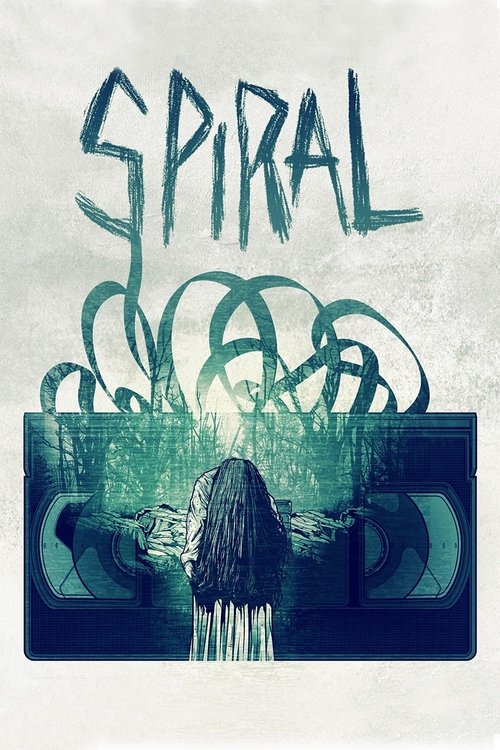
"Spiral" is one of the two sequels to "The Ring," released practically at the same time as the first episode of the saga, which consists of four films in total between sequels and prequels ("The Ring," "Spiral," "The Ring 2," "Ring 0"), plus the two American remakes.
The story, based on Koji Suzuka's book "Rasen," although it begins at the same point where the previous chapter ended and resumes the vicissitudes of some characters, is actually quite distant from both the novel and the pilot episode.
The film was a true box-office flop, to the point that a year later, director Hideo Nakata, who had already directed "The Ring," was tasked with filming an official new sequel: "The Ring 2." The latter relied on a rather tangled and unconvincing narrative construct, but in that aspect, "Spiral" surpasses it by far. The extraordinary psychic abilities of Professor Takayama are the core upon which a story with sci-fi twists is built, which has little to do with the well-known and classic tale of the videotape that kills. The task of deciphering the absurd riddle devised by the deceased professor is entrusted to his old study partner Mitsuo Andou. The construction of this new character leaves something to be desired: in addition to having a psychological profile of little depth, the protagonist seems to act almost by inertia, passively carried by the inexplicable events that dot his life. The actor who portrays him is also not particularly expressive or charismatic. If the clue that poor Takayama leaves for the former colleague seems crazy and absolutely illogical, even more so is the purpose for which the strange code was conceived. The infamous videotape slowly assumes an increasingly marginal role to make way for other elements such as Reiko's diary or the deadly virus that spreads in a way that would be reductive to call bizarre. Sadako's resentment comes to life through a twisted plan that allows no possibility of failure and will involve all of humanity, altering the destiny of every individual. The paranormal element takes a back seat, paving the way for genetic engineering.
There is not even a trace of the morbid and mysterious atmosphere that permeated "The Ring." Everything unfolds in a flat and impersonal climate, made even less engaging by the total lack of true moments of suspense. The director, with the choice to opt for a more fanciful explanation where disease and resurrections dominate, completely denatures the film, resulting in a poor substitute halfway between a sequel and a spin-off, which ends in a ridiculous epilogue. The non-linearity of the plot makes everything even more incomprehensible: when the viewer finally thinks they have understood, a new inexplicable situation comes to shuffle the cards; a game that ultimately tires.
Although it contains some interesting points, overall there is almost nothing salvageable in this film: a viewing that can be safely skipped.
The poor quality of the DVD image distributed in Italy by Dynit is also noteworthy.
Comments
Comments (0)






Comments