
The Verdict
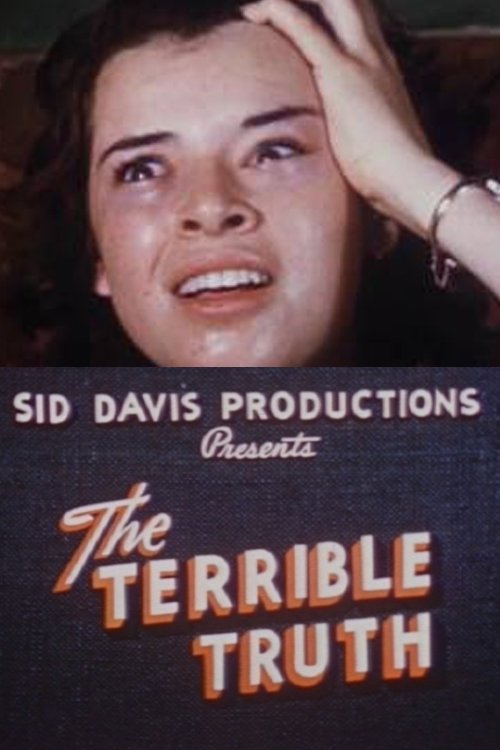
Eddie, Tony, and Sara are a trio of burglars who infiltrate the homes of wealthy owners to steal all their belongings. However, their new heist has complications, and the three are caught in the act by an "Intruder." The robbery still succeeds, but from that moment, the perfect balance that had been established among them begins to waver.
Eddie, Tony, and Sara are a trio of burglars who infiltrate the homes of wealthy owners to steal all their belongings. However, their new heist has complications, and the three are caught in the act by an "Intruder." The robbery still succeeds, but from that moment, the perfect balance that had been established among them begins to waver.
Two years after "The Eye," a highly valid adaptation of Edgar Allan Poe's "The Tell-Tale Heart," the Capasso brothers bring to the screen a new short film that this time speaks the language of pulp fiction.
A story of crimes and criminals, perversions and paranoia, betrayal and revenge, "Terrible Truth" is a whirlwind of situations that oscillate between the dramatic and the grotesque with extreme nonchalance and narrative effectiveness, although it must be said that if Angelo and Giuseppe Capasso's film has a flaw, it is precisely the story. Essentially, "Terrible Truth" is a modern noir
in pulp style, heavily indebted to the rhythms and languages of Tarantino cinema, so one can expect charismatic characters and sly dialogues packed with profanity, choices perhaps a bit too frequent in the works of today's young filmmakers who grew up with "Reservoir Dogs" and "Pulp Fiction." A slight lack of personality that, however, does not weigh on the overall goodness of the work, which, on the contrary, is more flawed in content than in form. The story told flows quickly and is not devoid of a certain taste for entertainment, but it lacks that "quid" that could make it really interesting, an element perhaps subtracted by the predictability of the plot that creates already seen situations in its genre and concludes exactly as one would expect.
No harm done, though, because "Terrible Truth" still makes a good impression in the increasingly inflated panorama of "crime-oriented" shorts also because it possesses a trio of well-characterized characters. Starting with Eddie, a deeply insecure man with a marked propensity for paranoia; it will probably be the fault of a childhood trauma that constantly haunts him, but Eddie has learned that "trust is good, but not trusting is better" and thus every situation for him assumes a double face, the same schizophrenic declination that assails him and forces him to wear a mask to protect himself from everyday life. And if the trauma is related to sex, the character's favorite mask è the classic black latex characteristic of sadomasochistic actions, as to follow a logical thread that connects past and present, body and mind of Eddie. Completing the trio are the boastful and foul-mouthed Tony and the seductive and reassuring Sara, the
classic "female" of the boss who here is also a woman of action. The three characters are supported by the excellent performances of actors Valerio Amoruso, Andrea De Bruyn, and Valentina D'Andrea.
Excellent is the direction of the Capassos and the photography of Mirco Sgarzi ("House of Flesh Mannequins"; "32"); the first extremely attentive and sought-after, sometimes dedicated to "original" framings that add value to the scene, the second dedicated to the use of bright and unnatural chromaticism that underline the atmosphere.
We can therefore consider "Terrible Truth" a well-played opportunity, a short film made with talent that could have had an extra gear if it had shaken off that halo of derivativeness and told a more original story.
Comments
Comments (0)
Comments