

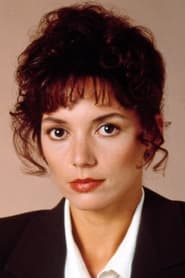
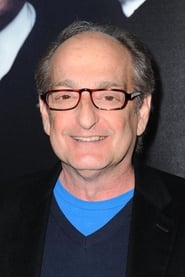
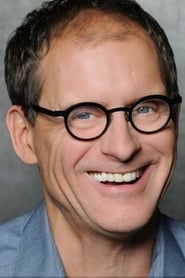
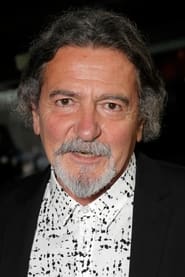
Twixt backdrop
Twixt poster

TWIXT

2011 US HMDB
septembre 10, 2011

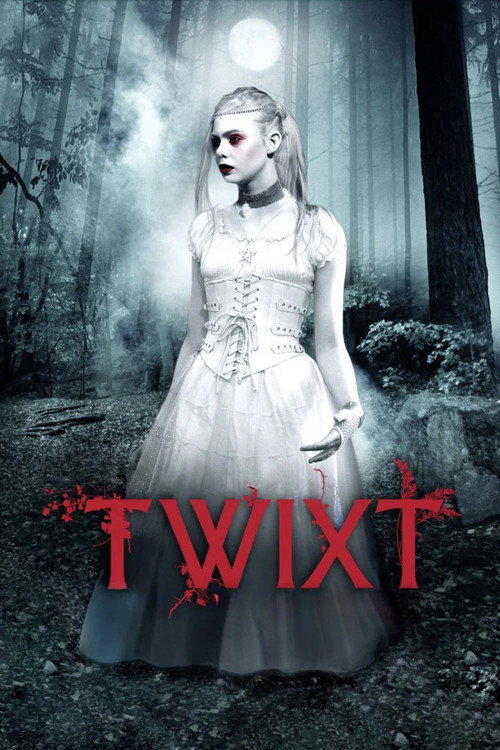
Un écrivain sur le déclin arrive dans une petite bourgade des États-Unis pour y promouvoir son dernier roman de sorcellerie. Il se fait entraîner par le shérif dans une mystérieuse histoire de meurtre dont la victime est une jeune fille du coin. Le soir même, il rencontre, en rêve, l’énigmatique fantôme d’une adolescente prénommée V. Il soupçonne un rapport entre V et le meurtre commis en ville, mais il décèle également dans cette histoire un passionnant sujet de roman qui s’offre à lui. Pour démêler cette énigme, il va devoir aller fouiller les méandres de son subconscient et découvrir que la clé du mystère est intimement liée à son histoire personnelle.

Distribution

👍 👎 🔥 🧻 👑

Commentaires

Commentaires (0)
Equipe

Production: Fred Roos (Executive Producer)Francis Ford Coppola (Producer)Anahid Nazarian (Executive Producer)
Musique: Dan Deacon (Original Music Composer)Osvaldo Golijov (Original Music Composer)
Photographie: Mihai Malaimare Jr. (Director of Photography)

CRITIQUES (1)

Andrea Costantini
Hall Baltimore est un écrivain de romans d'horreur, dont la spécialité est la sorcellerie. En crise créative et financière, Baltimore commence une tournée promotionnelle de son nouveau roman, finissant dans une petite ville appelée Swan Valley. Ici, il rencontrera le shérif du lieu, un homme à moitié fou qui l'implique dans les enquêtes d'une jeune fille assassinée avec un pieu de bois dans le cœur. Pendant ce temps, de l'autre côté du lac, un groupe de jeunes passent leur temps à faire des orgies et à adorer le mal, Hall Baltimore se fera impliquer émotionnellement par les fantômes de ce pays et par ceux qui vivent en lui. Universellement connu comme l'un des plus grands réalisateurs vivants, Francis Ford Coppola est un vrai mythe du septième art. Il a à son actif plus de vingt films, dont des chefs-d'œuvre absolus comme la saga "Le Parrain", "Apocalypse Now" et "La Conversation". Au cours de sa longue carrière, il a également exploré, à sa manière, le cinéma d'horreur avec "Terror at the Thirteenth Hour" et la fidèle révision du roman "Dracula" de Bram Stoker. En 2011, après un couple de films introspectifs et personnels, Coppola revient au genre que nous aimons tant avec un film qui a divisé le public : "Twixte". Il s'agit de l'histoire d'un écrivain de romans d'horreur en crise créative qui, lors de la tournée promotionnelle de son livre, finira dans une ville où le mal semble se cacher. Hall Baltimore, avec l'aide du shérif fou du pays, prend à cœur un meurtre bizarre et, grâce aux étranges histoires qui circulent sur ces lieux, entrevoit une lueur d'espoir pour son nouveau roman. Mais d'abord, il devra faire face à son douloureux passé. En regardant "Twixte", certaines choses typiques du réalisateur sautent immédiatement aux yeux. L'une d'entre elles est la maîtrise magistrale des couleurs. Comme cela se produisait dans d'autres de ses travaux précédents, il y a souvent des images en noir et blanc caractérisées par un seul élément chromatique : dans "Rusty le sauvage", il y avait des poissons, dans "Segreti di famiglia", il y avait des souvenirs, ici nous avons la lanterne d'Edgar Allan Poe, le maquillage de V et le sang, des éléments qui prennent couleur dans les rêves en noir et blanc de Hall. Il ne s'agit pas d'un véritable film d'horreur, c'est un film sur les vampires mais qui en réalité ne parle pas de vampires. Il parle de la douleur d'un homme qui ne parvient pas à exorciser la perte de sa fille en noyant ses peines dans l'alcool et en cherchant une solution à son sentiment de culpabilité. Jusqu'à ce qu'il trouve une ouverture grâce à Edgar Allan Poe, qui, comme un Virgile dantesque, le guide à travers la forêt sombre de son enfer personnel, lui montrant les horreurs de ce pays et les horreurs qui se cachent dans son esprit. "Twixte" est un film très personnel pour Coppola, abordant le thème de la perte d'un enfant, tout comme cela est arrivé au réalisateur pendant le tournage du film "Les Jardins de pierre" de manière similaire à celle montrée dans le film. Visuellement magnifique, le film souffre malheureusement de compréhension. Si au début l'intrigue semble linéaire et captivante, dès que Baltimore rencontre V dans les bois, tout change. Au début, on joue le jeu, on s'implique et on a l'impression d'assister à la version lynchienne de "Le Seme de la folie" (beaucoup d'éléments qui le rappellent comme le motel, les enfants et le clocher, aussi bizarre que l'église byzantine) avec des personnages fous et des discours sans queue ni tête. Puis il n'y a plus de rebondissements et le film continue de cette manière en alternant continuellement les rêves du protagoniste avec la réalité, créant beaucoup de confusion et une baisse consécutive d'attention. Pourtant, malgré les défauts de l'intrigue, le film reste un produit intéressant, naturellement pas au niveau de beaucoup de ses films précédents. C'est beau de voir un artiste comme Coppola, qui pourrait se reposer du matin au soir en vivant sur la gloire des travaux passés, tenter de renouveler son style tout en maintenant toujours sobriété et classe. Et si l'on passe sur l'intrigue un peu embrouillée, on reste néanmoins fasciné par la mise en scène. Le casting de stars en déclin et en ascension est composé de Val Kilmer, gonflé comme jamais, Bruce Dern en acteur gigionnant, un Ben Chaplin monocorde et la jeune Elle Fanning, sœur de la plus célèbre Dakota, qui risque de surpasser sa sœur en talent, l'unique qui vraiment se démarque dans le film. Certaines scènes du film ont été tournées en 3D. Ajouter une demi-citrouille au vote final.
👍 👎 🔥 🧻 👑

Commentaires

Commentaires (0)
Où Regarder

Louer

Amazon Video Amazon Video
Google Play Movies Google Play Movies

Acheter

Amazon Video Amazon Video
Google Play Movies Google Play Movies

AVIS DE LA COMMUNAUTÉ (3)

John Chard

John Chard

6 /10

The bit in between the dream and waking worlds.

Twixt is written and directed by Francis Ford Coppola. It stars Val Kilmer, Bruce Dern, Elle Fanning, Ben Chaplin, Joanne Whalley and Don Novello. Music is by Dan Deacon and Osvaldo Golijov and cinematography by Mihai Malaimare.

Hall Baltimore (Kilmer) is a struggling writer of witchcraft based novels, during a book signing stop over in a sleepy backwater American town, he finds himself involved with evil, murder and Edgar Allan Poe’s Ghost. But just what is real here?...

Twixt finds Coppola in relaxed mode, in the later stages of his film making career, he’s clearly made an adventurous movie based on a dream and personal instances. Very much operating in the realm of dreamscaping, both on visual and narrative terms, it’s an often silly picture yet one that still beguiles with its weirdness and daring visual touches. There’s also a good quotient of humour, both self aware and absurd, but if searching for a horror movie here you will be very disappointed. The Lynchian feel to it ensures it’s an interesting misfire, while the cast are all very enjoyable, but it’s not a film for a concrete recommendation. 6/10

Wuchak

Wuchak

6 /10

"The horror, the horror" of the creative process

Val Kilmer stars as Hall Baltimore, a third string mystery/horror writer on his latest book tour staying in a small town where he gets involved in a murder mystery upon meeting the eccentric sheriff, Bobby LaGrange (Bruce Dern). He meets a quasi-goth girl named V (Elle Fanning) who reminds him of his pubescent daughter. There's also a camp of weirdo goth-kids across the lake and Edgar Allen Poe shows up now and then as a kind of spirit-guide (Ben Chaplin), but what's dream and what's reality? And who murdered the female in the morgue with a stake?

"Twixt" (2011) was reedited and renamed as “B'Twixt Now and Sunrise” by creator Francis Ford Coppola’s in 2022. It’s a mystery/dramedy with elements of horror, combining the look of Coppola's "Bram Stoker's Dracula" with the inscrutableness of his "Youth Without Youth," plus a welcome side of humor. It's a quirky mystery that leaves you scratching your head, but you find yourself enjoying the ride, a Gothic tale with beautifully haunting cinematography & atmosphere, highlighted by Poe, bell towers, ghosts and bats in the belfry. The enhanced moonlighting and otherworldly blueish gray tones are awesome.

It tackles the creative process as we observe the desperation of a writer scraping the bottom of the barrel, often under the influence of sundry intoxicants. Will he come up with a best seller? Will he solve the murder mystery? Will he come to terms with his specters and demons that arise from his guilt over what happened to his daughter? That element, by the way, brings to mind Francis' 23 years-old son, Gian-Carlo Coppola, who was tragically killed in a similar boating accident in May, 1986. The reckless driver was Griffin O'Neal (Ryan's son).

A lot of the movie is an internal dialogue with the author's own ghosts and literary influences. Charles Baudelaire (a notorious substance abuser) is referenced, with the aforementioned Poe intermittently appearing, but only when Baltimore is under the influence, or dreaming. Did the abuse and murder of the children happen as shown? Or did Poe and the vampire incarnation of Hall’s own daughter serve as muses as he works his way through creating a story that might turn his career around? Coppola leaves it up to you to decide what is real and what is imagination, but the answers are there if you want 'em.

Francis got the story from a dream he had while staying in Istanbul. This sets-up the criticism that Coppola's dream is the audience's nightmare. While "Twixt" and this reedit are too ambiguous for their own good, it’s obviously intentional and he wanted the viewer to leave with questions to ponder. Besides, does everything need to be spelled out?

As for comparing the two versions, this one’s 8 minutes shorter and I think I liked it better (it’s hard to say because I saw the former version 8 years earlier).

It was shot at Kelseyville and the Clear Lake area of Northern California.

GRADE: B+

MISC. INSIGHTS SPOILER ALERT (Don't read further unless you've watched the movie)

A lot of what happens in the town was the author working out his story, but most of it isn't real. The sheriff and deputy are real, as are their deaths at the end, not to mention Baltimore's wife. The sheriff really wanted to write with him. The movie shows what Baltimore experienced as he journeys through his creative process. His book is completed by the end, selling 30,000 copies.

The bell tower strangely features seven different times, perhaps figurative of when Baltimore couldn't join his daughter for a trip due to setting his alarm clock with the wrong time. If he was there, she wouldn't have died, he reasons. So "time" is useless and naturally the antagonist. Even V says keeping track of time "here" is meaningless, which explains her missing the book signing.

An important part of the movie is Hall's loss of his daughter. Time is the 'villain.' By not dealing with the tragic accident Baltimore is figuratively keeping his daughter undead. He's fighting time somehow.

The age of his daughter when she died is also pertinent. She was betwixt a child and a teenager. And Hall was perhaps between deadlines and going on tours, thus missing out on some of her late childhood/early adolescence ("I thought they would be small boats... children's boats...").

The vampire kids represent the sometimes-startling changes children go through as they enter their teens, e.g. their music and the clothes they wear, as they start developing a disposition of their own. It seems weird to their parents who unexpectedly discover themselves "on the outside looking in." The Sheriff symbolizes the older generation; basically saying, "Bah, these kids today!"

The psycho pastor slays the kids to prevent them from "becoming vampires," that is, becoming teenagers who will lose their innocence as they make many mistakes learning to decide for themselves.

Flamingo (Alden Ehrenreich) is akin to the Pied Piper; he "gets away" at the climax because he'll always be around. In short, there will always be a teenage spirit of rebellion, regardless of the clothes it wears.

If these comments sound like dubiously-linking threads, it’s because the movie leaves you with this impression.

Rela Blue Jones

Rela Blue Jones

Now re-released as "B'Twixt Now & Sunrise" the director's cut is actually a little shorter than the 2011 initial release.

This film is a dreamscape with lots of nightmarish, surreal visuals which, unfortunately, are not helped by a flat, cheap, shot-on-digital look (the technology has gotten a lot better since then).

However, there is a lot to like here -- the horror and literary references, plus the cast. And, of course, Francis Ford Coppola movies are worth watching, especially some of the lesser known ones... for example, I liked his 'ageing backward' movie, Youth Without Youth, better than the far more popular Benjamin Button.

Avis fournis par TMDB