







The Verdict
At Central Park in New York, people suddenly begin to commit harmful acts against themselves, such as a woman who pierces her neck with the pin that held her hair together. Simultaneously, at a construction site, workers throw themselves from the scaffolding, crashing to the ground.
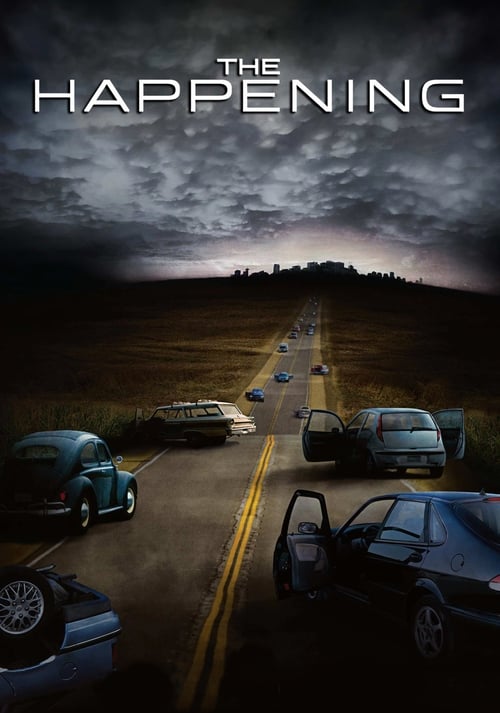
At Central Park in New York, people suddenly begin to commit harmful acts against themselves, such as a woman who pierces her neck with the pin that held her hair together. Simultaneously, at a construction site, workers throw themselves from the scaffolding, crashing to the ground. A mysterious toxin, which seems to have struck the east side of the United States, is inhibiting the survival spirit of humans, and the terrorism alert begins to spread on a large scale. Science professor Elliott Moore lives in Philadelphia, one of the "at-risk" cities, and following the news decides to abandon the city with his wife Alma and his colleague Julian, who brings his daughter Jess with him. Their journey to a "safe" place will naturally be fraught with difficulties.
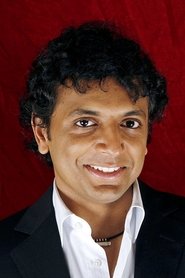
M. Night Shyamalan is the director of colors. Each of his films is characterized by a tone that emits particular and precise sensations and conveys metaphors. "The Sixth Sense" is red, the color of adrenaline and love, the color that strategically returns in the scenes of fear and in the scenes where Bruce Willis comes into contact with his partner. "Unbreakable - The Predestined" is blue, a color that conveys contemplation, spirituality, and, according to Chinese culture, immortality, the same that surrounds the superhero Bruce Willis. "Signs" is green, which means perseverance, a well-established value, but also anger, poison, envy. The perseverance in life that characterizes the family of the former pastor Mel Gibson and the moral value that translates into the reacquisition of lost faith, as well as the envy of the alien invaders towards the planet Earth and the poisonous gas they can secrete.
"The Village" is yellow, a color that corresponds to a condition of awakening and freedom, the same condition towards which Bryce Dallas Howard (dressed in yellow) is heading in her journey through the woods. Finally, blue is the color of "Lady in the Water," a symbol of the sea and the sky, places of good, from which the nymph Story and the prophetic eagle dispenser of salvation come.
"The Happening," the latest work of the Indian director, encompasses all the colors mentioned and adds one more, gray. In "The Happening," the protagonist jealously guards a mood ring, one of those trinkets with a stone that changes color based on the mood of the wearer. The stone is blue and also yellow, becomes red and green: fear, hope, love, poison, everything is mixed and constantly present in this anomalous eco-vengeance, to which gray is added, the color of neutrality of those who prefer to isolate and distance themselves from everything and everyone, just as the protagonists of this very dark moral fable do.
"The Happening" is a difficult and at the same time obvious film; it is a film full of meanings, as is now customary for the director, who this time reflects on the condition of total vulnerability of the human being, but it is also a cannibal film that devours in just 90 minutes a lot of horror, sci-fi, and disaster cinema of the last 50 years. At the base of "The Happening" there is the eco-vengeance like "The Birds" (to which it owes a lot), the fear of the natural environment and what it can be capable of: its unpredictability. But "The Happening" is essentially also a science fiction film, with several references to "Invasion of the Body Snatchers" (the plant threat, people suddenly emptied of their will) and all that catastrophic science fiction that has filled the nightmares of Americans during the Cold War years and is coming back into vogue in the post-9/11 years. Ending inevitably in the bloodiest horror and siege situations that represent both a quote ("Night of the Living Dead") and a self-quote ("Signs").
What surprises is precisely the nonchalance with which Shyamalan deals with gruesome scenes of explicit violence, scenes that earned him the first R-rating in the United States. The film has an opening very similar to our "Solar Flares," a series of suicides culminating irreparably in the spectacularization of violence, as happens in the terrible scene of the man torn apart by lions shown on the video phone and which in a certain sense refers to the scene of the alien's appearance at the party in "Signs." Yet this blood that spurts and these dismemberments, even if they give life to some of the most successful scenes of the film, go against the poetics of the "suggested" to which the director seemed firmly devoted, diminishing that constant aura of tension that hovered over his most successful works.
According to the director himself, what lies at the base of his film, and what is most frightening, is the fact that people begin to behave in the opposite way to what one would expect. Everything starts to work in reverse in the organism of those who breathe the toxin: one begins to walk backward and then does what our instinct of conservation would never allow. But "acting in reverse" is also one of the metanarrative mechanisms of the film. Shyamalan makes a B-movie (horror and disaster) with the language of more authorial cinema, but, as we well know, genre cinema has very precise rules, and the Indian director turns them upside down. To give two glaring examples, in a disaster film, the areas where the tragedy occurs, and consequently less safe, are the big cities. In "The Happening," even if everything begins in New York, the cities, with the classic concrete flows, are much safer than the rural areas! Or in the horror genre, when the characters separate they usually meet their death, in Shyamalan's film being alone or in very small groups is instead one of the factors of salvation. In short, it is noted that a meticulous work on the narrative mechanics has been carried out.
However, "The Happening" also has some flaws, which are mainly concentrated in the construction of the characters and the way they interact with each other. The original script of the film (which was titled "The Green Effect") provided for many more scenes that would have also deepened the relationships between the characters, but due to sudden budget restrictions and some duration cuts imposed by the production, the film underwent some changes. So we have a couple of protagonists in marital crisis, a crisis that has a huge weight on the evolution of the psychology of the characters themselves, but which is not adequately emphasized beyond a few lines. Even the supporting characters are too much "supporting" (think of Julian played by John Leguizamo or the two kids who join the protagonists' journey) and their exits often seem forced. Not to mention incomprehensible characters like the old lady who appears in the finale, who at least stars in one of the highest tension scenes of the entire film.
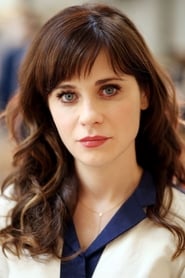
Usually, then, Shyamalan's films have perfect casts, but this time not all the performances are memorable. Mark Wahlberg is a good actor, but he is certainly not up to the likes of Willis, Gibson, Howard, or Phoenix who have characterized the director's other works, while Zooey Deschanel ("A Bridge to Terabithia"), in the role of Alma Moore, seems constantly out of place.
In conclusion, "The Happening" is another fundamental piece in the filmography of one of the most interesting and gifted authors of the new generation, a film that is interesting to follow and offers food for thought, even if the flaws are there (and are evident) and it still does not reach the greatness of the director's first works.
It deserves half a vote more.
Curiosity. Shyamalan is used to making small appearances in his films (even if in two cases - "Signs" and "Lady in the Water" - he has given himself rather important roles), but in "The Happening" he does not appear physically, but his voice can only be heard on the phone for a moment: he is Joey, the presumed lover of Alma!
Comments
Comments (0)




Comments