









The Verdict
Viktor and Elizabeth Frankenstein are two scientists who, inside a laboratory on the outskirts of Los Angeles, cultivate their dream of creating human life from scratch through an avant-garde technique of creating living organs and cells using a 3D bio-printer. Years of experiments see their efforts crowned with the birth of the first man created by the team of researchers, baptized with the name of Adam.
Viktor and Elizabeth Frankenstein are two scientists who, inside a laboratory on the outskirts of Los Angeles, cultivate their dream of creating human life from scratch through an avant-garde technique of creating living organs and cells using a 3D bio-printer. Years of experiments see their efforts crowned with the birth of the first man created by the team of researchers, baptized with the name of Adam. The Creature, of docile appearance and a face with delicate features, behaves like a newborn and quickly establishes a very close relationship with Elizabeth, who is the first to feed it with milk, as is done with small children. Everything seems to proceed according to plan until Viktor and his collaborators discover that Adam has some spots and pustules on his neck that are only the first symptoms of a tumor and a heart attack. The group of scientists then decides, reluctantly, to put down the Creature, which however manages to free itself and leave the laboratory, finding itself alone to face the reality of a surrounding world full of dangers and pitfalls and not yet ready to accept those who are different.
When one sets out to write a review, or any other type of article, about a film concerning the myth of "Frankenstein," the greatest and most frequent risk is repeating things already said hundreds of times or, worse still, falling into banalities and clichés. One could, in fact, dwell on the figure of the young author Mary Shelley and the crazy stormy night in Geneva that led to the writing of the novel, a circumstance effectively told in "Gothic" by Ken Russell; or, another redundant exercise would be to make the usual long list of film adaptations that gave the monster the look with which it entered the collective imagination, starting with the 1931 one by James Whale with Boris Karloff.
But this time it is appropriate to spare these preambles and focus immediately on this "Frankenstein" by Bernard Rose, who, after years of absence from the world of horror (in the past he had stood out mainly with "Candyman - terror behind the mirror"), ventures into a modern adaptation of one of the most exploited stories by cinema and which, precisely for this reason, no longer seemed capable of offering anything new of what had already been said. And yet, the work of the English director, despite some flaws, turns out to be innovative, rich in elements of reflection and, above all, capable of transmitting that strong emotional tension inherent in a character destined not to be accepted by the surrounding world and to destroy everything he loves.
The fresh and innovative imprint decided by Rose is evident from the first frames with the narrator's voice of the monster that begins to express the protagonist's state of mind, who, contrary to what is dictated by tradition, is no longer Viktor, but his Creature shown in all its weaknesses and its amazement and innocence of a being with the consciousness of a newborn.
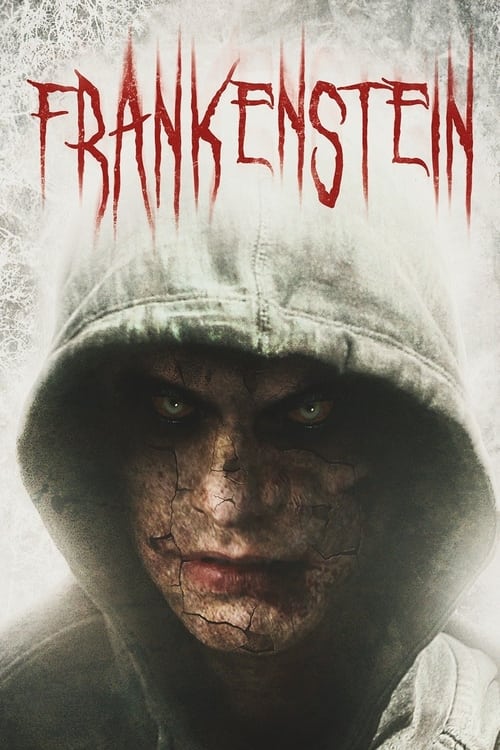
An idea that allows starting a long journey in which Adam discovers an external world made of almost all negative characters, from the corrupt and violent policeman to the locals who attack him and accuse him of drowning a child, passing through the blind musician who becomes his friend only to exploit him as a cane to lean on to better orient himself during his pilgrimage begging for alms. And then there is the prostitute, presented by the same blind beggar, who flees frightened by the appearance of the monster who approaches her to consummate the sexual act, in the same way as Elsa Lanchester in "The Bride of Frankenstein" by James Whale. Of course, Rose does not forget that the story of Frankenstein is primarily a horror and inserts several sequences of strong splatter vein, among which the escape from the laboratory that culminates in the attack on a doctor whose skull is opened and his brain made into pieces. Notable also the underground look of the monster with a hood that reminds one very much of a street thug and a disfigured and torn face really unsettling as the creature of Viktor should be.
Unfortunately, "Frankenstein" is not without flaws, all detectable in a screenplay that places too much in the background the other characters and presents too many holes; the most significant example is the scene in which Adam passes in front of a police car without being noticed while the day before he seemed to be the number one fugitive of Los Angeles.
Despite these empty passages, however, the film is overall well done also thanks to the contribution of a convincing Xavier Samuel in the role of the monster and brilliant at holding the scene almost alone, since the rest of the characters, as said, serve almost as simple background or little more.
The verdict, in conclusion, is definitely positive and three full pumpkins are more than deserved even considering the limited budget available.
Comments
Comments (0)










Comments