

The Verdict
Dr. Frederick Frankenstein is the nephew of the famous Baron Victor, whose infamy he denies to the point of changing his surname to Frankensteen.
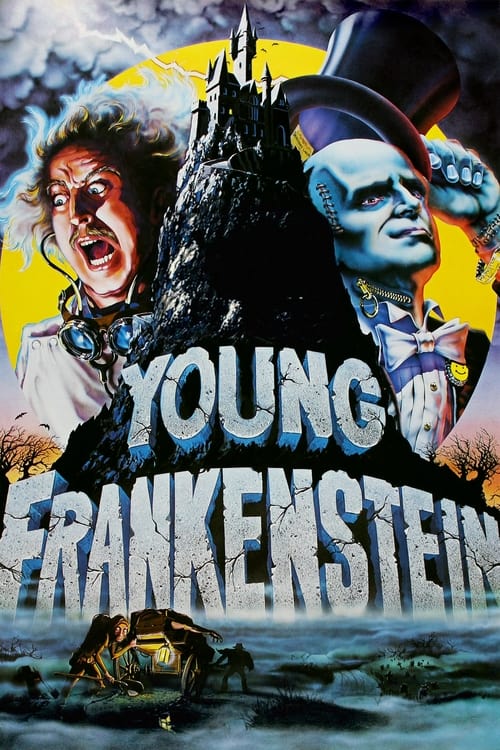
Dr. Frederick Frankenstein is the nephew of the famous Baron Victor, whose infamy he denies to the point of changing his surname to Frankensteen. Frederick is reluctantly summoned to Transylvania, to the castle of his grandfather, for the reading of the will. There he discovers the fateful instruction manual that allows him to bring the dead back to life, which leads him to reconsider the theories of his illustrious relative. With the help of the clumsy hunchback Igor and the beautiful Inga, he creates a Monster.
Ladies and gentlemen, stand up. Here we are in the presence of a masterpiece of comedy cinema, a masterpiece of citationistic parody.
How could one speak, if not of an immortal masterpiece, of a film that for over 30 years has been making thousands of fans die of laughter? A film that half the world knows by heart. Its lines, gags, and scenes, which have become absolutely famous, entertain in the same way whether it's the first or the millionth time you watch it. A film in which everything is perfect: direction, screenplay, performances, comedic timing, sets, settings, costumes, music. A masterpiece, indeed.
"Young Frankenstein" was born from an idea by future star Gene Wilder, a story later refined and perfected by director Mel Brooks. The two received an Oscar nomination for their screenplay.
The film is a jewel of citationism, absolute perfection of details, and extraordinary refinement of references. The entire plot overflows with reverent homages to early horror, which is never disrespected, but rather, through citation, the director declares his affection for a way of making movies that no longer exists.
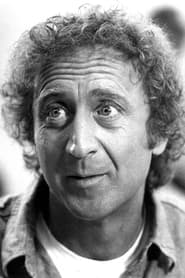
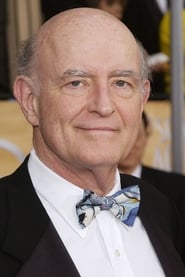
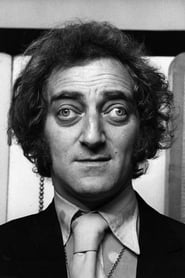
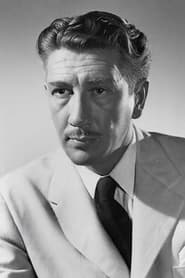
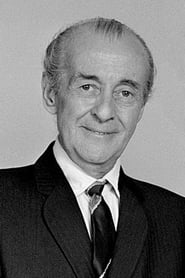
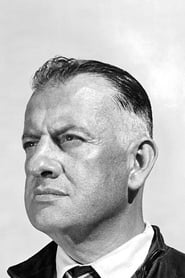
Everything is inspired by the original films, starting clearly with the characters: from Dr. Frederick Frankensteen, the surname adopted by the character in his initial rejection of the uncomfortable kinship, played by Gene Wilder; to Igor (to be read as Aigor), played by Marty Feldman, clearly inspired by the characters, both distinguished by a visible hunchback, of Fritz, the assistant of the first "Frankenstein" played by Dwight Frye, and Ygor, the monster's friend played by Bela Lugosi, present in the third and fourth chapters of the series; to the Monster played by Peter Boyle. Even secondary characters like Inspector Kemp, famous for his mechanical arm prosthesis, a parody of Inspector Krogh present in the third chapter of the saga.
Citationism extended to the technical aspect, as demonstrated by the choice of black and white, at the time considered absurd and crazy by the studios with which Brooks and Wilder fought (even changing production) firm in their decision, a choice that will prove to be one of the many keys to the film's success. Black and white, just like the films the movie is inspired by, namely the Universal Frankenstein saga, which saw the light and great success in the late 1930s/early 1940s (from "Frankenstein" to "Bride of Frankenstein", from "Son of Frankenstein" to "Ghost of Frankenstein"), and which the film aims to be, as we said, homage and not just parody. We will therefore experience moments of absolute mimicry of the era's atmosphere thanks to the same style of framing, cuts between the various scenes, the same film grain, the same lights.
And how not to talk about the faithful reconstruction of costumes, sets, and settings, absolutely perfect? It is enough to think that some sets are the original ones, such as those of the laboratory, made by Kenneth Strickfaden for the "Frankenstein" of 1931, or that the castle in which the story takes place is the same in which Whale's masterpiece was filmed.
The film is what can be considered a perfect parody, most of the scenes, in fact, are inspired by scenes present in the Universal films: from the scene of the monster with the little girl to that of the blind hermit, from the scene of the darts game to that of the final brain swap, and many others. Every little detail is born from the films it pays homage to, such as the gestures of the Monster/Peter Boyle, ecstatic in hearing the violin music, which recall those of the great Boris Karloff, or the hairstyle of the character Elizabeth in the final scene for which the wig worn by Elsa Lancaster in "Bride of Frankenstein" was used.
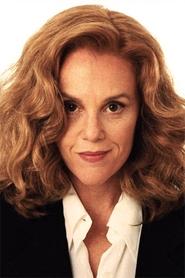
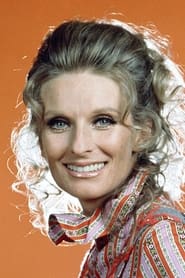
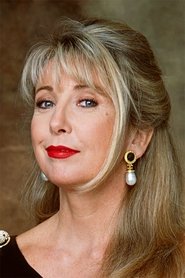
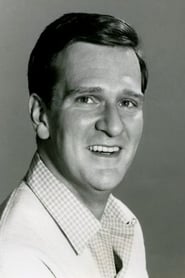
The film is a set of hilarious and unforgettable gags and lines, quoting them all would probably mean quoting the entire film. The result of a great script as well as the genius of Brooks, author of a perfect direction and memorable ideas, and the extraordinary performance of the entire cast from which a magical and winning alchemy transpires; it is enough to know that the director and cast were so entertained by the experience that they added shots with the aim of increasing the production times. The cast deserves mention, naturally, for the extraordinary performances of the trio Wilder, Feldman, Boyle. Gene Wilder gives us a fantastic Dr. Frankensteen whose mere look is pure madness; Feldman with his (A)Igor with the "mobile" hunchback (more than once during the film the hunchback will change shoulder) has created a character entered into the Hall of Fame of laughter. Boyle, despite a character who is mute for almost the entire film, manages with only the expressiveness of his face and gestures to entertain more than many lines. But everyone is great, even the interpreters of the so-called secondary characters: Teri Garr in the role of the beautiful assistant Inga, of whom we remember the famous line, with sexual connotations, about the Schwanstuk; Cloris Leachman in the role of the maid Frau Blücher whose mere name pronounced always causes panic in the horses (Blücher in German means butcher, i.e., the one who slaughtered animals); Madeleine Kahn in the role of Elizabeth, Frederick's fiancée; Kenneth Mars in the role of Kemp, the already mentioned head of the local police with the mechanical arm.
Perhaps not everyone knows that in a cameo appears the popular actor Gene Hackman, namely in one of the many climactic scenes in the role of the blind hermit. The actor was a friend of Brooks and Wilder who at the time spoke to him about the project making him read the script eager for an opinion, Hackman was so impressed that he asked the two for a participation, albeit small, at all costs. He foresaw the greatness of the work and wanted the honor of taking part... well, we can say that he was not wrong.
The film in question is undoubtedly the masterpiece of the career of the cast and the director, and it should be noted that we are talking about comedians of the caliber of Boyle, Feldman, and Wilder and above all a director like Mel Brooks, in short, not the last arrivals.
As for the Italian version, it must be said that the film has enjoyed excellent treatment, starting with the adaptation of the original title from "Young Frankenstein" to "Frankenstein Junior" with which our distributors managed to do no "damage", but above all regarding the translation (and adaptation in the case of untranslatable lines and wordplays) of the dialogues and the dubbing itself, absolutely perfect. As evidence of the brilliant work, we would like to quote the now famous line "The wolf howls, the castle howls" which is born from the adaptation of an untranslatable wordplay between the words "werewolf" (werewolf) and "there" (here), an adaptation capable of becoming a cult line in Italy at least equal to the original one in the USA: a bravo to the genius of the translator. In short, we often have to say bad things (for good reason) about Italian distribution, it can't be a real pleasure to sing its praises when it happens.
It is not a hackneyed phrase or a banal commonplace if we tell you that enjoying this film gives you a clear sensation of a comedy that probably no longer exists, which makes "Frankenstein Junior" even more special than it already is. It makes us smile, for example, to compare the various "Scary Movie", the modern parodies, with the title in question, they would pale at the mere thought of comparison.
In conclusion, aware of repeating ourselves but never tired of remembering, "Frankenstein Junior" is a masterpiece, no other term can be used for a pearl immortal of the comic and parodistic genre. "Frankenstein Junior" is one of those films that everyone knows by heart. If it is true that the importance of a work is also constituted by its survival over time, Mel Brooks' film can look the great cinema myths in the eye. A parody of a classic that has become a classic in its turn. Unmissable.
If you have never seen it.. what are you still doing here?! And in case you have already seen it.. watch it again, you will never get tired of it!
Comments
Comments (0)


Comments