








The Verdict
At the international film school «F. W.
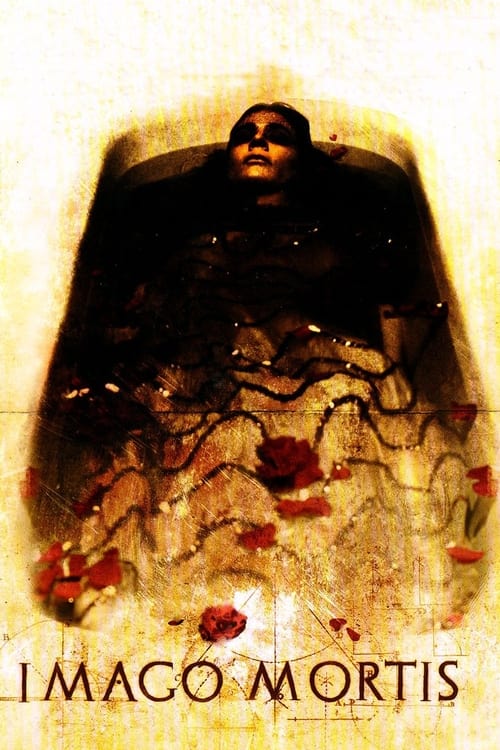
At the international film school «F. W. Murnau», students are facing a series of photography assignments whose outcome will lead to the choice of the winner of the title of «director». Seeking a subject to photograph for the theme «Time», Bruno has a vision in which a young suicide appears to him, just having thrown himself from the high floors of the building. This appearance, however, is not an isolated case, and the young man appears to Bruno several times, almost as if he wants to tell him something. Deciphering the indications of the specter, the boy discovers a box containing the thanatoscopio, a machine created in the 17th century by the alchemist Girolamo Fumagalli and capable of capturing the last image imprinted on the retina of a dying person. From that moment, strange bloody events begin to happen in the school.
For some time, the Italian cinematic landscape seems to be interested again in genre cinema. The first steps were taken in comedy, where attempts were made to give sequels to cult films from the early 1980s, with results that were satisfying for the box office but mostly embarrassing in terms of quality. A few steps have also been taken in the crime genre, which has been devoured by television for years but re-explored in cinema by professionals like Soavi and Placido with decidedly good results. Could horror be missing? Of course not. So between old glories that hit the mark but of which little has been said (Pupi Avati) and others that risk the lynching of fans (Dario Argento and Lamberto Bava), there is also the opportunity for a grand distribution for a quasi-debutant, Stefano Bessoni, who with «Imago Mortis» tries the real coup. He tries, however, because in the end the coup is not successful.
The forty-three-year-old Bessoni, former comic book artist, film professor, screenwriter, and even special effects technician, directs «Imago Mortis» trying to bring together in a single film all his love for cinema. In his second work after «Fragments of Inexact Sciences», a 2005 scientific thriller (unfortunately never released in theaters), Bessoni writes and directs a horror that winks at German Expressionism, the Gothic of the 1960s, the Polanski-style conspiracy and paranoid thriller, the 1970s Italian giallo-horror, and the ghost stories of the last decade. A mix as risky as it is appetizing. Unfortunately, however, not everything goes right in this feature film, and often the defects are more cumbersome than the merits.
The citational and cinephile game is immediately evident and readable on two levels. On the one hand, there is the obvious and nominal citation, the one that immediately makes us recognize the homage to Expressionism with the names of Murnau (the school) and Caligari (the professor's nickname), or to the 1970s genre cinema, especially Argento's, with the names of Nicolodi (historic actress and former companion of Dario Argento, here the name of the school caretaker), Fumagalli (the name of the alchemist that sounds very close to Fulcanelli of «Inferno») and of course the thanatoscopio, which strongly reminds us of the mysterious method used in «Four Flies on Velvet» to unmask the killer. But Bessoni's cinephile desire is then noticed even at a more ipodermic level, in the very formal realization of the work that captures the Gothic atmosphere of some classics of the Hammer and Freda's cinema, especially in the sets, as well as some camera movements and framing that directly refer to the Expressionist lesson. How not to notice then a construction of tension that seems to derive directly from the last generation's ghost story (the verbal citation of «The Sixth Sense» returns here at the skin level), including sound jumps? In short, the passion is all there, it is evident, and the staging is one of those really well-curated and refined. The beautiful thing is that Bessoni also knows how to move very well behind the camera, there is much elegance and a meticulous study for every detail, as well as the choice and use of the, at times dilapidated, sets (taken from a disused hospital and the Lumiq studios in Turin) and the care of the photography, the work of Arnaldo Catinari.
So what doesn't convince in what seems to be a film with all the cards in hand? First of all, the story, or rather, the way it has been developed. The ideas of thanatography and the sometimes meta-cinematic construction were excellent, certainly worthy of attention, but the plot of «Imago Mortis» easily relegates them to the background to privilege the little credible immersion into the madness of the protagonist and the ridiculous ghost story that hovers around. It has been revealed that the screenplay had a very troubled realization, starting from the collaboration of as many as five screenwriters (in addition to Bessoni himself, Luis Berdejo, Richard Stanley, Marcello Paolillo, and Giulia Blasi) and then rewritten in a short time (two weeks, it is said) by Bessoni and the Spaniard Berdejo. And indeed, the confusion that we imagine hovered during the writing phase is felt in the final product where a blatant indecision about the path to take the plot is noticed. There is a too-long preparatory phase that attempts (badly) to deepen the protagonist, his past, and his interpersonal relationships, filled with a «scary» story that plays everything on the useless appearances of the ghost, which annoyingly remind us of Asian ghost stories. Then there is the discovery of this thanatoscopio, and things start to get interesting, but the subject is immediately relegated to support new mental frustrations of the protagonist and again by the intrusive appearances of the ghosts. New change of register, back to the thanatoscopio, but this time it is contaminated with the thriller, with an accomplice killer and motive. So it is very noticeable that the film suffers from schizophrenia, given by a classic soul dictated by the influences of past cinema (will it be the Bessonian soul?) and another devoted to easy scares with the avoidable contamination with the more modern ectoplasmic scare cinema (Berdejo's fault?).
«Imago Mortis» then impressively lacks rhythm, there is a worrying going around in circles that risks making the viewer's eyelids close, an unjustified lack of involvement with the story and identification with the characters. In this sense, probably, the simplification of the story and the reduction of the duration would have helped.
The cast does its job without infamy and without praise; you can recognize the faces of Geraldine Chaplin («Talk to Her»; «The Orphanage»), Francesco Carnelutti («The Da Vinci Code»; «The Hideout») and Alex Angulo («Mutant Action»; «Pan's Labyrinth») and get to know those of Oona Chaplin («Quantum of Solace») and Leticia Dolera («[Rec 2]»). He who does not convince at all is Alberto Amarilla («The Sea Inside»), in the role of the protagonist, always indecisive between sweet smiles to his friend Arianna (even at the least opportune moments) and expressions of a beaten puppy, with big eyes full of tears.
«Imago Mortis» presents itself as a beautiful exercise in style that can make known the aesthetic-technical talent of the director, but suffers from so many narrative «disorders» as to think of a beautiful missed opportunity. Let us hope that little by little Italian genre cinema will really start to produce a good quantity of productively relevant titles so as to become competitive; «Imago Mortis» is only a small step in what is nevertheless a long walk.
Comments
Comments (0)





Comments