



















The Verdict
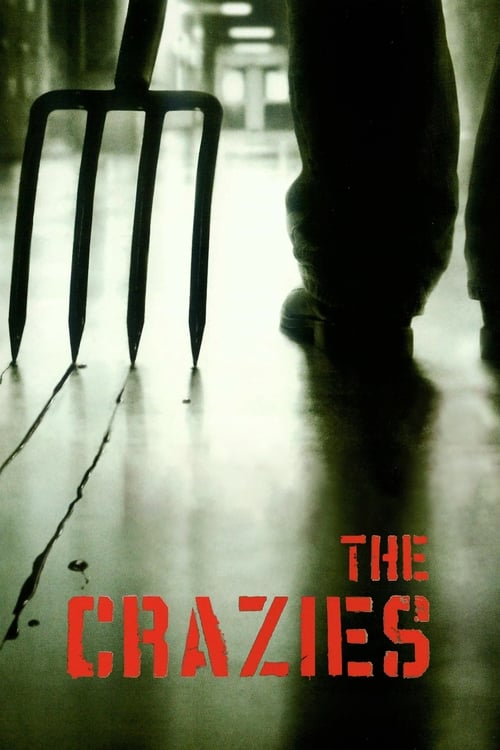
In a quiet rural town in the American Midwest, a strange epidemic suddenly breaks out, turning the infected into mad killers. The cause of it all is a toxin carried on a military aircraft that crashed near the aqueduct supplying the town with water.
In a quiet rural town in the American Midwest, a strange epidemic suddenly breaks out, turning the infected into mad killers. The cause of it all is a toxin carried on a military aircraft that crashed near the aqueduct supplying the town with water. Sheriff David Dutton, his pregnant wife Judy, the young nurse Becca, and the deputy sheriff Russell are among the few still immune to the contagion and seek to find a way out of the town, which in the meantime has been placed under quarantine and besieged by the military who, to implement a containment strategy, are exterminating all citizens, without distinction between infected and healthy.
"The Town Will Be Destroyed at Dawn" 1973 version is a film that, although not among the most successful of George Romero's works, has nevertheless made a mark. It was not a horror film tout court, as the father of "Night of the Living Dead" had already wanted to experiment with his previous film "The Season of the Witch," but rather an anomalous action drama contaminated with science fiction suggestions. Its greatest merit was to give a new point of view and style to the cinematic subgenre of 'contagions,' making it less aseptic than its predecessors and endowing it with a meanness and incorrectness difficult to find in films belonging to this genre: in practice, it gave an exploitative twist to a genre of films that often and willingly belonged to mainstream Hollywood cinema. The success was not among the most memorable in Romero's career, and yet "The Town Will Be Destroyed at Dawn" has been copied and cited countless times in the genre cinema that followed, from "Nightmare on the Contaminated City" to "Planet Terror" through the true clone "28 Days Later," up to the inevitable remake that arrived punctually in 2010 directed by Breck Eisner, precisely at the moment when in Hollywood the rule of 'everything goes' reigns when it comes to horror remakes.
However, we are here to welcome "The Town Will Be Destroyed at Dawn" 2010 version as an excellent remake, a well-made film with several points in its favor, so much so that it proves to be complementary rather than a substitute for the original film. The first comparative example that comes to mind when talking about this film in relation to the prototype is "Dawn of the Dead," another Romero-inspired remake and another excellent film. In Eisner's film, as in Snyder's film, one senses having found the right path to retell the story already known to the viewer, and it is done not by replicating the original film word for word, but simply taking inspiration from it, starting from similar premises to then stage a completely different development. It seems almost as if the town affected by the epidemic recounted in Eisner's film is not the same one in which Romero's work was set, but rather a neighboring town, perhaps the adjacent one that can be seen in a scene from the film; just as the protagonists are not at all the same even though they have the same first name, because they do different things, behave differently, have profoundly different psychologies, and the difference is not dictated only by the era in which the films were produced, but by a real desire to completely change the cards on the table.
First of all, the new "The Town Will Be Destroyed at Dawn" has the merit of a screenplay - the work of Scott Kosar ("Don't Open That Door"; "The Man Without Sleep") and Ray Wright ("Pulse"; "Case 39") - that introduces important variations that have an immediate effect on the film's effectiveness. The 'crazies' are the protagonists of many scenes, all very successful and capable of remaining well impressed in the viewer's mind for the charge of anxious tension they manage to generate; thus, the lack that the original film had, the staging of the danger posed by the infected, is remedied. Moreover, here it is decided to eliminate the scientific point of view and all those 'sensitive' characters who, in Romero's film, incorporated the government counterpart of the crowded multitude of protagonists: Kosar and Wright focus on the uninfected citizens, give very little information about the cause and development of the epidemic, and transform the military into true monsters of cruelty, devoid of speech and morality, as well as a face. Enemies almost more Romero-like than those staged by Romero himself, who here embody an extreme anti-militarism sentiment.
In short, everything convinces in this film, even the characterization of the characters and especially the trio of sheriff-deputy-doctor. The first, played by Timothy Olyphant ("Die Hard - Live or Die"; "Hitman"), is a man deeply disheartened by the provincial climate that surrounds him, a man who does not feel fulfilled but trapped by a rural reality inadequate for his aspirations, the classic big fish in a small pond. His deputy, Russell, played by Joe Anderson ("Across the Universe"; "Rovine"), is instead a simple man, a loyal friend to the end, probably the embodiment of the values of the locus amoenus paradoxically poorly tolerated by David. Then there is Judy, who has the face of the always excellent Radha Mitchell ("Silent Hill"; "The World of the Replicants"), David's wife, from whom she is expecting a child, and the only doctor in the town, a strong and determined woman even if distant from the 'usual' horror film heroine to which we are accustomed. Absent, however, is the character of Becca, played by Danielle Panabaker ("Mr. Brooks"; "Friday the 13th"), the classic statuette at the mercy of events placed there evidently only to make up the numbers.
Strangely, "The Town Will Be Destroyed at Dawn" does not follow the splatter trend of recent years and, while boasting a series of violent scenes with a strong visual and emotional impact, prefers to focus more on building tension rather than gratuitous splatter.
One of the most successful remakes of the immense post-2000 wave.
Curiosity. The actress Lynn Lowry, who in the 1973 film played Kathy, the girl who slowly goes mad accompanied by her incestuous father, also appears in this remake in the fleeting role of the unsettling woman on a bicycle who crosses the deserted streets of the town under the sheriff's gaze.
Comments
Comments (0)












Comments