
















The Verdict
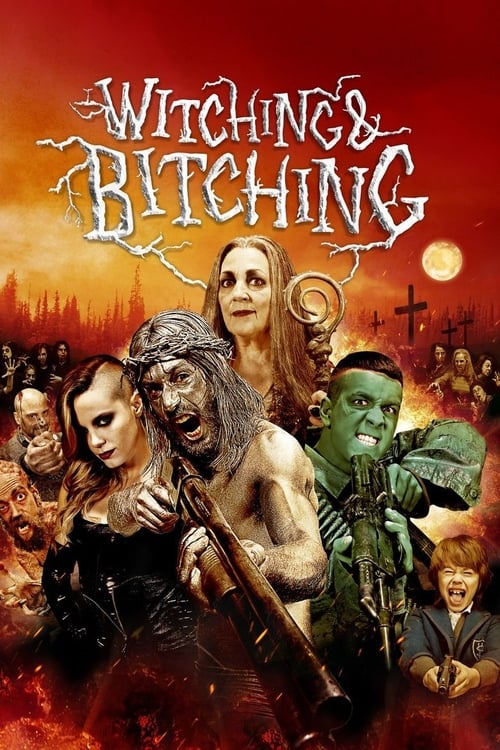
A group of masked men assaults a gold shop in the middle of Madrid's main square: these are José, a divorced father in open conflict with his ex-wife, Tony, his gangster boy accomplice, Manuel, a taxi driver taken hostage during the chaotic escape from the police, and Sergio, José's young son.
A group of masked men assaults a gold shop in the middle of Madrid's main square: these are José, a divorced father in open conflict with his ex-wife, Tony, his gangster boy accomplice, Manuel, a taxi driver taken hostage during the chaotic escape from the police, and Sergio, José's young son. In an attempt to reach France to save their skins, the four are forced to cross the small town of Zugarramurdi, encountering a strange group of more or less fascinating women who turn out to belong to a family of witches who have always been at odds with the male gender. José and his companions soon find themselves powerless pawns in a superior diabolical plan.
From Spain with fury. Álex de la Iglesia è – with all probability – a name destined to become a legend in the world of Basque cinema, and not only. Once upon a time there was a dense forest, a couple of sinister female figures wandering around, an enormous mansion apparently abandoned and voilà, the fairy tale is ready, seasoned with a massive dose of pitch-black humor and jarring irony, served after a slow but precise cooking between boiling cauldrons and frog bones.
After about two years of wandering in search of a solid springboard in our beautiful country, with Officine UBU Las brujas de Zugarramurdi finally arrives on Italian big screens, bringing with it all that remains unsullied in the dimension of the horrid. Or rather, the road is always that: it is instead the way, masterful and irreverent, with which the director conducts the developments of this film that has nothing to envy to the cinematographic standards of the genre. With promising beginnings behind him (Azione Mutante, financed by Almodóvar) and undoubtedly known titles (The Oxford Murders, Ballata dell'odio e dell'amore), De la Iglesia certainly proves to be up to expectations. An auteur horror trash that coagulates one of the oldest problems between human blood and flying brooms of pseudo-erotic character, namely the imperishable clash between the sexes. The most disparate contaminations appear on the screen – from the most classic horror element, through demented comedy, to the action movie – following each other in a crescendo of surreal disguises, tight dialogues and images with a visionary taste that blend well with the aura of ancestral sacrality with which the filmmaker signs the film, so much so as to feel strongly the call to the ancient uses and customs traditionally linked to his homeland.
One must not forget, in fact, that the Zugarramurdi of the title actually exists: a village of at most two hundred souls hidden in the heart of Navarre, not far from the French border marked by the Pyrenees. Undeniable is the reference to the American Salem and the episodes of witchcraft connected to it, since in this region of Spain there are news of terrible bonfires and purges that took place around the seventeenth century. The figure of the witch, always significant in the collective imagination, is presented here as a stepmother and avenging force, in full contrast with a vile and derided male world, in an attempt to highlight that gap that – despite the continuous and sometimes a bit redundant struggles for gender equality – remains constant over time due to rigid positions or inability to react. The supernatural atmosphere thus becomes a means of updating in an ideal program advocated by the director: accusations of misogyny do not fail, but have been skillfully avoided by statements concerning the feature film itself by De la Iglesia. After all, generalizing on a proverbial delicate issue would only make its contents banal. It is the push to reflection the driving engine of the entire film, the one that has the task of tearing the apparent veil of the “typification” thanks to clearly contrasting actions and jokes steeped in sarcasm.
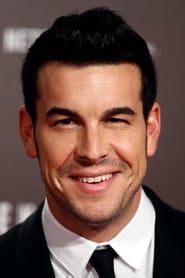
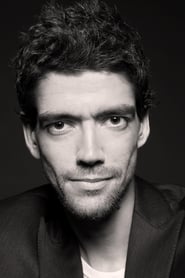
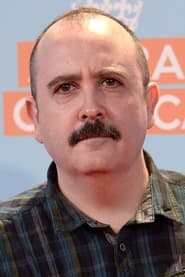
With a stellar cast that includes well-known faces in Iberian homeland – among which stand out the hilarious trio Hugo Silva/Mario Casas/Jaime Ordóñez, the young Gabriel Delgado, the beautiful Carolina Bang and the timeless Carmen Maura – flanked by a crown of equally valid colleagues (first among them Terele Pávez, Pepón Nieto and Javier Botet), with a screenplay structured in a relentless rhythm reflected even in the intense use of the camera, with special effects too refined for such a well-tested grotesque cinema, enhanced by a strongly suggestive soundtrack, the film delves into the dark shadows of archaic sacrificial rites awaiting an epilogue that is paradoxical in parts. Life is a farce that not everyone manages to unmask in the end.
Comments
Comments (0)











Comments