
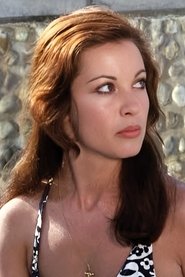

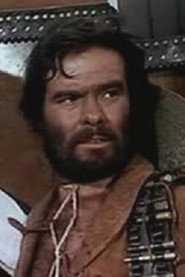



La Révolte des morts-vivants backdrop
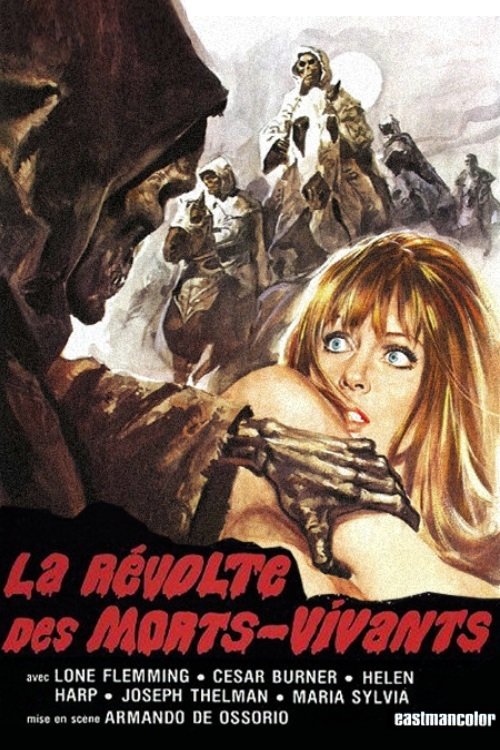
La Révolte des morts-vivants poster

LA RÉVOLTE DES MORTS-VIVANTS

La noche del terror ciego

1972 PT HMDB
avril 10, 1972

Au treizième siècle, les Templiers sont condamnés à être pendus (et à se faire bouffer les yeux par des corneilles accessoirement) par le roi d'Espagne pour sacrifices rituels et adoration du Malin. Ils reviennent pourtant quelques siècles plus tard, zombifiés mais toujours en quête de chair fraîche…

Réalisateurs

Distribution

👍 👎 🔥 🧻 👑

Commentaires

Commentaires (0)
Equipe

Production: José Antonio Pérez Giner (Executive Producer)Salvadore Romero (Executive Producer)
Scenario: Amando de Ossorio (Writer)
Musique: Antón García Abril (Original Music Composer)
Photographie: Pablo Ripoll (Director of Photography)

CRITIQUES (1)

Giuliano Giacomelli
Virginia est une jeune femme charmante qui s'apprête à partir en vacances avec son compagnon, Roger. Avant qu'ils ne puissent commencer leur voyage, ils rencontrent Betty, une vieille amie de Virginia, et l'invitent à passer les vacances avec eux. Pendant le voyage en train, Virginia commence à nourrir une série de jalousies envers la complicité qui s'est formée entre Betty et Roger. C'est pourquoi, à l'insu de ses compagnons de voyage, elle décide de quitter le train en marche. Virginia, descendue dans une terre désolée et abandonnée depuis des années, commence à errer jusqu'à trouver un vieux bâtiment abandonné situé près du cimetière. Le soleil est presque couché et Virginia décide d'y passer la nuit. Mais après le coucher du soleil, quelque chose de étrange se produit dans le vieux cimetière : une horde de templiers zombies, excommuniés et tués par l'Église après leur retour de Terre Sainte, accusés de satanisme, reviennent du monde des morts pour apaiser leur soif de sang humain. Après la découverte du cadavre de la pauvre Virginia, Roger et Betty décideront d'enquêter pour voir ce qui se cache derrière le meurtre brutal de leur amie. « Les tombes des ressuscités aveugles » (« La noche del terror ciego ») n'est autre que le premier film, réalisé par le célèbre réalisateur espagnol Amando De Ossorio (qui se consacrera principalement à l'accomplissement de toute la série), sur la célèbre saga dédiée aux Templiers zombies et aveugles de surcroît (car on dit qu'après leur pendaison, les corbeaux leur ont arraché les yeux). Le film, daté de 1971, est considéré par beaucoup comme un petit « culte » et a réussi à se créer un cercle de fans qui ont commencé à vénérer la saga, qui a gagné avec le temps une certaine renommée. En réalité, il s'agit d'un film assez surévalué et qui ne mérite pas tous les mérites pour s'attribuer le titre de « culte ». En effet, il présente de nombreux défauts qui ne trouvent pas toujours accueil et justification dans le fait qu'il s'agisse d'un film réalisé avec un budget très limité, car ces problèmes sont principalement dus à des idées assez malheureuses. Le scénario se révèle assez faible et fragile, peu capable de captiver l'attention du spectateur qui risque, pendant la première heure du film, de s'ennuyer et de s'endormir. De plus, il présente trop de longueurs capables seulement d'alourdir le tout, soulignons ensuite la présence de certaines idées absolument déplacées, utiles seulement à allonger la sauce (voir la scène où, sans aucune raison, la fille revient à la vie). Les dialogues sont également faibles, mais surtout, les performances des acteurs qui semblent tous assez déplacés et peu capables de porter la scène ; ils ne sont pas aidés non plus par une bonne caractérisation des personnages, qui au contraire se révèle assez approximative et peu crédible : il y a de nombreuses séquences où les personnages se comportent de manière peu naturelle, comme la scène initiale où Virginia, toute seule et perdue, décide de passer la nuit, avec beaucoup de désinvolture, dans un bâtiment abandonné depuis des années et adjacent à un cimetière... combien de femmes, dans la vie réelle, auraient fait une chose pareille ? Le département gore laisse également à désirer car il y a peu (presque rares) de séquences qui aboutissent au sang (à noter seulement la torture efficace, infligée à une jeune donzelle, montrée pendant la narration du passé sur les Templiers). Mais à fasciner, et capable donc de redonner le sourire au spectateur, c'est le look fascinant des Templiers Zombies (et ce sera justement celui-ci le cheval de bataille de toute la saga d'Ossorio) qui pourraient sembler à un œil inexpérimenté un peu ridicules ou trop faux mais qui seront sûrement du goût de tout vrai amateur du vieux film d'horreur. Pour donner de la vitalité au film, outre le look efficace des zombies (sympathique de voir des morts-vivants à cheval), c'est aussi le beau et insolite final, seul moment où le scénario parvient à gagner un peu de rythme, qui grâce à une touche innovante et une juste effervescence, résulte sûrement d'anthologie. En conclusion, « Les tombes des ressuscités aveugles » est un film d'horreur un peu trop surévalué avec de nombreux défauts mais qui n'est pas exempt d'aspects positifs. Il aurait pu, et même dû, offrir quelque chose de plus.
👍 👎 🔥 🧻 👑

Commentaires

Commentaires (0)
AVIS DE LA COMMUNAUTÉ (3)

tmdb17996075

7 /10

"La noche del teror ciego", tells the story of a legion of evil warriors who lived through the 13th century, known as the Templar Knights. These warriors wanted to live forever and the way to achieve that, was by drinking human blood and offering sacrifices to Satan. So The Templar Knights would gladly torture and use innocent maidens for their rituals and please their master. However, their atrocious deeds come to an end, when the Holy Inquisition decides to punish them, by hanging them in public. Several centuries later, in the 1970s, two girls named Virginia and Betty go on a trip together with a guy named Roger. After a pathetic soap opera incident, Virginia gets jealous of her friends and jumps off the train. Landing on a strange place, she finds shelter in some kind of forsaken fortress in ruins. Unfortunately, that place is also a shelter for some hideously frightening creatures that become alive during the nightfall until dawn. Those creatures are, in fact, the Templar Knights, who come back to life as zombies every night.

Director Armando de Ossorio didn't try to please a blood-thirsty audience that wanted brutal killings for an hour and a half. For the contrary, the body count may be humble, but "La noche del terror ciego" takes the zombie subgenre to a different level, in which the creatures are more dark, mysterious and frightening than gory and brutal. If you are a zombie lover, you're probably going to love this film and if you are not, you might be pleasantly surprised by this.

I have read on the message boards that there were a lot of gore lovers dissatisfied by the lack of blood and guts, but I think this film contains a pretty well-brought-up amount. My favorite scene in the entire movie is one in which one of the girls is trying to hide from the zombies. Since the zombies are blind, the girl stays in the same room with them and the only thing she can do to remain undetected, is staying absolutely quiet. But since she's so afraid and tense, her heart starts beating more and more quickly and all of a sudden, we see a close-up of her chest, pointing out that she's on the verge of either fainting or running for her life. The living dead knights hear those heartbeats and turn to the poor girl, who has no choice but finally running away in fear, trying to avoid the nightmarish creatures. This was perhaps one of the most atmospheric situations I have ever seen in a zombie flick. To be honest, most of the chasing sequences were practically faultless, but that one in particular had to be remarked. Reading the message boards, I also came across some people who also complained about a few unresolved questions like: "How could the zombies hear?", "Where did they get the horses?" "How come they were so strong if they were only skeletons?". The answer to all those questions could be: "this is a horror movie about living dead creatures and it's really not supposed to be realistic". To be honest, I think the zombies were more believable than the pointless lesbian story between the two girls, which didn't serve a purpose to the story. Then again, most couples in horror movies make no sense, anyway.

CinemaSerf

CinemaSerf

6 /10

It's fair to say that "Virginia" (María Elena Arpón) isn't the sharpest tool in the box when she gets fed up with the flirting of her travelling companions "Roger" (César Burner) and "Betty" (Lone Fleming) and abandons their slowly moving Portuguese train in the middle of nowhere. Fortunately, she stumbles upon what looks like a ruined monastery and having built a pretty impressive fire from a few twigs, settles down in her sleeping bag for a good night's sleep. No chance. Barely have her eyes closed than things are going bump in the night. The bodies of the condemned Knights Templar buried on the site resurrect themselves and are are thirsty! Feeling a little guilty next day, her two friends try to trace her movements but are ill-equipped for what they find - especially when their horses take flight. Soon the police, some local smugglers and a comically staged cat-fight provide a little entertainment as these wraith like versions of Richard the Lionheart continue to wreak havoc... It's actually quite fun, this film. By no means can it be called good and the acting (and writing) is pretty woeful, but it does make use of it's creepy monastic surroundings quite well, with loads of creaking and dimly lit passageways. There's some fun to be had in a mannequin factory (they don't react too well to fire) too, and there's loads of hysterical screaming - from both sexes. It's way too long with far too much padding, but it's still quite an entertaining horror that can make you laugh.

Wuchak

Wuchak

6 /10

“A pale horse! Its rider was named Death, and Hades followed close behind him”

After a young woman in Portugal (María Elena Arpón) has a horrifying experience at some mysterious ruins by a remote graveyard, her two friends try to find out what happened to her (Lone Fleming and César Burner). Big mistake.

A Portuguese/Spanish production, “Tombs of the Blind Dead” (1972) was originally called “The Night of the Blind Terror” (translated from Spanish). It spawned three sequels in the next three years: “Return of the Blind Dead,” “The Ghost Galleon” and “Night of the Seagulls.” “The Ghost Galleon” is the only other one I’ve seen, which is wisely a standalone flick.

This is slightly superior. The story is interesting, but it basically rips off plot elements of the Dracula story, just replace Harker with Virginia and the undead Count with the Templar mummies. The structure also brings to mind “Psycho” and obviously so. Nevertheless, the Iberian locations are great, the characters interesting, the women lovely, the antagonists creepy and the locomotive a nice addition.

Unfortunately, I lost a little respect for the flick when the train conductor's assistant tries to help a distraught female get on the train. You’ll see what I mean. Then there’s the issue of the horses. I guess you’re not supposed to overthink things.

While watching the skeletal Templars riding horses, I couldn’t help think of the apes on horses in “Planet of the Apes.” Some distributors thought the same thing and so reedited the film, releasing it as “Revenge from Planet Ape,” to take advantage of the popularity of that franchise in the 70s. It played at various theaters in America and even Guam.

It runs 1 hours, 41 minutes, with an edited American version called “The Blind Dead” butchering it to 1 hour, 23 minutes. It was shot in Portugal (Lisbon & places nearby: Palmela, Setúbal, Sesimbra and Estoril) and Spain (Monastery of Pelayos in Madrid).

GRADE: B-

Avis fournis par TMDB