











The Verdict
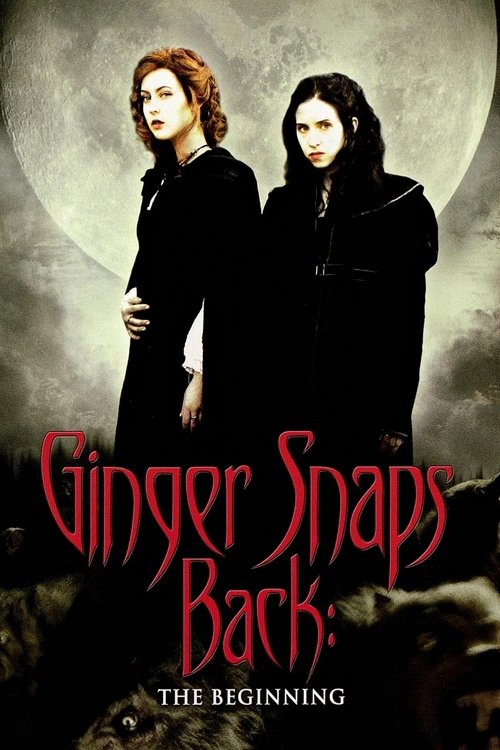
Canada, 1815. Two sisters, Ginger and Brigitte, wander in the forest in search of shelter.
Canada, 1815. Two sisters, Ginger and Brigitte, wander in the forest in search of shelter. Brigitte falls victim to a bear trap and is rescued by a young Indian who tends to her and leads her, along with Ginger, to a fort inhabited by a group of merchants waiting, for months now, for reinforcements and supplies. The two girls are immediately taken in dislike by most of the men, who see them as bearers of misfortune, with the exception of the captain, who has recently lost his wife and son, devoured by mysterious creatures living in the forest and periodically attacking the fort. During one night, in a limbo between dream and reality, Ginger is bitten by a strange being that lives in the basements and gradually begins to show signs of lycanthropy. When the inhabitants of the fort realize that the girl has been contaminated, they force her to abandon the refuge. Ginger and Brigitte move away from the fort, but a doomed fate will bring them back to that place.
Released right in the middle of the summer season, that is, at a time when the Italian spectator prefers to stay far from the cinema, this "Licantropia" is nothing more than the third and, for now, last chapter of the "Ginger Snaps" saga; although Italian distributors have completely and inexplicably ignored the second chapter, and have not distributed the first, neither in theaters nor for home video, which had to settle for a few fleeting appearances late at night on Rai channels.
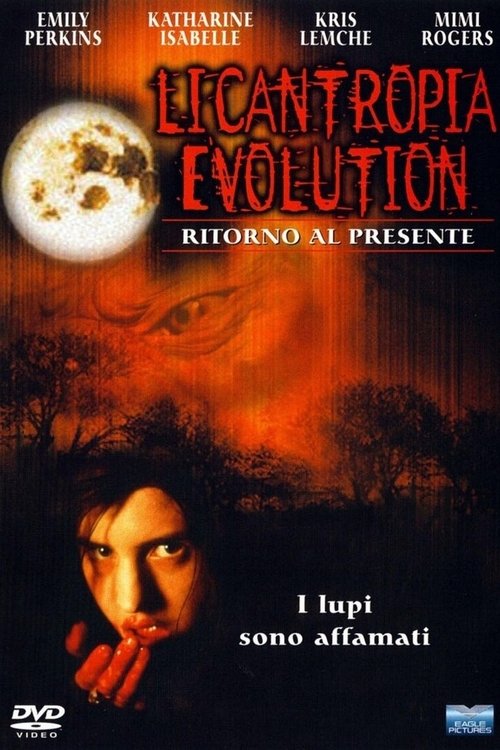
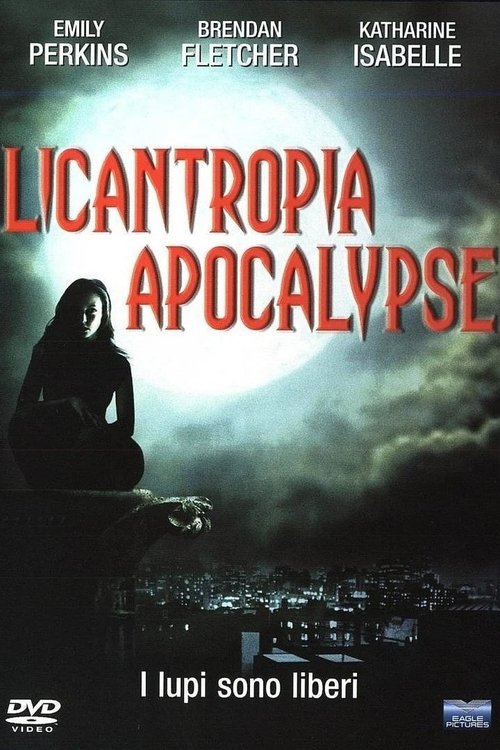
"Licantropia", in reality, is a prequel to the first "Ginger Snaps" and proposes the same situation and plot as the previous films, with the two sisters (played again by Katharine Isabelle and Emily Perkins) facing the curse of the werewolf; although in this case the era and setting change: instead of the classic provincial town, the action is moved to a fort in 1800s Canada, a place and time that bring to mind the beautiful film by Antonia Bird "Ravenous", with which it also shares the presence of the wendigo myth. Another clear reference is to "Phenomena" by Dario Argento, which is explicitly paid homage to in one sequence (I leave it to you to discover the surprise).
"Licantropia" benefits from a suggestive fairy-tale atmosphere, characterized by a perpetual and unsettling mist that surrounds everything and everyone; the settings are fundamental: the exteriors (the forest) are places to fear due to the presence of werewolves, but the real threat comes from within, from the emotional tension and the strong bigoted and racial prejudice that lives among the inhabitants of the fort, as well as the creature that wanders in the basements of the fortress, comparable to the evil that is born and grows within Ginger, an ancient and folkloric evil that leads to a destiny already written and anticipated by the visions of an old shaman.
Unfortunately, the film in question also brings several limitations. Mainly, the film appears rather weak and disappointing in the final epilogue: from the moment the two sisters flee the fort and go to seek the shaman, the film seems to jam, mixing the story of Ginger's curse with the mystical world of Native American culture, punctuated by visions and premonitions. The final climax, which involves the long-awaited confrontation between werewolves and humans, leaves a bittersweet taste, especially due to the almost total absence of splatter or gore scenes, which were expected and would have certainly helped. The werewolves, strangely (and fortunately, I would add), are made without the use of digital effects, but with old mechanical tricks, 80s style, which, although in some cases crude, appear certainly well-made and fascinating.
In conclusion, "Licantropia" is a good film that benefits from an engaging first part and appreciated old-style effects, but is marked by a weak second part and a final climax not up to expectations. It deserves a viewing.
Comments
Comments (0)












Comments