L'Occhio che Uccide backdrop
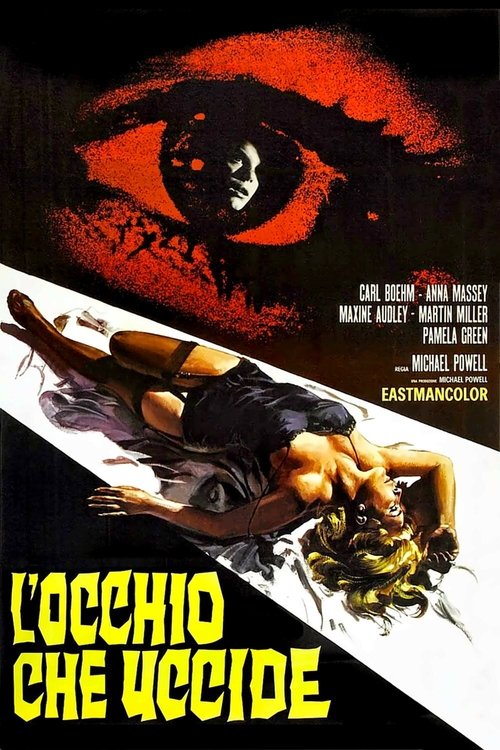
L'Occhio che Uccide poster

L'OCCHIO CHE UCCIDE

Peeping Tom

1960 • GB HMDB
aprile 7, 1960

Mark Lewis è un operatore cinematografico, schivo e introverso, che sogna di diventare regista e che per arrotondare lo stipendio realizza foto osé per conto di un giornalaio.Mark svilupperà una forma acuta di voyeurismo: un'autentica ossessione per lo spiare gli altri riprendendoli con la sua cinepresa da cui non si separa mai...

Cast

Commenti

Troupe

Produzione: Michael Powell (Producer)
Sceneggiatura: Leo Marks (Screenplay)
Musica: Brian Easdale (Original Music Composer)
Fotografia: Otto Heller (Director of Photography)

RECENSIONI (1)

Marco Castellini

•
Mark Lewis, un giovane assistente operatore, con la scusa di voler realizzare un documentario trascorre il tempo libero uccidendo ragazze. Per compiere i suoi omicidi si serve di un’attrezzatura cinematografica “ritoccata” appositamente: un cavalletto che cela una lama e una macchina da presa in modo da cogliere gli sguardi delle vittime al momento della loro fine… È stato definito “una pietra miliare nella storia dei serial-killer movies”; realizzato lo stesso anno di “Psycho” il film di Powell riesce a mettere in scena una terrificante tecnica omicida connessa all’idea stessa del cinema, con la telecamera allo stesso tempo mezzo di ripresa e strumento di morte. “L’Occhio che Uccide” (in originale “Peeping Tom”) all’epoca della sua uscita non ottenne alcun successo: massacrato dai tagli della censura e praticamente ignorato dal pubblico il film fu smontato dalle sale dopo neppure una settimana di programmazione. Solamente nel 1979 grazie al regista Martin Scorsese, che pagò personalmente le spese per la ricostruzione della versione integrale e per la riedizione del film, l’opera fu riscoperta e rivalutata. Nel ruolo del nevrotico e timido protagonista troviamo un credibilissimo Karl Boehm.

Commenti

Dove Guardare

Streaming

Amazon Prime Video Amazon Prime Video
Cultpix Cultpix
Raro Video Amazon Channel Raro Video Amazon Channel
Amazon Prime Video with Ads Amazon Prime Video with Ads

Noleggio

Amazon Video Amazon Video
Google Play Movies Google Play Movies

Acquista

Amazon Video Amazon Video
Google Play Movies Google Play Movies

RECENSIONI DALLA COMMUNITY (2)

John Chard

John Chard

10 /10

Fear and the Nervous System.

Peeping Tom is directed by Michael Powell and written by Leo Marks. It stars Carl Boehm, Moira Shearer, Anna Massey, Maxine Audley and Brenda Bruce. Music is by Brian Easdale and cinematography by Otto Heller.

A famous (infamous) film for a number of reasons, not least that the fall out from its release effectively finished the career of the great Michael Powell. Interestingly now, still some 50 plus years later, there are still people discovering the film for the first time and not being sure what they have just watched; much like many critics back in 1960 as it happens! While horror seekers quite often come away disappointed that they haven’t seen a Jack the Ripper bloodshed movie. Apparently they see the words serial killer and expect gore and terror on tap.

As fans of the film will attest, Peeping Tom isn’t that sort of serial killer film, it’s a fascinating piece of work. A cunningly crafted observation of a darkened mind, of voyeurism, loneliness and child abuse. From the opening strains of Easdale’s skin itching piano the mood is set, then the brilliantly lurid colour scheme comes into play as troubled Mark Lewis (Boehm) hones in on a victim, a lady of the night about to be filmed in the throes of death. It’s the start of Powell and Marks’ ploy to make us complicit in Lewis’ actions, and then the makers challenge us to sympathise with him as his back story is revealed and also as he struggles with his affections for Helen Stephens (Massey) in the present day.

There is also a sly aside to the movie industry running through the picture, something which no doubt irked critics and film distributors back in 1960. There could maybe be an argument that the trauma and psychological thematics at work that underpin the plot are a little dated now? But what is still relevant is the film making – voyeurism angle as we today are constantly fed reality TV for entertainment purpose. The production is across the board grade “A”, the performances highly effective, with the unfairly maligned Boehm perfect as Lewis, the actor even providing shadings of Peter Lorre at times. Heller’s bold colour photography is disgustingly atmospheric, Easdale’s music a stalking menace and the sound department really come up trumps. Perfect.

Then of course there is Powell himself, deeply hurt by the savaging he received when Tom was released, it’s nice to note that before he passed away in 1990 he would see the film become a highly regarded piece of film making. It and he deserves praise, his direction is conceptually daring, his framing of Lewis methodical, and of course his camera is our eyes and ears, uncomfortably so. A remarkable and genius film. 10/10

CinemaSerf

CinemaSerf

7 /10

I can recall being genuinely scared when I first saw this film in the early 1970s. Young women are being found murdered. What makes their crimes especially heinous is the look of sheer terror found on their faces - and that is what is further perplexing the pursing Scotland Yard detective "Gregg" (Jack Watson). Meantime, actress "Vivian" (Moira Shearer) is filming her new movie and on the set is the camera-obsessed "Mark" (Karlheinz Böhm) who rents out the bottom part of his sprawling house to a group of youngsters. Usually keeping himself to himself, he is befriended by "Helen" (Anna Massey) and soon a relationship, of sorts, develops as she takes an interest in both him and his films. When tragedy occurs at the studio, the police investigation initially includes the sound stage crew, and gradually the plot unfolds in a dark and menacing fashion. Böhm and Massey are great here and under Michael Powell and Otto Heller's creative direction and photography, deliver us an intimate and well paced story that takes it's time, but does so in a cumulatively effective fashion. The dialogue is disarmingly potent too - there is something almost childlike about "Mark" and almost maternal about "Massey", illustrative of the underlying psychology of the story. On a dark night with the rain battering against the window, this is about as good as cinema gets.

Recensioni fornite da TMDB