


The Verdict
Mari, to celebrate her seventeenth birthday, decides to go with her friend Phillis to a concert that the “Bloodlust” will hold in the city. Upon arrival, the girls, looking for some smoke, encounter a gang of criminals who have just escaped from prison and are led by the murderer Krug Stillo.
Mari, to celebrate her seventeenth birthday, decides to go with her friend Phillis to a concert that the “Bloodlust” will hold in the city. Upon arrival, the girls, looking for some smoke, encounter a gang of criminals who have just escaped from prison and are led by the murderer Krug Stillo. The two friends are kidnapped and taken to the forest adjacent to Mari's house, where the four criminals torture, rape, and then kill them without any mercy. To spend the night, the criminals decide to ask for hospitality in a nearby house, unaware that they have ended up in Mari's house, where the parents, after learning the painful truth, will take revenge in the most brutal way...
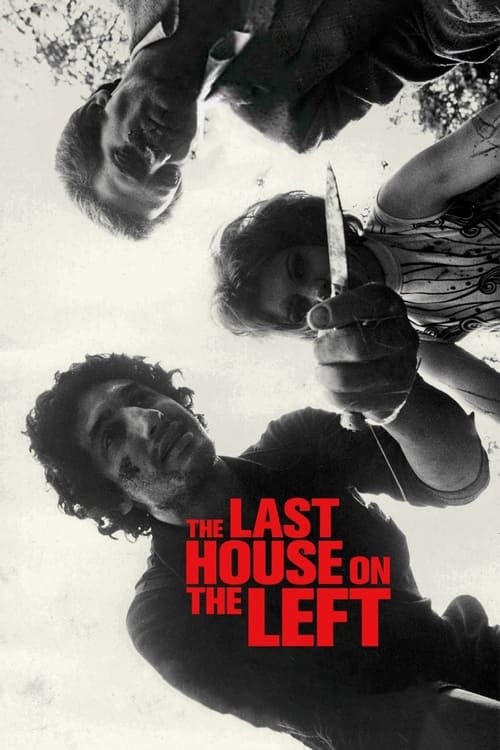
Directorial debut of one of the leading figures of new American horror, Wes Craven with “Last House on the Left” directs one of the most controversial, debated, and disturbing films in cinema history: a true innovator, which with this film will pave the way for a subgenre very popular between the ’70s and early ’80s, the so-called “rape & revenge”.
The film in question had a very troubled fate, mainly linked to the shocking contents and the absolute documentary realism with which it was made, to the point of being banned in some countries (England and Australia) and boycotted by the masses until the disappearance of the uncut version from the scene. Today, in fact, it seems that there is no really uncut version of the film (originally 90 minutes long, while today the most complete version is the Dutch one at 84 minutes) since at its release the cinema owners
removed some sequences at will and threw away entire parts of the film that they considered uncomfortable, thus creating an infinite number of versions of different lengths. Despite this, the film had a great public success, partly due to the title and the promotional campaign.
Initially, a different working title was chosen for the film, “Night of Vengeance”, which turned out to be low-impact. Thus, in the indecision, at the time of release, the film was distributed in various cities with as many as three different titles: “Krug & Company” (from the name of the leader of the criminals), “Sex Crime of the Century”, and “The Last House on the Left”. In the cities where the film was distributed with the first two titles, almost no one went to see it, while where it was called “The Last House on the Left” it broke box office records, helped also by a clever and impactful promotional campaign (very much in the style of William Castle) that read the phrase: “If you don’t want to faint, keep repeating to yourself: It’s just a movie, it’s just a movie, it’s just a movie...”.
Regarding the title, Craven himself explained that it was successful because it was more suggestive and meaningful, even if in the end it had little to do with the story of the film: “last” represented the final destination, death, the end of everything; while “left” took on an esoteric meaning (since the left represents the evil part of man) and a political one,
considering that in the early ’70s society was still immersed in the aftermath of the flower children culture, who defined themselves as “left-wing”.
“Last House on the Left” is a film strongly influenced by what characterized the culture of those years, as demonstrated by its character so full of violence and degeneration. At the beginning of the ’70s in the independent film environment there was a great desire to transgress, to do new things, to show what no one would have ever dared to show. Porn, for example, had been widely accepted with the great success of “Deep Throat”, and Kubrick had made us participants in the atrocities and cruelties of which a “normal” boy from the sleepy bourgeoisie was capable with his “A Clockwork Orange”.
Wes Craven, supported by the father of “Friday the 13th” Sean S. Cunningham (here producer), does nothing but show the viewer a series of atrocities committed by a well-assorted group of criminals.. but he does it in a realistic, direct way, leaving nothing to the viewer’s imagination. According to the director himself, the audience would
accept this violence as they were accustomed to the horror shown daily by the news on Vietnam, a horror documented with coldness and never complacent of itself.
The film also addresses other representative themes of the era, including feminism, which in those years was leaving a great mark on a society that had been strongly misogynistic: in Craven’s film we see a girl, Sadie (Jeramie Rain), very emancipated and sexually free, capable of committing the same atrocities as her male friends; as well as Mrs. Collingwood (Mari’s mother, played by Cynthia Carr) who takes center stage in one of the most terrifying scenes of the film: the castration by biting one of the criminals.
Sex and death are therefore the guiding themes of this horror gem, but other recurring themes can be identified that will then characterize all of Craven’s future filmography: the family as a den of violence and repression (which will then be one of the most
important themes of the subsequent “Hills Have Eyes”), in particular the metaphorical criminal family of Krug represents violence, while the actual Collingwood family represents the repression of sexual experience (Mari is a virgin) and violence (the final explosion of the murderous impulse of the Collingwood couple). Another theme found in the film is the ineptitude of the authorities, who here, represented by a caricatured sheriff and his deputy, take center stage in demented comic scenes. Last, but not least, is the dream dimension so dear to the author and which will reach its peak in “Nightmare – From the Depths of the Night”. Even in “Last House on the Left” there is a nightmare that represents, according to the director, the most effective scene of the entire film, in which we witness a dental operation performed with a hammer and chisel!
Finally, it is worth mentioning the suggestive soundtrack curated by David Hess, the actor who plays the murderer Krug Stillo, in which stands out the beautiful “Wait for the Rain”.
In short, with Craven’s first film we are faced with a work of undeniable charm, crude,
rough in style, which is presented as a punch in the stomach of the viewer, who may appreciate the film or not, but will certainly not remain indifferent...
Trivia: Craven and Cunningham excluded from the film some scenes that were planned in the director’s screenplay, considered excessive by them. Among these scenes, we mention: Mari masturbating under the shower at the beginning of the film; some lesbian sequences and cannibalism in which the actress Jeramie Rain was to star (in one of which she was to eat Phillis’ nipples after her death); and a scene of necrophilia on Mari’s corpse by the actors David Hess and Fred Lincoln.
Comments
Comments (0)








Comments