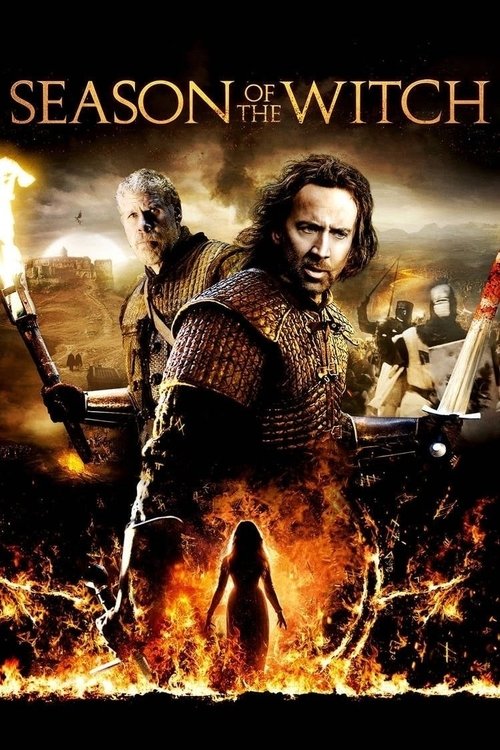



Season of the Witch backdrop
Season of the Witch poster

SEASON OF THE WITCH

2011 US HMDB
January 7, 2011

A 14th century Crusader returns with his comrade to a homeland devastated by the Black Plague. The Church commands the two knights to transport a witch to a remote abbey, where monks will perform a ritual in hopes of ending the pestilence.

Directors

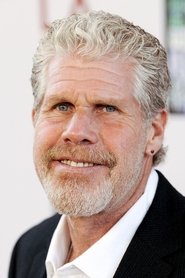
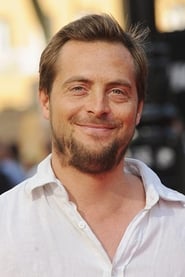
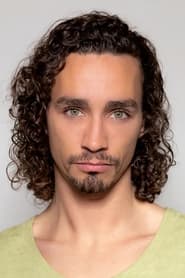
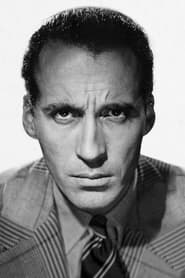
Cast

👍 👎 🔥 🧻 👑

Comments

Comments (0)

Crew

Production: Steve Alexander (Executive Producer)Alex Gartner (Producer)Charles Roven (Producer)Ryan Kavanaugh (Executive Producer)Alan Glazer (Executive Producer)Tucker Tooley (Executive Producer)Tom Karnowski (Executive Producer)
Screenplay: Bragi F. Schut (Writer)
Music: Atli Örvarsson (Original Music Composer)
Cinematography: Amir Mokri (Director of Photography)

REVIEWS (1)

Roberto Giacomelli
Europe, 14th century. Behmen and his friend Felson, two deserter crusaders, arrive in Marburg, one of the many cities affected by the Black Plague that is ravaging the entire region. The two knights are stopped and brought before the local dying Cardinal who threatens to have them arrested for desertion, unless they accept a dangerous mission: they must escort a young woman accused of being one of the witches carrying the plague to the Severako Abbey where the monks will celebrate the trial and an ancient ritual to free the region from its curse. Behmen and Felson accept and embark on the journey accompanied by a stern priest, a disillusioned knight, a swindler who knows the territory, and a young aspiring knight. The journey will be fraught with dangers that border on the supernatural. The original title of the latest film by action-maker Dominic Sena ("Swordfish"; "Whiteout") is "Season of the Witch" and the memory of the more seasoned viewer takes off towards the second feature film by George Romero, in which the "Witch" of the title stood as a symbol of female emancipation. Rest assured, Sena's film, despite the titological similarity, is not a remake of the forgotten Romerian work, but a medieval horror that tells of witches, plague, and demonic possession. The Italian distribution, perhaps in consideration of the modestest box office returns in the United States, is pushing "Season of the Witch" towards territories that do not belong to it, decidedly misleading, starting with a re-titling - "The Last of the Templars" - which cunningly evokes the first successful film of the diptych "National Treasure" - "The Mystery of the Templars" - which only shares with Sena's film Nicholas Cage in the lead role. The trailer focuses heavily on action and spectacular battles, which, upon watching the film, we realize are relegated as a preamble in a handful of initial minutes. The warlike spirit exhausted, "The Last of the Templars" presents itself as a solid historical setting horror, very American - perhaps too much - for some narrative choices and for the magniloquent staging. Sena's film has a series of absolutely non-negligible merits. Let's start by saying that you can immediately notice a fresh and original approach to the horror genre that successfully mixes action, fear, atmosphere, a touch of fantasy, and - why not - a pinch of buddy comedy. In the end, the predominant element is precisely the horror, which already stems from a very successful introduction that brings on stage one of the most successful scenes with a witch since "Army of Darkness". Sena also has the merit of always keeping the viewer's attention with a well-managed rhythm and fear and/or disgust scenes dosed with effectiveness. For the most part, it plays with the gruesome effects of the plague, but there are no lack of attacks by hungry and manifestly demonic wolves, incursions of zombie plague monks, and adrenaline-filled crossings over a precipice (the bridge scene, one of the best in the film). The element in which Sena's film overflows due to excess of kitsch is the booming finale that does not skimp on monsters and computer graphics. Let's be clear, a similar deviation can exist and is in perfect harmony with the overall narrative construction of the film, as well as the special effects appear to be of good craftsmanship, but you cannot help but smile at what appears before your eyes. Another sore point are the dialogues. Bragi Schut signs an orderly screenplay with characters of almost B-movie characterization, effective enough; the problem is many dialogues written as if they should be pronounced in a 21st-century context and not the 14th, thus removing credibility from some scenes. Curious to find also in this film an explicit criticism of the Church, as a manipulative institution, strongly politicized and embodiment of a selfish evil that affects the community in its entirety. In recent months, the attack on the Church by American horror cinema (see also "Priest" and "The Last Exorcism", just to name a couple of titles) is becoming a fact that would be interesting to analyze (certainly not here). The cast of "The Last of the Templars" is heterogeneous and well-assorted, with the always excellent Nicholas Cage ("Drive Angry") and Ron Perlman ("Hellboy") in the leading roles, supported by the good Stephen Graham ("Pirates of the Caribbean: On Stranger Tides") and the young Claire Foy ("Being Human"), in the role of the presumed witch, and Robert Sheehan ("Misfits") in that of the aspiring knight. In a small part also Christopher Lee, who plays the dying Cardinal who assigns the mission to Behmen and friends. "The Last of the Templars" is a film that certainly lends itself to being criticized by those seeking a serious and dark film that addresses the pestilent Middle Ages. To perform this task, there is already the good "Black Death" by Christopher Smith, with "The Last of the Templars" we are in the realm of the Hollywood blockbuster, good entertainment cinema that presents a series of aces up its sleeve not to be underestimated in terms of rhythm and witchy horror finds that will not disappoint horror movie lovers.
👍 👎 🔥 🧻 👑

Comments

Comments (0)

Where to Watch

Stream

Mediaset Infinity Mediaset Infinity

Rent

Apple TV Apple TV
Amazon Video Amazon Video

Buy

Apple TV Apple TV
Amazon Video Amazon Video

COMMUNITY REVIEWS (3)

Dark Jedi

6 /10

It never received very god critics and I have to say it wasn’t the best film that I have seen, even though Nicolas Cage is one of my favorite actors. Then again, I never really like it when my favorite actors die at the end of the movie. Also the CGI, especially at the end of the film, was of rather mediocre quality.

Anyway, on the whole it was a fairly nice medieval sword swinging fantasy/supernatural action flick and not at all as bad as the critics tried to make it but then I’m not really surprised that the critics are off-whack as usual.

Wuchak

Wuchak

8 /10

Knights, crusades, black plague, witches, castles, foreboding forests and demons

RELEASED IN EARLY 2011 and directed by Dominic Sena, "Season of the Witch" chronicles events when two ex-Teutonic Knight crusaders (Nicolas Cage & Ron Pearlman) traveling through Styria in modern-day Austria are enlisted to escort an alleged witch suspected of causing the black death (Claire Foy) to a remote monastery in the mountains for trial and to hopefully stop the devastating plague. Stephen Campbell Moore (Debelzaq), Stephen Graham (Hagamar) and Robert Sheehan (Kay) accompany the Knights.

This is basically the American version of "Black Death," a European film released around the same time. Both movies are dark, gritty and brutal in their depictions of Medieval Europe, but "Season of the Witch" is more of a stereotypical blockbuster with modish protagonists, amusing one-liners and CGI-laden climax. "Black Death" is deeper, more thought-provoking and realistic, which is why I give it the edge in overall value (see my review).

"Season" is the more conventionally entertaining movie and anyone who appreciates Dark Ages-based flicks are highly encouraged to check it out. Films which come to mind include "In the Name of the Rose" (1986), "Kingdom of Heaven" (2005), "Robin Hood" (2010), "Ironclad" (2011), "King Arthur" (2004), "Dragonslayer" (1981), "Red Riding Hood" (2011), "Tristan + Isolde" (2006) and "Robin Hood, Prince of Thieves" (1991). It's as good, or better, than any of these.

The colorful Medieval cinematography (castles, dungeons, villages, dark forests and breathtaking mountains) is mind-blowing and the two protagonists are great with their amusing rapport. Furthermore, Foy is easy-on-the-eyes. Look out for a thrilling rope-bridge crossing à la "Sorcerer" (1977). Although the climax is over-the-top cartoony, the tone up to that point is quasi-realistic, similar to "Robin Hood, Prince of Thieves.”

THE MOVIE RUNS 1 hour 35 minutes and was shot in Austria, Hungary and Croatia with reshoots done in Louisiana. WRITERS: Bragi F. Schut. ADDITIONAL CAST: Christopher Lee is almost unrecognizable as the plague-ridden Cardinal D'Ambroise.

GRADE: A-/B+

Filipe Manuel Neto

Filipe Manuel Neto

1 /10

A perfect example of how disrespect for the past and history can totally annihilate a film, even if it is fiction.

I really enjoy watching period films. However, my work as a historian gives me some antibodies to these films, for reasons linked to the lack of ability to harmonize creative freedom and strict respect for the historical facts and period customs. So, it was with some curiosity that I decided to see this film. After seeing it, I just wanted to slap director Dominic Sena and screenwriter Bragi Schut. None deserve any respect for what has been done here. The film is an insult to historians… even if it is not deliberate!

The script is the film's biggest problem, with a writing that seems to glue together fragments of several different stories: we start with the Crusades, we follow two knights in several military episodes and then, somewhat brusquely, they turn their backs on the Church (supposedly) and leave, probably for their homeland. It turns out that, on the way, they come across the Plague, and there is a woman, supposedly a witch, who was arrested, accused of causing the disease. Now, it's up to them the task of escorting the so-called witch to a monastery where some friars will judge her, in the light of a book that doesn't exist anywhere else in the world.

When you make a film with a historical background, at the very least, you should ask for the support of a consultant, someone who really knows History. No one should have the presumptuous arrogance to think they know everything, much less to take the public for an idiot, thinking that they will swallow everything that is shown to them! This film is an authentic case study in cinematic anachronism! How can the production admit the placement of clearly baroque decorative pieces in the midst of a medieval setting? How the hell can characters to disinfect their hands with alcohol if that was something totally unknown to medieval man? Since when is there a sea in Styria, if that ancient region is an inland part of present-day Austria and Slovenia? How can characters defect if this military concept simply didn't exist at the time?

And if these small questions seem serious, there is something much worse: the Crusades were an entire religious, political and military effort that involved Christianity for about 300 years, but that effort had practically ended decades before the Black Death, and much before the dates that the film uses for the fights where the characters take part. There were, in fact, no serious crusades in the 14th century. The Battle of Artah, which is shown in the film, took place two hundred years earlier, in 1105. Therefore, the film deliberately delayed the Crusades two hundred years, in order to almost coincide with the Black Death, and the characters could participate in both situations! It's absurd! Another thing that simply didn't exist in the Middle Ages was the notion of a witch hunt! Of course, for medieval man, the Devil was a threat, and of course there was a relationship between diabolical art and the works and studies of many scholars, alchemists or sages who contradicted the religious knowledge. But the so-called witch persecutions only began to be more notable in the 16th century, framed in a clerical response to the Reformation and to ideas (all of them) that endangered the dominion that the Church had over knowledge!

I pity Nicolas Cage and Ron Perlman. They are actors I respect, and seeing them participate in such a poorly made film is quite unfortunate, given that they have talent and are, as far as I've seen, almost the only positive things to highlight. Even if everything had been done in a way that respects history, the end of the film is so unbelievably stupid that it would spoil any previous effort. The rest of the cast, except for the two names mentioned, do not stand out in any way.

Reviews provided by TMDB