


Le dernier des templiers backdrop
Le dernier des templiers poster

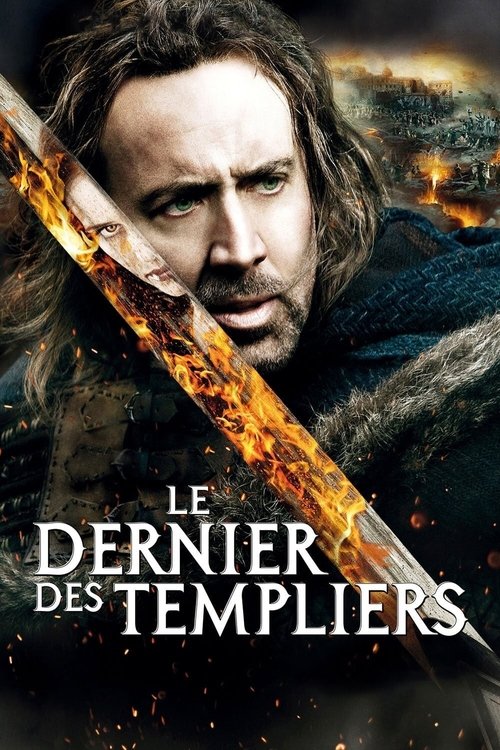
LE DERNIER DES TEMPLIERS

Season of the Witch

2011 US HMDB
janvier 7, 2011

Après des années de croisade en Terre sainte, le templier Behmen et son fidèle compagnon, Felson, reviennent en Europe, désabusés. Alors qu'ils aspirent à une vie paisible, ils découvrent leur pays ravagé par la peste noire et se retrouvent appréhendés par les hommes du Cardinal. Accusés d'avoir déserté, ils risquent la prison. Ils n'ont pas d'autre choix que d'accepter une étrange mission. Ils doivent escorter une mystérieuse jeune femme, désignée comme une sorcière responsable de l'épidémie, jusqu'à un lointain monastère où elle sera jugée et où sera pratiqué un ancestral rituel purificateur…

Réalisateurs

Distribution

👍 👎 🔥 🧻 👑

Commentaires

Commentaires (0)

Equipe

Production: Steve Alexander (Executive Producer)Alex Gartner (Producer)Charles Roven (Producer)Ryan Kavanaugh (Executive Producer)Alan Glazer (Executive Producer)Tucker Tooley (Executive Producer)Tom Karnowski (Executive Producer)
Scenario: Bragi F. Schut (Writer)
Musique: Atli Örvarsson (Original Music Composer)
Photographie: Amir Mokri (Director of Photography)

CRITIQUES (1)

Roberto Giacomelli
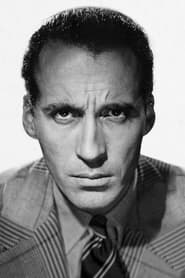
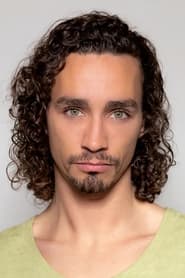
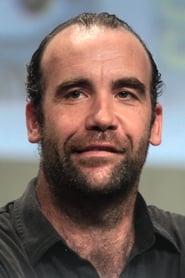
Europe, XIVe siècle. Behmen et son ami Felson, deux déserteurs croisés, arrivent à Marbourg, l'une des nombreuses villes touchées par la peste noire qui sévit dans toute la région. Les deux chevaliers sont arrêtés et conduits devant le Cardinal local mourant qui menace de les faire arrêter pour désertion, à moins qu'ils n'acceptent une mission dangereuse : ils doivent escorter une jeune femme accusée d'être l'une des sorcières porteuses de la peste jusqu'à l'abbaye de Severako où les moines célébreront le procès et un ancien rituel pour libérer la région de son anatheme. Behmen et Felson acceptent et entreprennent le voyage en compagnie d'un prêtre sévère, d'un chevalier désillusionné, d'un escroc qui connaît le territoire et d'un jeune aspirant chevalier. Le voyage sera semé de dangers qui frôlent le surnaturel. Le titre original du dernier film de l'action-maker Dominic Sena ("Code Swordfish" ; "Whiteout - Blanc d'outre-tombe") est "Season of the Witch" et la mémoire de l'observateur le plus averti décolle vers le deuxième long métrage de George Romero, dans lequel la "Sorcière" du titre se dressait comme symbole de l'émancipation féminine. Rassurez-vous, le film de Sena, malgré la similitude titologique, n'est pourtant pas un remake de l'oubliée œuvre romerienne, mais un film d'horreur médiéval qui raconte des sorcières, la peste et la possession démoniaque. La distribution italienne, peut-être en considération des recettes modestes sur le territoire américain, pousse "Season of the Witch" vers des territoires qui ne lui conviennent pas, décidément trompeurs, commençant par un re-titrage - "Le Dernier des Templiers" - qui évoque habilement le premier film réussi du diptyque "National Treasure" - "Le Mystère des Templiers" - qui n'a en commun avec le film de Sena que Nicholas Cage dans le rôle principal. La bande-annonce mise beaucoup sur l'action et les batailles spectaculaires, mais en regardant le film, nous nous rendons compte qu'elles sont reléguées comme un préambule dans une poignée de minutes initiales. L'esprit guerrier épuisé, "Le Dernier des Templiers" se présente comme un solide film d'horreur à ambiance historique, très américain - peut-être trop - pour certains choix narratifs et pour la mise en scène magniloquente. Le film de Sena a pour lui une série de mérites absolument à ne pas sous-estimer. Commençons par dire qu'on peut remarquer immédiatement une approche fraîche et originale du genre horrifique qui mélange avec succès l'action, la peur, l'atmosphère, une touche de fantasy et - pourquoi pas - un petit zeste de buddy comedy. À la fin, l'élément prédominant est justement l'horreur, qui découle déjà d'une introduction très réussie qui met en scène une des scènes avec une sorcière la plus réussie depuis "L'Armée des ténèbres". Sena a ensuite le mérite de maintenir toujours l'attention du spectateur avec un rythme bien géré et des scènes de peur et/ou de dégoût dosées avec efficacité. Pour la plupart, il joue avec les effets raccapricciants de la peste, mais il n'y a pas de manque d'attaques de loups affamés et manifestement démoniaques, d'incursions de moines zombies pestiférés et de traversées adrénalinées sur un précipice (la scène du pont, une des meilleures du film). L'élément dans lequel le film de Sena se répand par excès de pacotille est le final retentissant qui ne lésine pas sur les monstres et les effets graphiques. Soyons francs, une déviation similaire peut exister et est en parfaite harmonie avec la construction narrative globale du film, de même que les effets spéciaux semblent de bonne facture, mais on ne peut s'empêcher de sourire devant ce qui se présente à nos yeux. Autre point sensible sont les dialogues. Bragi Schut signe un scénario ordonné avec des personnages de caractérisation presque de B-movie, efficaces autant que nécessaire ; le problème est que beaucoup de dialogues sont écrits comme s'ils devaient être prononcés dans un contexte du XXIe siècle et non du XIVe, ce qui enlève de la crédibilité à certaines scènes. Curieux de retrouver également dans ce film une critique explicite de l'Église, en tant qu'institution manipulatrice, fortement politisée et incarnation d'un mal égoïste qui pèse sur la communauté dans son ensemble. Au cours des derniers mois, l'attaque contre l'Église par le cinéma d'horreur américain (voir aussi "Priest" et "The Last Exorcism", juste pour citer deux titres) devient un fait qui serait intéressant à analyser (certainement pas ici). Le casting de "Le Dernier des Templiers" est hétéroclite et bien assorti, avec les toujours excellents Nicholas Cage ("Drive Angry - Destination Enfer") et Ron Perlman ("Hellboy") dans les rôles principaux, soutenus par le bon Stephen Graham ("Pirates des Caraïbes : La Fontaine de Jouvence") et les jeunes Claire Foy ("Being Human"), dans le rôle de la présumée sorcière, et Robert Sheehan ("Misfits") dans celui de l'aspirant chevalier. Dans un petit rôle, Christopher Lee, qui interprète le Cardinal mourant qui confie la mission à Behmen et ses amis. "Le Dernier des Templiers" est un film qui se prête certainement à être critiqué par ceux qui cherchent un film sérieux et sombre qui aborde le Moyen Âge pestilentiel. À accomplir cette tâche, il y a déjà le bon "Black Death" de Christopher Smith, avec "Le Dernier des Templiers" nous sommes du côté du blockbuster hollywoodien, un bon cinéma de divertissement qui présente une série d'atouts à ne pas sous-estimer en termes de rythme et de trouvailles d'horreur sorcière qui ne décevront pas les amateurs de cinéma d'horreur.
👍 👎 🔥 🧻 👑

Commentaires

Commentaires (0)

Où Regarder

Streaming

Mediaset Infinity Mediaset Infinity

Louer

Apple TV Apple TV
Amazon Video Amazon Video

Acheter

Apple TV Apple TV
Amazon Video Amazon Video

AVIS DE LA COMMUNAUTÉ (3)

Dark Jedi

6 /10

It never received very god critics and I have to say it wasn’t the best film that I have seen, even though Nicolas Cage is one of my favorite actors. Then again, I never really like it when my favorite actors die at the end of the movie. Also the CGI, especially at the end of the film, was of rather mediocre quality.

Anyway, on the whole it was a fairly nice medieval sword swinging fantasy/supernatural action flick and not at all as bad as the critics tried to make it but then I’m not really surprised that the critics are off-whack as usual.

Wuchak

Wuchak

8 /10

Knights, crusades, black plague, witches, castles, foreboding forests and demons

RELEASED IN EARLY 2011 and directed by Dominic Sena, "Season of the Witch" chronicles events when two ex-Teutonic Knight crusaders (Nicolas Cage & Ron Pearlman) traveling through Styria in modern-day Austria are enlisted to escort an alleged witch suspected of causing the black death (Claire Foy) to a remote monastery in the mountains for trial and to hopefully stop the devastating plague. Stephen Campbell Moore (Debelzaq), Stephen Graham (Hagamar) and Robert Sheehan (Kay) accompany the Knights.

This is basically the American version of "Black Death," a European film released around the same time. Both movies are dark, gritty and brutal in their depictions of Medieval Europe, but "Season of the Witch" is more of a stereotypical blockbuster with modish protagonists, amusing one-liners and CGI-laden climax. "Black Death" is deeper, more thought-provoking and realistic, which is why I give it the edge in overall value (see my review).

"Season" is the more conventionally entertaining movie and anyone who appreciates Dark Ages-based flicks are highly encouraged to check it out. Films which come to mind include "In the Name of the Rose" (1986), "Kingdom of Heaven" (2005), "Robin Hood" (2010), "Ironclad" (2011), "King Arthur" (2004), "Dragonslayer" (1981), "Red Riding Hood" (2011), "Tristan + Isolde" (2006) and "Robin Hood, Prince of Thieves" (1991). It's as good, or better, than any of these.

The colorful Medieval cinematography (castles, dungeons, villages, dark forests and breathtaking mountains) is mind-blowing and the two protagonists are great with their amusing rapport. Furthermore, Foy is easy-on-the-eyes. Look out for a thrilling rope-bridge crossing à la "Sorcerer" (1977). Although the climax is over-the-top cartoony, the tone up to that point is quasi-realistic, similar to "Robin Hood, Prince of Thieves.”

THE MOVIE RUNS 1 hour 35 minutes and was shot in Austria, Hungary and Croatia with reshoots done in Louisiana. WRITERS: Bragi F. Schut. ADDITIONAL CAST: Christopher Lee is almost unrecognizable as the plague-ridden Cardinal D'Ambroise.

GRADE: A-/B+

Filipe Manuel Neto

Filipe Manuel Neto

1 /10

A perfect example of how disrespect for the past and history can totally annihilate a film, even if it is fiction.

I really enjoy watching period films. However, my work as a historian gives me some antibodies to these films, for reasons linked to the lack of ability to harmonize creative freedom and strict respect for the historical facts and period customs. So, it was with some curiosity that I decided to see this film. After seeing it, I just wanted to slap director Dominic Sena and screenwriter Bragi Schut. None deserve any respect for what has been done here. The film is an insult to historians… even if it is not deliberate!

The script is the film's biggest problem, with a writing that seems to glue together fragments of several different stories: we start with the Crusades, we follow two knights in several military episodes and then, somewhat brusquely, they turn their backs on the Church (supposedly) and leave, probably for their homeland. It turns out that, on the way, they come across the Plague, and there is a woman, supposedly a witch, who was arrested, accused of causing the disease. Now, it's up to them the task of escorting the so-called witch to a monastery where some friars will judge her, in the light of a book that doesn't exist anywhere else in the world.

When you make a film with a historical background, at the very least, you should ask for the support of a consultant, someone who really knows History. No one should have the presumptuous arrogance to think they know everything, much less to take the public for an idiot, thinking that they will swallow everything that is shown to them! This film is an authentic case study in cinematic anachronism! How can the production admit the placement of clearly baroque decorative pieces in the midst of a medieval setting? How the hell can characters to disinfect their hands with alcohol if that was something totally unknown to medieval man? Since when is there a sea in Styria, if that ancient region is an inland part of present-day Austria and Slovenia? How can characters defect if this military concept simply didn't exist at the time?

And if these small questions seem serious, there is something much worse: the Crusades were an entire religious, political and military effort that involved Christianity for about 300 years, but that effort had practically ended decades before the Black Death, and much before the dates that the film uses for the fights where the characters take part. There were, in fact, no serious crusades in the 14th century. The Battle of Artah, which is shown in the film, took place two hundred years earlier, in 1105. Therefore, the film deliberately delayed the Crusades two hundred years, in order to almost coincide with the Black Death, and the characters could participate in both situations! It's absurd! Another thing that simply didn't exist in the Middle Ages was the notion of a witch hunt! Of course, for medieval man, the Devil was a threat, and of course there was a relationship between diabolical art and the works and studies of many scholars, alchemists or sages who contradicted the religious knowledge. But the so-called witch persecutions only began to be more notable in the 16th century, framed in a clerical response to the Reformation and to ideas (all of them) that endangered the dominion that the Church had over knowledge!

I pity Nicolas Cage and Ron Perlman. They are actors I respect, and seeing them participate in such a poorly made film is quite unfortunate, given that they have talent and are, as far as I've seen, almost the only positive things to highlight. Even if everything had been done in a way that respects history, the end of the film is so unbelievably stupid that it would spoil any previous effort. The rest of the cast, except for the two names mentioned, do not stand out in any way.

Avis fournis par TMDB