
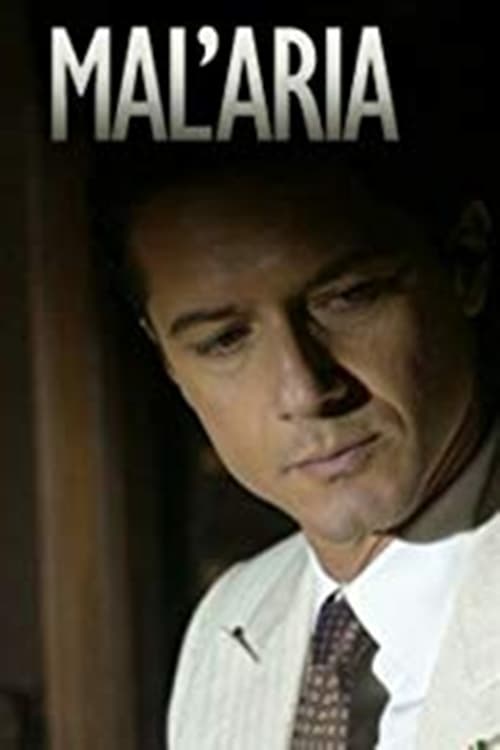




















1925. Spinaro is a town in the Ravenna area destined for reclamation works that the nascent Fascist regime is about to undertake. Following a malaria epidemic, sanitary inspector Carlo Rambelli is sent to the area, who then finds himself facing not only the deadly disease but also a series of mysterious deaths affecting some prominent figures in the town. The victims, found dead in the swamp, all have their throats torn open by the bite of a large animal, and the population begins to fear that it is the wrath of the Borda, a witch who, according to popular beliefs, haunts the swamp and is also the carrier of malaria.
It is probably a more unique than rare case to see an Italian prime-time fiction reviewed on this site, but given the theme addressed, it seemed appropriate to add this title to the already extensive number of reviews that populate the database.
Italy has now become the 'country of fiction,' and when talking about made-in-Italy audiovisual products, it is customary to immediately imagine Marshals Rocca, Police Districts, various Don Matteos, and a large number of saints' lives and melodramas in costume that would put to the test the patience of anyone who grew up passionate about products made for the cinema. Those at Rai must have realized the extremely inflated landscape of Italian fiction and thus attempted the novelty card with a product that differs in themes and (partially) in execution from the canonical TV trope that fills schedules. The result is called 'Mal'aria,' a TV movie divided into two episodes and freely adapted from the eponymous novel by Eraldo Baldini, a film that is worth watching but that at the same time has so many flaws that it certainly does not provide any reason for redemption for the 'masters of TV,' still too far from the tastes of an audience accustomed to escaping beyond strictly domestic walls.
The desire to tell a 'different' story is praiseworthy, especially when this difference lies in addressing themes dear to horror and supernatural mystery, which in this case delves deeply into the imagery of rural Gothic so dear to some of the shiniest gems of our genre cinema. The geographical setting brings to mind some glorious films directed by Pupi Avati ('The House with Laughing Windows' and 'The Enchanter'), from which is also borrowed that surrogate of mundane normality that conceals unspeakable horrors. At the center of the story is popular superstition, witchcraft, and the immolation of infants, features that, recalling the Fulcian 'Don't Torture a Duckling,' are certainly very appealing to an alternative audience to the habitual TV viewers, especially if accustomed to certain 'genre' languages.
The closed-mindedness of some populations that confuse the true disease (malaria) and death with magic is an interesting premise, also in its insistence on the ambiguity of the situation that nevertheless puts the viewer (and the protagonist with him, a rational mind faced with the irrational) in doubt about which path the narration really wants to follow - normal or paranormal? -; even the historical contextualization in the Fascist era seems a well-chosen move and, despite the stereotypical nature of some characters, especially the bad fascists, the frequent but never intrusive reference to the issues that characterized that historical period appears successful, without ever falling into the didactic.
The 'what,' therefore, is certainly winning, what often leaves one perplexed is the 'how.'
The story is in some points unnecessarily diluted in sometimes useless melodramatic contaminations that nevertheless want to remind the viewer with what type of audiovisual product they are dealing; moreover, the screenplay by Giovanna Koch and Stefano Sollima tends in more points to betray the original material (and indeed the film is 'freely' adapted from the novel) softening the narration with politically correct finds and purging it from the more marked contaminations with the horror genre. The plot in some points appears excessively reliant on the 'incredible' intuitions of the protagonist that go to fill some evident screenplay holes (the discovery of the deadly mechanism and the recovery of memory above all), as well as, at a certain point, it is possible to predict with too much ease the resolution of the story that, moreover, is also consumed in a hasty manner.
The cast is definitely too inconsistent, and while the performances of Stefano Dionisi ('The Enchanter'; 'I Can't Sleep'), Eros Pagni ('Deep Red'; 'Nestore — The Last Race'), and Sarah Felderbaum ('Cardiofitness') appear convincing, the same cannot be said for the miscast Francesco Salvi ('Fracchia the Human Beast'), the bewildered Giuseppe Soleri ('Apartment 17'; 'Inspector Coliandro'), and the protagonist Ettore Bassi, a well-known face of Italian fiction and constantly engaged in expressions of a ladies' man.
The direction by Paolo Bianchini is disappointing, sometimes unnecessarily devoted to pathetic experiments that smell of conceptually old virtuosity. Unusually good for a TV fiction is the cinematography by Giovanni Cavallini.
In short, since in Italy one cannot do without fiction in large quantities, incursions into the 'genre' that tend to distance themselves from the main productive current are welcome, but the road to a product that does not simply turn out to be mediocre seems really very far away.
Watch the spot for MAL'ARIA
Comments
Comments (0)
Comments