





The Verdict
While Kitty waits for her husband Alberto at Pincio, she decides to look at the landscape through a rental telescope and inadvertently witnesses a murder. The victim is a dancer, and the police commissioner links this murder to another crime that occurred some time ago, also targeting a dancer.
While Kitty waits for her husband Alberto at Pincio, she decides to look at the landscape through a rental telescope and inadvertently witnesses a murder. The victim is a dancer, and the police commissioner links this murder to another crime that occurred some time ago, also targeting a dancer. The commissioner's suspicions fall on Alberto himself, who, cornered, begins to conduct a personal investigation helped by his wife and his journalist friend Lidia.
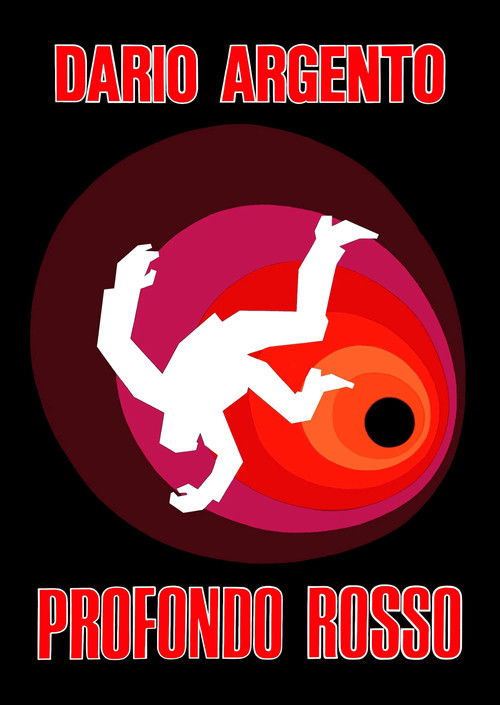
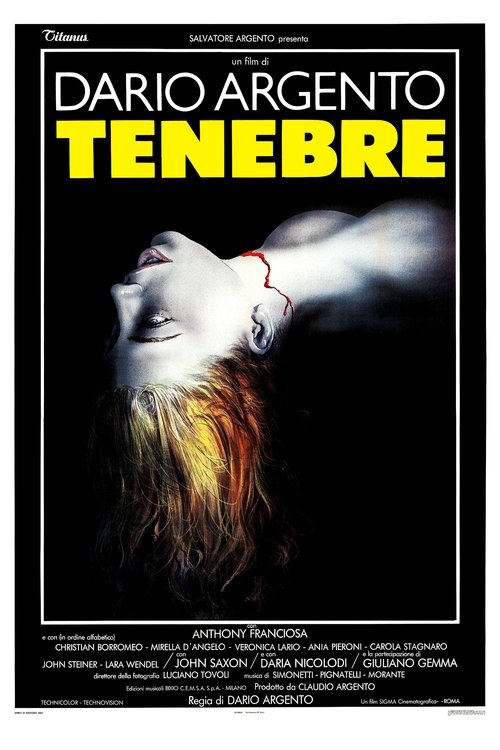
We are in 1973, in the midst of the "spaghetti thriller" craze. The Italo-French Maurizio Pradeaux, who until then had unsuccessfully wandered between the western genre ("Ramon the Mexican") and the war genre ("The Leopards of Churchill"), decides to try his hand at the successful trend of the moment and throws himself headlong into reckless imitation. Pradeaux has no shame and grabs everything available in the thriller field, from Hitchcock to Bava, focusing particularly on Argento. After all, those were the years of "The Bird with the Crystal Plumage" and "Four Flies on Grey Velvet," so the Argento model seemed the most pertinent to create a product of imitation that struggles in mediocrity from the first to the last frame.
"Steps of Dance on a Razor's Edge" begins by modestly retelling the typical situation of "Rear Window," introducing, however, the clever variant of spatial distance and the scarcity of time for voyeuristic suspense to increase the suspense and create a situation of palpable participatory impotence. The film, however, immediately unfolds into a series of stereotypes and already seen situations that nullify for the most part the atmosphere of mystery. The screenplay written by eight hands by Alfonso Balcázar, Arpad DeRiso, George Martin, and Pradeaux himself, proceeds in a rather predictable way, continuously introducing suspicious characters who are then immediately cleared, up to a final solution that is obvious in the identity of the killer and quite unlikely in the unoriginal motive.
What works best are the murder scenes, which, although not particularly "inspired," present fairly effective visual violence. The frequent erotic scenes, on the other hand, often appear gratuitous, probably inserted in the hope of distracting or relieving the viewer's attention.
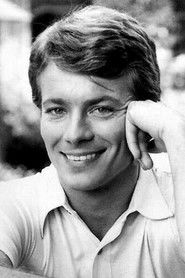
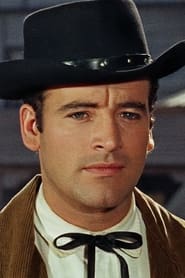
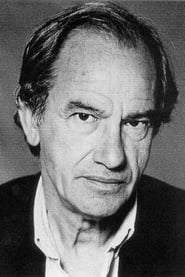
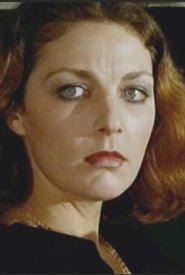
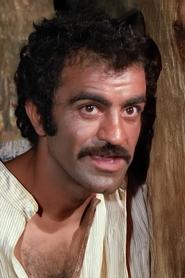
If the direction appears mediocre in its substantial lack of personality, the music by Roberto Pregadio and the performances of the cast somewhat redeem the whole. Among the actors are Susan Scott (Nives Navarro by registry) in the role of Kitty, the witness of the murder, a good genre actress here dealing with a character a bit undecided whether to appear as the protagonist or the lady in danger. Another elusive character is Alberto, played by Robert Hoffmann ("Spasmo"), also moving between the supporting role and the leading role. In minor roles are Simón Andreu ("Death Walks on High Heels;" "A Wedding Dress Stained with Blood") and Anuska Borova, here in her first and only film.
A cult scene in its absurdity is the one in which Kitty is used by the police as bait and sent to pretend to be a prostitute to attract the killer, instead attracting the attention of the police chief, a regular client of the streetwalkers.
In short, "Steps of Dance on a Razor's Edge" is a classic by-product born exclusively to exploit the success of a trendy genre like the Italian thriller. There is little memorable, it is certainly watchable for its high fluidity, but just as certainly it does not leave much in the viewer, including the aficionados of the spaghetti thriller.
Comments
Comments (0)



Comments