


















The Verdict
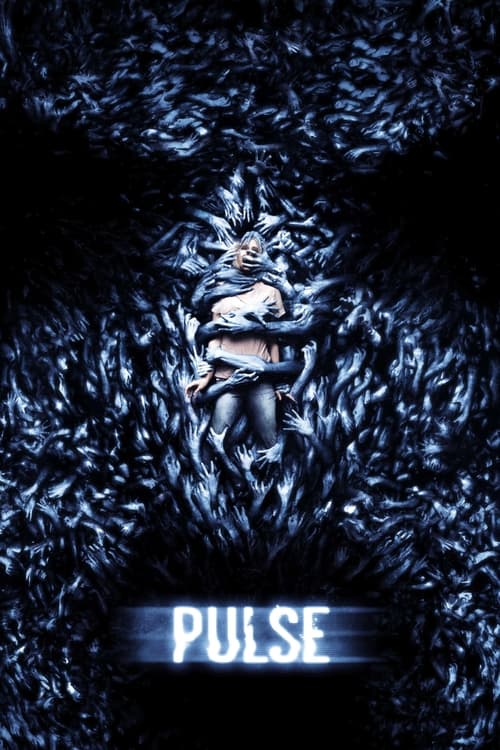
After the suicide of his friend Josh, the young student Mattie decides, with the help of some of her friends, to understand what drove Josh to commit such an act. Meanwhile, a mysterious message asking "Do you want to meet a ghost?" suddenly appears on all the students' computers in the university campus.
After the suicide of his friend Josh, the young student Mattie decides, with the help of some of her friends, to understand what drove Josh to commit such an act. Meanwhile, a mysterious message asking "Do you want to meet a ghost?" suddenly appears on all the students' computers in the university campus. Mattie will discover that her friend Josh had unknowingly picked up a strange frequency via the Internet that acts as a "portal" to another dimension populated by malevolent entities that suck the "will to live" from people, driving them to suicide. This malevolent entity, passing through all technological devices, will soon begin to spread like a virus, causing an epidemic of suicides that will ultimately lead to the end of humanity.
The American tendency to appropriate Asian films to make Western remakes is becoming increasingly unstoppable. After "The Ring" and "The Ring 2", after "The Grudge" and "Dark Water", it's the turn of making a remake of "Kairo", a film directed in 2001 by Kiyoshi Kurosawa, which was more an attentive reflection on solitude and the danger that technological means can cause us, with which we have to deal daily. As often happens, the made in USA remakes draw inspiration only from the original story, to then give life to a nearly different product, a product that adapts Eastern uses and traditions with Western ways of life, sometimes updating the film to better impact a young audience that wants to be able to identify with the character seen in the film. "Pulse" follows this path in part; on the one hand, it tries to follow the path of Kurosawa's previous film, on the other hand, it decides to adapt the story to the new electronic generation, making instruments of death not only computers (as in the original) but also other Wi-Fi devices like cell phones that, for some years now, have assumed an increasingly decisive and important role in the life of the average citizen.
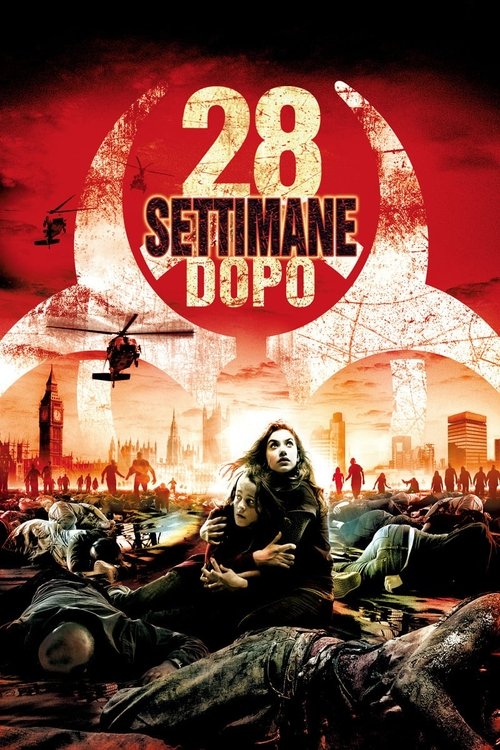
"Pulse" thus appears to us as a film that without a shadow of a doubt cannot stand out in terms of originality; although one wants not to consider its inspiration film, the story it tells had already been developed (in the worst way) in that disastrous film released in 2002 that is "Paura.com", a clumsy film that, given the release date and the theme, had already drawn from Kurosawa's film in one way or another. But there where "Paura.com" had miserably failed (practically everywhere), this new American horror works rather well. The story that "Kairo" told us, and which in turn has been taken up by "Pulse", is very intriguing and sometimes even unsettling, just think about the fact that the threat comes precisely from the "daily bread", from that with which we have to deal every day, from that which has become fundamental in our life. Therefore, to a captivating story, a valid and engaging screenplay is added that captures the viewer's attention from the start and fascinates him above all in the ending, in which we are offered a post-apocalyptic scenario, capable of evoking that terrifying but fascinating atmosphere that Romero made us know with his "Il giorno degli zombi", showing now empty and destroyed cities, vehicles abandoned in the streets, military camps scattered across the countryside and the few survivors wander, from one place to another, in search of a place far from means of communication and therefore safe; a scenario that we got to know well thanks to Romero, but that years before had been made us taste by the horror interpreted by Vincent Price "L'ultimo uomo della terra" or that more recently we find (and in this case even more similar to "Pulse") in the apocalyptic horror "28 Days Later".
The direction of the film, in the past, had been entrusted to the master of horror Wes Craven, who would certainly have felt at ease directing a film in which evil is technology, since this theme, albeit remotely, is found in his "Scream" (Sotto Shock in Italian), but, after the "Pulse" project remained stalled in the workshop for a long time and after further disagreements between Craven and the production company Dimension Films (who had already manipulated "Cursed - Il maleficio"), he decided to abandon the project; but here, his name is not completely excluded but appears as executive screenwriter; while the direction has passed from the hands of a professional, of someone who knows horror to perfection, to the hands of a "newcomer", Jim Sonzero, a director in his first job who until now had only directed some TV spots and music videos. The strong point of the film, as often happens in a ghost movie, is the photography, which here appears extremely careful and fascinating due to a great tendency to end on red chromes or on a gray so light that it seems to evoke the charm of black and white.
According to the new trend, which aims to signal how television influences the world of cinema, here the cast of this film draws from two famous productions for the small screen: we find, in fact, in the role of the protagonist a young Kristen Bell fresh out of the TV series "Veronica Mars" (but who, at the beginning, when the good old Craven was still involved, was supposed to be Kristine Dunst), accompanied by another star of the small screen, an equally young Ian Somerhalder, the missing Boone of "Lost". The choice to populate the cast with stars from TV series may prove to be a misstep in part, given that the two protagonists, sometimes, give the impression of not having perfectly immersed themselves in their role, but all in all, their acting performance does not negatively influence the final result more than necessary.
In conclusion, this American remake, "Pulse", turns out to be a fairly fascinating and engaging product, which finally adds some "original" variations in the story (enough with these children who cast curses as we have seen in all the Asian films that so far have boasted of a remake) and which, therefore, positions itself among the successful transitions from the East to the West.
Comments
Comments (0)








Comments