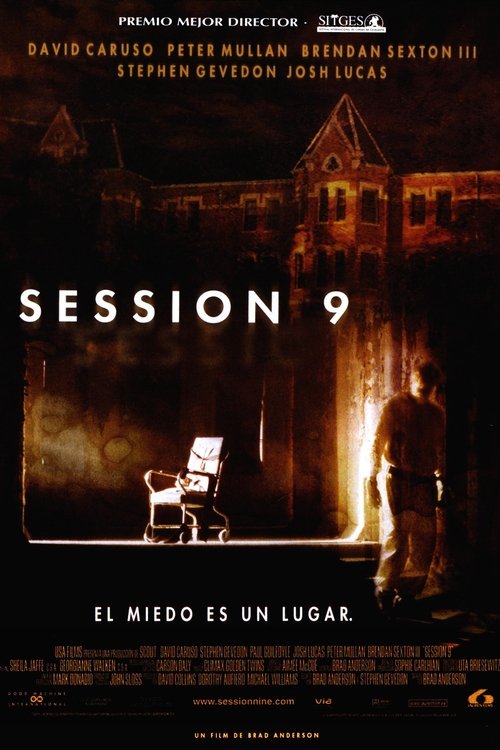





Session 9 backdrop
Session 9 poster

SESSION 9

2001 US HMDB
agosto 10, 2001

Il Danvers State Mental Hospital, vecchio manicomio chiuso da 15 anni, sta per ricevere cinque nuovi visitatori. Gordon (Peter Mullan), proprietario della Hazmat Elimination Co, ha vinto l'appalto per la rimozione dell'amianto dall'ospedale, prossimo alla ristrutturazione. Della sua squadra fanno parte Bill (Paul Guilfoyle), tecnico responsabile, il caposquadra Phil (David Caruso), Mike (Stephen Gevedon), l'ansioso Hank (Josh Lucas) e Jeff (Brendan Sexton III), nipote di Gordon. I cinque uomini si avventurano nei reparti immensi e vuoti dell'ospedale dove regna un'atmosfera inquietante... Oscuri segreti sembrano trapelare dalle corsie ormai deserte, portando alla luce orribili verità.

Cast

Commenti

Troupe

Produzione: David Collins (Producer)John Sloss (Executive Producer)Dorothy Aufiero (Producer)Michael Williams (Producer)
Sceneggiatura: Brad Anderson (Screenplay)Stephen Gevedon (Screenplay)
Musica: Climax Golden Twins (Original Music Composer)
Fotografia: Uta Briesewitz (Director of Photography)

RECENSIONI (1)

Marco Castellini

Gordon gestisce una società di bonifica in difficoltà finanziaria; la vincita di un appalto per eliminare i residui d'amianto da un vecchio ospedale psichiatrico da ristrutturare potrebbe essere la salvezza per lui ed i suoi dipendenti. La squadra formata da cinque operai in tutto, si mette subito al lavoro, ma la permanenza tra le mura dell'ospedale e le sinistre leggende che aleggiano tra le sue pareti, contribuiscono ad aumentare la pressione. I lunghi ed interminabili corridoi, le celle dove venivano rinchiusi i pazienti più pericolosi e gli umidi scantinati del fatiscente capannone nascondono ancora alcuni terribili segreti… Il film ha una storia particolare: il regista Brad Anderson scorse il Danvers Mental Hospital, una struttura di fine ottocento, abbandonata nei primi anni ottanta, mentre girovaga in macchina nei sobborghi di Boston; il suo aspetto decisamente tetro, in grado di creare ansia al solo guardarlo lo convinse subito che sarebbe stato perfetto come sfondo per l’ambientazione di un film dell’orrore. Ed allora ecco questo “Session 9” vera piccola grande sorpresa della stagione nel genere horror; girato in digitale, con un nuovo sistema della Sony in via di sviluppo, e poi riversato su pellicola, il film non ha alcun bisogno di affidarsi a scene truculente o smembramenti vari per trasmettere il “senso del terrore”; piuttosto il regista, utilizzando al meglio la telecamera e soprattutto le tetre ambientazioni del manicomio (che pare una sorta di enorme Overlook Hotel di “Shining”) guida lo spettatore in un incubo che si fa via via sempre più angosciante, sfociando in un finale da brividi. La parte centrale risulta un po’ lenta ma ciò era inevitabile al fine di presentare la psiche dei vari personaggi e fornire allo spettatore gli indizi per comprendere, e magari anticipare, le angoscianti sequenze finali. Una lieta sorpresa da un regista emergente; decisamente consigliata la visione.

Commenti

RECENSIONI DALLA COMMUNITY (1)

John Chard

John Chard

10 /10

Madness is just overactive curiosity.

Session 9 is directed by Brad Anderson who also co-writes the screenplay with Stephen Gevedon. It stars Peter Mullan, David Caruso, Josh Lucas, Brendan Sexton III and Stephen Gevedon. Music is scored by Climax Golden Twins and cinematography is by Uta Briesewitz.

Danvers State Hospital (AKA: State Lunatic Hospital at Danvers, The Danvers Lunatic Asylum, and The Danvers State Insane Asylum), Massachusetts. Built in 1874, opened in 1878 and closed in 1992. The home to misery, madness, tragedies and troubling treatments. Five men from an asbestos removal company, each with issues or points to prove, enter the vast bat shaped structure under the promise of a big pay off to get the job done in one week. But over the course of the week money will be the last thing on their minds.

Psychological horror at its finest, Session 9, in the hands of Brad Anderson, pretty much gets everything right in this most skin itching of sub-genres. Like the ghost story splinter of horror, setting is absolutely everything, and few, if any? Horror settings are as imposing or eerie as the one time Danvers State Hospital. Sadly demolished in 2006/7 to make way for an apartment complex (bastard property developers have no respect outside of the purse), the place positively oozes unease throughout the movie. With Anderson choosing to shoot his film on videotape, this further aids the sense of realism and palpable dread, and although it isn't a stretch of the mind to think about some of the misery that played out in reality at Danvers, Anderson and his photographer Briesewitz ensure that it never leaves our conscious. Tone is set from the off as being slow burn, this is perfect as it allows us to get a grasp of the characters, their psychological make ups and narrative worth.

With the Danvers facility proving to be the extra character, all things come together seamlessly to gnaw away at the viewers. It's a devilishly odd thing to say, but as the story and characters are given room to breath, the audience who have immersed themselves in the picture will start to feel claustrophobic, and then for the night time sequences, even achluophobic. It's pitch perfect pacing by Anderson, who prior to unleashing the unnerving finale, has pulled us (and his excellent cast) slowly through a labyrinth of dank corridors, wards, treatment rooms, caged stairwells and a morgue. Even on the outside during daylight hours everything feels bleak, either with characters loomed over by the building, or on a roof chatting while Gothic turrets watch over them menacingly, the ghosts and bitterness of Danvers Hospital exist fully in Anderson's movie.

Story links a tape recording found by Mike (Gevedon) with that of the workers' unfolding plight. The tape tells of 9 sessions with a troubled patient named Mary Hobbes, to say anymore would be spoilerish, but for the record in this writers eyes it's the creepiest tape recording in horrorville. Add in the odd hospital prop such as a lone wheelchair, a hydrotherapy bath or an orbitoclast! Well you get the picture I'm sure. Climax Golden Twins provide a suitably jarring score, where disjointed noises and elongated tonal strains further enhance the pervading disquiet. Picture only falls down slightly with silly plot error involving a furnace, and for some folk the ending will inevitably be met with dissatisfaction. I liked it plenty but I also feel they could have gone another way with it. But it does work well and isn't a cop out, and certainly it's better than the alternate ending available in the extras section of home disc formats.

It's a horror film aimed at a certain horror fan, the one who has the patience to enjoy slow burn psychological pin prickery. All played out expertly by cast and film makers at a naturally unsettling location. 9/10

Recensioni fornite da TMDB