








The Verdict
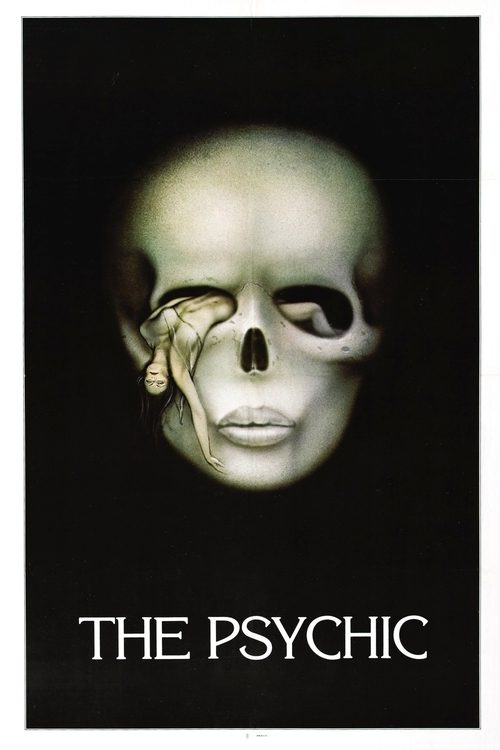
Thanks to extraordinary extrasensory abilities, Virginia (who saw her mother commit suicide as a child) during a car ride, feels and sees some flashbacks of a presumed murder committed by her own husband, who is indeed arrested shortly after. The wife, however, will manage to clear him, delving into the case and will be helped by other people interested in it.
Thanks to extraordinary extrasensory abilities, Virginia (who saw her mother commit suicide as a child) during a car ride, feels and sees some flashbacks of a presumed murder committed by her own husband, who is indeed arrested shortly after. The wife, however, will manage to clear him, delving into the case and will be helped by other people interested in it. After a succession of increasingly unsettling events and discoveries, Virginia, against her will, will realize that what she saw that fateful day in the car was nothing more than a precognition, or rather, a vision of the future...
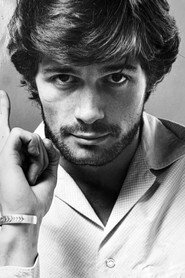
Psychological thriller revelation of the 1970s, directed with skill and precision by the so-called artisan of horror, Lucio Fulci. And to think that the latter had just come from equally memorable films in the wake of the giallo, including "A Lizard in a Woman's Skin", "One Upon a Time", "Don't Torture a Duckling". In 1977, "Seven Deaths in the Cat's Eye" was born, a film that goes beyond Fulci's usual gialli; here, in addition to having a killer who kills and subsequently walls his victims, we have some rather innovative plot twists, just think that the film revolves around the objects and faces that our protagonist sees in her usual visions, each of which is fundamental for the continuation of the investigation. Delirious at just the right moment, the film offers healthy moments of suspense, interspersed with some really well-chosen sound effects, including the unsettling ticking of a clock, desperate moans, and zoom-effect shots that are simply stunning. From the prologue, it is explicitly clear that the film's main theme is the protagonist's extrasensory power, well portrayed by Jennifer O'Neill, who, through her deep and communicative eyes, anticipates each of her visions; note also the effective performances of the other actors, including Gabriele Ferzetti as a professor highly suspected of being the executioner, and Marc Porel who plays Luca, a key character in the film, also engaged in uncovering the mystery of the murder presumably committed in the past.
The screenplay is also good (except for a few minor holes) by the trio Lucio Fulci, Roberto Gianviti, and Dardano Sacchetti, already scriptwriter of "Reaction Chain", a film that marked the slasher-movie genre; the photography also plays its part, and the credit goes to the diligent work of Sergio Salvati, who puts forward luminous images that blur on the occasion of the protagonist's vague flashbacks. Despite the film being heart-wrenching and melancholic, there are very few violent and bloody scenes; this is certainly a factor that sets this film apart from the other gialli made previously (first and foremost "Six Women for the Assassin" and "Reaction Chain"). "After Seven Deaths in the Cat's Eye" Lucio Fulci will move on to horror-science fiction populated by zombies, ghosts, and black cats, directing respectively "City of the Living Dead", "The Beyond", "Black Cat" and the claustrophobic "That House Near the Cemetery". In conclusion, "Seven Deaths in the Cat's Eye" is a must-see cult film, enhanced by excellent truly original sequences, an engaging plot, and a magnificently crafted ending; it is no wonder that this film is considered one of the best supernatural thrillers ever directed in our country.
Comments
Comments (0)

















Comments