











The Verdict
In a not-too-distant future, a terrible epidemic strikes girls between the ages of 15 and 17, killing them and then bringing them back to life as bloodthirsty zombies. To combat this threat, the UN has established special law enforcement units called "Romero," tasked with inspecting cities and re-killing the zombie girls.
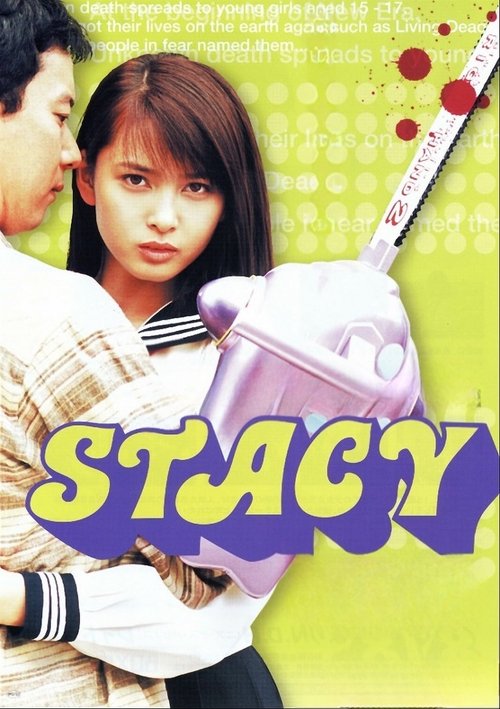
In a not-too-distant future, a terrible epidemic strikes girls between the ages of 15 and 17, killing them and then bringing them back to life as bloodthirsty zombies. To combat this threat, the UN has established special law enforcement units called "Romero," tasked with inspecting cities and re-killing the zombie girls. Against this dramatic backdrop, the story of a young artist who falls in love with a girl of the right age to fall ill and who already shows all the symptoms of the disease (a particular euphoria that always precedes death) unfolds. The two will live together beautiful moments, even though the young sculptor knows that, at any moment, the girl will die and transform into a zombie. At the same time, the story of a doctor who tries to study the epidemic by conducting experiments on zombie girls unfolds. As we have learned to observe in the East, extremely valid, original, and well-made products are created, not just repetitive films that lead one to think that creativity and imagination are zero in the Japanese areas. Unfortunately, however, such works rarely achieve success in the rest of the world and are destined to remain, most of the time, unreleased, especially in our country where there seems to be a particular refusal towards these films as they try to avoid introducing the public to true Eastern cinema, that intelligent, innovative cinema that undoubtedly deserves more attention than it actually receives. This is the case of "Stacy," an extremely intelligent horror film with a zombie theme, which manages to convey a glimmer of originality in a genre (the zombie movie) where it was thought there was really nothing left to say. Released in 2001 in Japan and directed by Naoyuki Tomomatsu, the film presents a particularly original story (as already mentioned) as it beautifully incorporates within a tragic and distinctly horror story a second story (that of the sculptor and the girl nearing death) with romantic and sentimental themes that, if at first thought may seem an inadequate choice, after viewing cannot do anything but give the work that extra tone to elevate the film above the average of many zombie movies. However, this romantic story does not serve to soften the entire plot but rather to exacerbate it even more, making the situation more dramatic, as Tomomatsu tells us of a love story destined to be unhappy and without any possibility because the young artist has entered a story destined to end tragically as the young girl he is in love with is already marked by fate. Therefore, this love story can be depicted as a romantic dream within an exacerbating nightmare, a dream that, however, is destined to turn into a nightmare as well. But beyond the story, what makes "Stacy" an unforgettable and absolutely must-see film? What elevates this film significantly are all those small essential elements that perfect a winning product from the start. We can mention a beautiful and particular photography that is carefully managed according to the situations: it appears simple (and therefore not memorable) in purely horror scenes, but in the sequences where the love story between the two young people is narrated, the photography takes on a particular, very bright aspect that tends to blur and thus gives even more the idea of a dream within the nightmare. Contributing to this is a massive use of splatter and gore; indeed, there are many well-executed splatter sequences that never have the problem of what to show and what to leave to the imagination; no, in "Stacy" everything is calmly shown! And so, one can witness (satisfying all splatter fans) truly gruesome scenes ranging from vivisection, to numerous cannibalism scenes; from bodies opened and dismembered by hand, to cadavers torn apart with a chainsaw, etc. To conclude, Tomomatsu's desire to pay homage to some pillars of Western genre cinema in his film is notably appreciated: in addition to the zombie-killing squad called "Romero" (which needs no explanation as to whom it honors), there is a clear homage to Bruce Campbell (the unforgettable actor who played Ash in Raimi's "Evil Dead" saga) as a particular chainsaw that fits comfortably into the right arm (just as the actor did in Raimi's film) is advertised several times in the film and is called "Blues Campbell right hand 2." In conclusion, "Stacy" is a film that fascinates, excites, and entertains the viewer; it manages to bring originality to a genre that has never had its strong point in originality. Unfortunately, this film is impossible to find in Italy except through importation. Let's hope that one day they decide to distribute in our country gems like "Stacy" and not just the usual ghost movies. A film suitable for all horror lovers and that undoubtedly deserves a viewing.
Comments
Comments (0)
Comments