



The Verdict
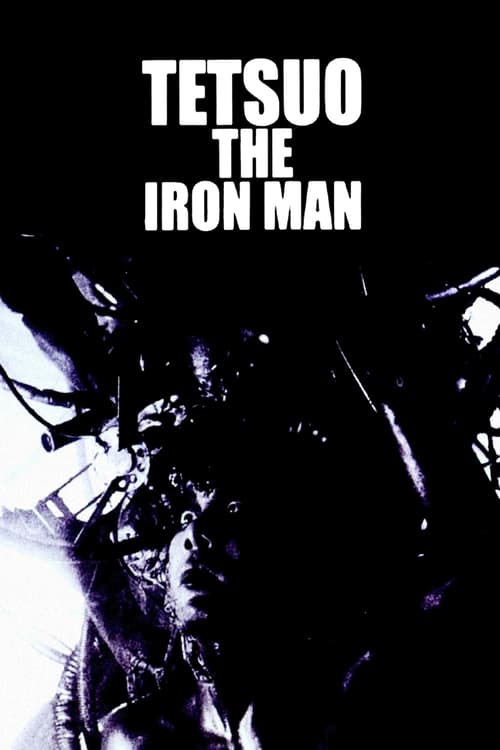
A man, a fetishist of metal, inserts a steel tube into his leg: from that moment, his body begins a mutation that will turn him into a completely new being, a blend of flesh and metal that will bring blood and destruction. Reviewing a work of the caliber of "Tetsuo" is a daunting, if not impossible, task, bordering on masochism.
A man, a fetishist of metal, inserts a steel tube into his leg: from that moment, his body begins a mutation that will turn him into a completely new being, a blend of flesh and metal that will bring blood and destruction.
Reviewing a work of the caliber of "Tetsuo" is a daunting, if not impossible, task, bordering on masochism.
Why "Tetsuo" is not a film: Shinya Tsukamoto's work is a bullet fired at point-blank range that goes straight into the brain, and in a perpetual rotary motion continues to travel through the spectator's skull, quickly releasing the venom inside that will complete the work of annihilating the mind.
"Tetsuo", even before being a film, is first and foremost an experiment, because it is not only a work on "mutation" without actually talking about anything (there is no plot, we do not find a clear unfolding of events), but it is itself "mutation", "infection", "change": it is therefore impossible to catalog or insert Tsukamoto's work within a genre (even if it will be said that we are facing the manifesto of "cyberpunk") because first of all "Tetsuo" is
an indissoluble blend of styles and influences mixed at the genetic-molecular level.
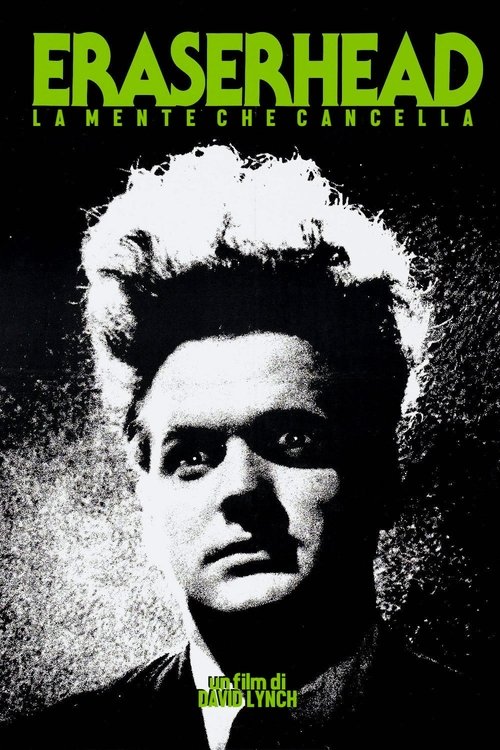
We find Lynchian echoes, Cronenbergian obsessions with new flesh and the power of media ("Videodrome") taken to extreme consequences, music video editing, Japanese monster movies, (post)postmodern urban samurai with metal tubes instead of katana and "Manga" aesthetics mixed together meticulously without it being possible to understand where one influence ends and the next begins. All of this, of course, fired at a crazy speed, often hyper-accelerated, almost as if we were facing a bombardment of frames accompanied by a symphony of metallic clangs, rhythmic carpets of gears, and chilling screams.
Watching "Tetsuo", we are faced with a work without precedent in the history of cinema, a film that is primarily "Other", "Novelty", "Breaking Point" in its desire to shock and be extreme just for the sake of it.
In this delirium of technology, flesh, blood, violence, and sex (present in massive doses, which will then be left aside in "Tetsuo 2-Body Hammer"), Tsukamoto still manages to convey a message, also because we are facing the classic example of how the "form" coincides with the "content": Tsukamoto is telling us that we are relying too much on technology and mass media, that the work of infecting metal with our flesh has already begun a long time ago and we have not even noticed it. We are no longer even able to distinguish reality from television fiction. What comes out of the cathode tube has the same value as the real, or perhaps the real is only able to acquire this status when it is confirmed by television. Maybe both.
This message, which shows that Tsukamoto in 1989 saw far ahead, is more relevant than ever and has as its backdrop a city shown in a frantic, fragmented manner, almost like crazy shards of a metropolis too large and frightening to be captured in its entirety, because it too is a mirror of the unchecked progress of humanity.
The staging follows the madness of the message/content: the direction is psychotic and erratic, the editing hyperkinetic, the camera movements nervous, and the music video aesthetic (very different from that of the various "Saw" films that dominate today) makes everything even more frantic and difficult to follow, also because, often and willingly, we proceed with an accumulation of images almost as if it were a real brainwashing.
A work that is difficult to follow and assimilate, but of a charm more unique than rare within Extreme cinematography (with a capital E), which captures at a subliminal level and which adheres to the spectator's brain, without letting go; a powerful and visionary work (often this word is used inappropriately, but here it seems more than ever justified) that leaves one astonished for
richness of content despite the hermeticism of the director's choices.
"Tetsuo" is an extreme film in every single aspect and that, precisely for this reason, does not allow for compromises and half-measures: you either love it or hate it. And if you love it, it is not a movie to insert into the DVD player to spend a little more than an hour pleasantly in front of the screen; "Tetsuo" is a film that requires the right mental disposition of the spectator every time you decide to watch it, because it is not a pleasant viewing, at least not in the way we are accustomed to understanding it in everyday life. "Tetsuo" is an exhausting, dizzying experience, from which, if you survive, you come out changed, infected, mutated.
Often, in cases like these, it is said "For many, but not for all".
With Tsukamoto's film, not even this saying applies: "Tetsuo is not for many, much less for all... it is really for very few".
It would deserve half a pumpkin more.
Comments
Comments (0)












Comments