

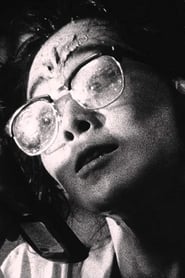

Tetsuo backdrop
Tetsuo poster

TETSUO

鉄男

1989 JP HMDB
juillet 1, 1989

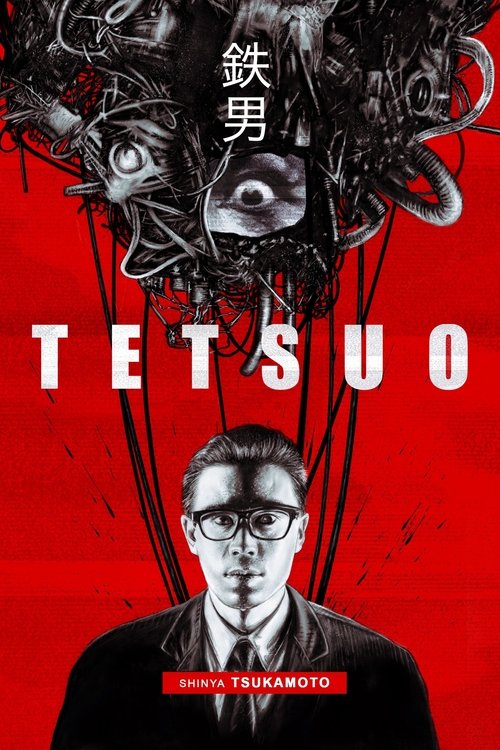
Après un accident d'automobile, un homme voit son corps muter en une sorte d'aimant ramassant tous les détritus métalliques de la société. Film phare du jeune cinéma underground japonais.

Réalisateurs

Distribution

👍 👎 🔥 🧻 👑

Commentaires

Commentaires (0)
Equipe

Scenario: 塚本晋也 (Writer)
Musique: 石川忠 (Original Music Composer)
Photographie: 不二稿京 (Director of Photography)

CRITIQUES (1)

Luca Pivetti
Un homme, fétichiste du métal, s'insère un tube d'acier dans une jambe : à partir de ce moment, son corps commence une mutation qui le conduira à devenir un être totalement nouveau, un mélange de chair et de métal qui apportera sang et destruction. Faire la critique d'un travail de la trempe de "Tetsuo" est une tâche ardue, voire impossible, aux limites du masochisme. Pourquoi "Tetsuo" n'est pas un film : l'œuvre de Shinya Tsukamoto est une balle tirée à bout portant qui va s'implanter directement dans le cerveau, et dans un mouvement rotatoire permanent continue de voyager dans la boîte crânienne du spectateur, libérant rapidement le venin à l'intérieur qui complétera l'œuvre d'annihilation de l'esprit. "Tetsuo", bien avant d'être un film, est avant tout une expérience, car ce n'est pas seulement un travail sur la "mutation" sans en parler effectivement de rien (il n'y a pas d'intrigue, on ne trouve pas un déroulement clair des événements), mais c'est lui-même "mutation", "infection", "changement" : impossible donc de cataloguer ou d'insérer l'œuvre de Tsukamoto dans un genre (même si l'on dira que nous sommes en présence du manifeste du "cyberpunk") car en premier lieu "Tetsuo" est un mélange indissociable de styles et d'influences mélangés au niveau génétique-moléculaire. On trouve des échos lynchiens, des obsessions cronenberghiennes sur la nouvelle chair et le pouvoir des médias ("Videodrome") portées à leurs extrêmes conséquences, montage de clip, films de monstres japonais, samouraïs (post)postmodernes urbains avec des tubes métalliques à la place des katana et une esthétique "Manga" mélangés de manière minutieuse sans qu'il soit possible de comprendre où finit une influence et où commence la suivante. Le tout évidemment tiré à une vitesse folle, souvent hyper-accéléré, presque comme si l'on était face à un bombardement de frames accompagné d'une symphonie de cliquetis métalliques, de tapis rythmiques d'engrenages et de cris glaçants. En observant "Tetsuo", on se retrouve face à un travail sans précédent dans l'histoire du cinéma, un film qui est avant tout "Autre", "Nouveauté", "Point de Rupture" dans sa volonté de choquer et d'être extrême simplement pour le plaisir de l'être. Dans ce délire de technologie, de chair, de sang, de violence et de sexe (présent en doses massives, qui sera ensuite laissé de côté dans "Tetsuo 2-Body Hammer"), Tsukamoto parvient néanmoins à véhiculer un message, aussi parce que nous sommes en présence de l'exemple classique de la "forme" qui coïncide avec le "contenu" : Tsukamoto nous dit que nous faisons trop confiance à la technologie et aux mass-médias, que l'œuvre d'infection du métal avec notre chair a déjà commencé depuis longtemps et que nous ne nous en sommes même pas rendu compte. Nous ne sommes même plus capables de distinguer la réalité de la fiction télévisée. Ce qui sort du tube cathodique a la même valeur que le réel, ou peut-être que le réel n'est capable d'acquérir ce statut que lorsqu'il est confirmé par la télévision. Peut-être les deux. Ce message, qui nous montre que Tsukamoto en 1989 voyait loin, est plus actuel que jamais et trouve comme toile de fond une ville montrée de manière frénétique, morcelée, presque comme des éclats fous d'une métropole trop grande et effrayante pour être capturée dans son ensemble, car elle aussi reflet du progrès démesuré de l'être humain. La mise en scène suit la folie du message/contenu : la réalisation est psychotique et erratique, le montage hypercinétique, les mouvements de la caméra nerveux et souvent l'esthétique de clip (très différente de celle des divers "Saw" qui sévissent aujourd'hui) rend le tout encore plus frénétique et difficile à suivre aussi parce que, souvent et volontiers, on procède par un accumulation d'images presque comme s'il s'agissait d'un véritable lavage de cerveau. Une œuvre difficile à suivre et à assimiler, mais d'un charme plus unique que rare au sein de la cinématographie Extrême (avec un E majuscule), qui capture au niveau subliminal et qui s'implante dans le cerveau du spectateur, sans plus le quitter ; un travail puissant et visionnaire (souvent ce mot est utilisé à tort et à travers, mais ici il apparaît plus que jamais justifié) qui laisse bouche bée pour richesse de contenus malgré l'hermétisme des choix du réalisateur. "Tetsuo" est un film extrême dans chacune de ses facettes et qui, justement pour cela, n'admet aucun compromis et demi-mesure : soit on l'aime soit on le déteste. Et si on l'aime, il ne s'agit pas d'une pellicule à insérer dans le lecteur DVD pour passer un peu plus d'une heure agréable devant l'écran ; "Tetsuo" est un film qui nécessite la bonne disposition mentale du spectateur chaque fois qu'on décide de le voir, car il ne s'agit pas d'une vision agréable, au moins pas dans la manière dont nous sommes portés à l'entendre dans la vie de tous les jours. "Tetsuo" est une expérience épuisante, étourdissante, dont, si on survit, on ressort changé, infecté, muté. Souvent, dans des cas comme ceux-ci, on dit "Pour beaucoup, mais pas pour tous". Avec le film de Tsukamoto, ce dicton ne vaut même pas : "Tetsuo n'est pas pour beaucoup, encore moins pour tous... il est vraiment pour très peu". Il mériterait une demi-courge en plus.
👍 👎 🔥 🧻 👑

Commentaires

Commentaires (0)

Où Regarder

Streaming

Raro Video Amazon Channel Raro Video Amazon Channel

Louer

Amazon Video Amazon Video
Chili Chili

Acheter

Amazon Video Amazon Video
Chili Chili

AVIS DE LA COMMUNAUTÉ (2)

Jeff Larsen

Jeff Larsen

“The penis is evil.” - Zardoz

When was the last time your city was torn apart by a towering metal penis?

A button-down wage earner and his girlfriend are driving in the city when they hit a man. They then cart him to a field and dump him. Seems the two were having sex while driving, and their hit-&-run arouses them still further until they are having sex at the scene in the full knowledge that their (presumably dying) victim is watching them.

The next morning, salaryman finds his cheek has sprouted a shiny metal zit. Soon he'll be having scary encounters with transformed strangers and having sexually charged nightmares of his girlfriend as a demonic hermaphrodite (or at least sporting a bionic strap-on of more than regular size).

What's going on here?

Shinya Tsukamoto's 1989 professional debut is a retelling and expansion of his homemade short Futsu Saizu no kaijin (“Monster of Regular Size”). It's more of a primal scream of suppressed rage and lust than a movie, really. With no budget to speak of, Tsukamoto has drawn on techniques not too removed from early Sam Raimi and applied them to an inspired vision of urban Hell that could the same neighborhood from Eraserhead, with a heavy dose of Cronenberg's body horror, Tetsuo seems to draw influence from manga and the pioneering days of Mtv (think Talking Heads videos). Tetsuo is filmed in stark black and white 16mm, lending a grain to convey the grit and inhuman decay of Tokyo city, and maniacally edited to the point that it's difficult to follow without several viewings. the images are of a world buried in the debris of society, metal refuse of every sort heaped and heaving like a fungus over civilization, nothing natural in sight but for the human body itself. Tetsuo has a sound design that matches its frantic and disjointed look. Feverish in pitch and tone, what not many mention when talking about the movie is that Tetsuo is also wickedly funny. Tsukamoto infuses it with a sick sense of humor from absurdist to slapstick.

So what is really going on? That's up for interpretation. Some see an anti-homosexual plea at work, others see it as pro-gay (Tsukamoto, a humanist with an empathetic bent, is far from the type to deliver a message of intolerance). The director claims that it grew from his love/hate relationship with the city itself, living removed from nature. The facts of the story are that the man hit by the wage earner has a fetish for metal and a sexual appetite for violence. He had already tried to fuse his body with bits of metal inserted under the meat of his limbs. When he sees the driver's lusty response to having hit and nearly killed him, the fetishist sees a kindred spirit and becomes infatuated with the driver. He begins to harass the man through bizarre psychic methods (we see his POV, memories, and messages to the businessman via televisual imagery), an insane courtship aimed at bringing out the salaryman's latent sexual thirst for destruction. The driver's transformation of psyche manifests in the man's biological body becoming more and more am abstract mass of iron. More than that and you're reading what you want into the film. It's highly suggestive but never explicates itself.

Tsukamoto structures his tale around two men and a woman, the same setup he's reused for the bulk of his early screen career with the woman often transformed through her relationships with the men. What I find fascinating in Tetsuo (Is that the name of the fetishist or the salary man? I don't know!) is that the business drone seems to have an ambivalent attitude about sex and possibly women (he flees an encounter with a prim businesswoman in the subway, though admittedly she's pretty damn scary) while the metal fetishist positively identifies with women and female sexuality, choosing to use both the girlfriend and the subway patron as his avatars, and ultimately appearing as an androgynous punk sprite during his final seduction.

Testsuo is not my favorite from Shinya Tsukamoto, but it gets better every time I see it. In fact, the first time left me exhilarated by the ferocity of it but lukewarm to its substance. I've now seen it a number of times, and it...grows on me. Tetsuo would make a great double-feature with Cronenberg's Crash.

tmdb76622195

10 /10

Just another Japanese-language, surreal, horrifying, chilling, gross, sadistic, industrial sixty seven minute nightmare in glorious black and white. What can I say about the plot? A victim of a hit-and-run accident has his revenge on the couple that ran him over. That sounds like a pitch to an average Hollywood movie, and it has been done, but "Tetsuo: The Iron Man" quickly leaves all safe Hollywood ingredients in its wake. The victim somehow gets the male driver to slowly turn into a raging machine. It starts with a small wire sticking out of his cheek. Soon, he is being chased in a subway terminal by a woman with the mechanical affliction. He escapes her, but still tries to make it with his girlfriend. In the film's most horrific scenes, he grows a giant ugly drill, and the two spend many minutes both trying to kill and love each other. Halfway through, we find out what the victim is trying to do, and the climax involves the two men joining together in more ways than one.

Surrealism is so hard to describe- quick, give me the plot of "Un Chien Andalou," but this film is one of the most violent films I have seen. So much can be read into this, from machines taking over our world, to impersonal love relationships, but all in all, director and writer Tsukamoto stuns the viewer with eye imploding visuals. The stop motion special effects work well, and everyone involved seems to be in actual pain in many scenes. The makeup and mechanical costuming are top notch, and the music totally kills- not quite heavy industrial, but not just another rock soundtrack, either. There is not a lot of blood here- there are torrents of it. This is a blood monsoon. The soundtrack has little dialogue, and the sound effects consist of a lot of metal scraping metal, which had me climbing the walls. Watch for the now infamous scene as the unnamed man feeds his girlfriend breakfast. "Tetsuo: The Iron Man" is a hard core sci-fi/horror fan's dream, I'll never curse my car or microwave again.

Avis fournis par TMDB