Aller au contenu
Je suis un monstre poster

JE SUIS UN MONSTRE

I, Monster

1971 • GB HMDB
novembre 1, 1971

Le docteur Marlowe, un scientifique mal dans sa peau, vient de mettre au point une drogue qui permet de libérer les pulsions enfouies en chaque être humain. Le médecin a l'idée saugrenue de tester le produit sur lui-même, sans prendre la mesure des conséquences que l'expérience pourrait entraîner. Très rapidement, le savant commence à ressentir les effets de la drogue. Il se transforme petit à petit en un être monstrueux, monsieur Blake. A chaque fois que Marlowe utilise la drogue, son double maléfique devient plus cruel encore. Il est en train de perdre le contrôle de la situation et risque de ne plus pouvoir revenir en arrière...

Réalisateurs

Distribution

👍 👎 🔥 🧻 👑

Il te faut un compte gratuit : choisis et on t'explique comment

Il n'est pas encore en streaming dans ton pays : ajoute-le à « A voir » et on te prévient quand il arrive.

Commentaires

Commentaires (0)

Equipe

Production: Max Rosenberg (Producer)
Scenario: Milton Subotsky (Screenplay)
Musique: Carl Davis (Original Music Composer)
Photographie: Moray Grant (Director of Photography)

Où Regarder

Pas encore en streaming dans ton pays.

On t'écrit le jour où il arrive sur une plateforme. Tu peux désactiver les alertes depuis ton profil.

Données fournies par JustWatch

Questions sur Je suis un monstre

Quelle est la durée de Je suis un monstre ?

Je suis un monstre dure 90 minutes.

Quand est sorti Je suis un monstre ?

Je suis un monstre est sorti en 1971.

Qui a réalisé Je suis un monstre ?

Je suis un monstre est réalisé par Stephen Weeks.

AVIS DE LA COMMUNAUTÉ (2)

John Chard

John Chard

4 /10

Charles Marlowe is I, Monster.

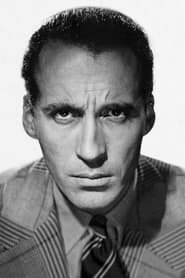
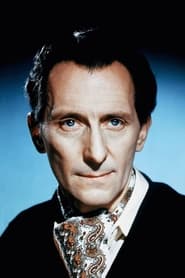
I, Monster is directed by Stephen Weeks and written by Milton Subotsky. An interpretation of Robert Louis Stevenson’s The Strange Case of Dr. Jekyll and Mr. Hyde, it stars Christopher Lee, Peter Cushing, Mike Raven, Richard Hurndall, George Merritt, Kenneth J. Warren, Susan Jameson and Marjie Lawrence. Music is by Carl Davis and cinematography by Moray Grant.

Kept By The Power Of God!

Stevenson’s age old tale gets another make-over as Dr. Charles Marlowe (Lee) invents a drug that releases his patients’ inhibitions. However, upon trying the drug himself, Marlowe finds that he turns into the monstrous Mr. Blake, who with each transformation becomes more cruel and debauched.

Dull and Hyde!

Amicus never quite made the mark on British Horror that they aspired to, a few films are enjoyable, certainly there’s good value to be found with some of the segments in their portmanteau releases, but so many others just come off as weak attempts to create a niche in the market. Quite often there was good intentions on the writing table, such is the case with I, Monster, which has literary intentions that are honourable. The Eastman Color photography is lovely, the period design equally so, and the use of canted angles is a good move, but unfortunately the film is just too dull and beset with problems elsewhere.

First off is Cushing and Lee, two bona fide legends of British cinema and bastions of horror. Lee is miscast, never quite convincing in the Mr. Blake role, which isn’t helped by the make up work which would look more at home in Carry On Screaming. With Cushing it’s just a case of him being underused, which is unforgivable in a horror film aiming for literary smarts. Carl Davis’ musical score is awful, at times I sounds like something that belongs in a silent movie farce.

Starting out as a 3-D venture, that idea was abandoned early in the production, it’s hard to believe that the gimmick would have stopped this being the dreary film that it is. 4/10


Wuchak

Wuchak

6 /10

Amicus’ version of “Dr. Jekyll and Mr. Hyde” with Lee and Cushing

In 1906, a psychologist in London entertains Freudian theories while experimenting with drug injections, which he eventually tries on himself with damaging results.

“I, Monster” (1971) changes the two names of the protagonist/antagonist (Christopher Lee) simply to preserve the surprise of the well-known plot twist in “The Strange Case of Dr. Jekyll and Mr. Hyde.” They did this because there had been so many versions of the story done in cinema by that point. The rival studio, Hammer, did a version eleven years earlier, “The Two Faces of Dr. Jekyll,” and were doing another variation the same year this came out, “Dr. Jekyll and Sister Hyde.” Producers even tried to hide the fact that it was the Dr. Jekyll/Mr. Hyde story in the opening credits when acknowledging Robert Louis Stevenson.

I can see why it’s relatively obscure seeing as how it’s nowhere near as entertaining as “Two Faces.” It takes a lowkey approach with a talky focus on the psychology of the novella and inserts Freudian theories into Stevenson's story with the events taking place two decades after the tale was published.

Also, the editing is sometimes questionable with certain things ambiguous rather than spelled out, such as the fact that Marlowe injects Diane with his experimental drug. This isn’t shown and the viewer has to connect the dots. I'm assuming the BBC frowned upon depictions of drug injections at the time.

Nevertheless, this is one of Lee’s most expressive roles and it’s worth viewing just for that. Also, the psychological theories are interesting and there are entertaining bits throughout. But the idea that Marlowe’s colleagues couldn’t recognize him as Blake is laughable. I guess you have to pretend that he looks different enough than the movie actually shows.

It runs 1 hours, 20 minutes, and was shot at Shepperton Studios, which is located just southwest of London.

GRADE: B-

Avis fournis par TMDB

Enregistre les films que tu veux voir

Avec un compte gratuit, tu gardes ta liste et la retrouves sur tous tes appareils.

Créez votre compte

Gratuit : un e-mail et un mot de passe suffisent.