




The Verdict
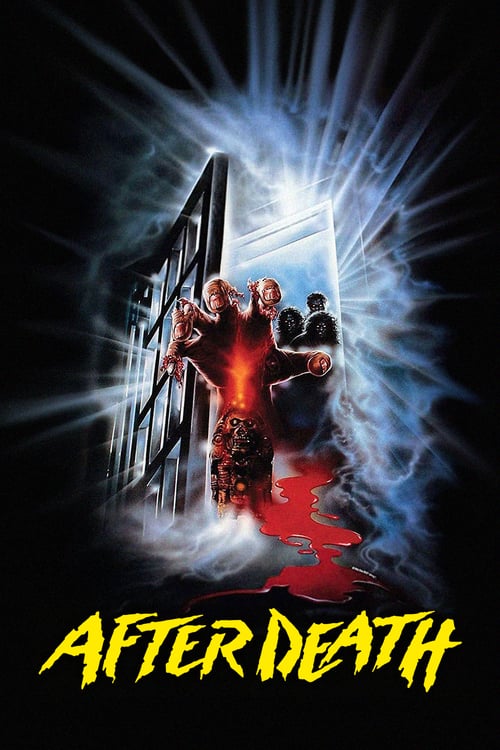
A community of scientists performs experiments using indigenous people from a South Sea island as guinea pigs. A voodoo sorcerer, blaming the scholars for his daughter's death, unleashes the living dead against them; the only person who manages to survive is a girl named Jenny.
A community of scientists performs experiments using indigenous people from a South Sea island as guinea pigs. A voodoo sorcerer, blaming the scholars for his daughter's death, unleashes the living dead against them; the only person who manages to survive is a girl named Jenny. Several years later, two groups of people reach the cursed island: the first group consists of 4 Vietnam veterans named Rod (Nick Nicholson), Mad (Jim Moss), Tommy (Don Wilson), and Dan (Jim Gaines); with them are Louise (Adrianne Joseph) and Jenny (Candice Daly), now grown up. The second group is made up of some researchers, Chuck (Chuck Peyton), David (Massimo Vanni), and Valerie (Cristina Caporilli), tracking down a colleague named Michael Crichton (yes, like the writer). David finds a book of black magic in a cave and accidentally recites some formulas, unleashing the wrath of the zombies again...
The usual "written" and "directed" (quotation marks are mandatory) by Claudio Fragasso, with contributions from his wife Rossella Drudi on the script, and the likely involvement of Bruno Mattei in the direction (Mattei is not credited, but at the time the two were inseparable). Without fear of contradiction, one can speak of one of the worst zombie movies ever.
The film is also known by the title "Zombi 4," and this designation is a typical example of the marketing of Italian distributors/producers of the time, who, to exploit the success of some films, would "invent" sequels, obviously with little in common with the originals (usually a situation or setting). Another glaring example of an apocryphal series, besides "Zombi," is the "Casa" series, which went up to chapter 7!
Moreover, the designation "Zombi" was used only for the Italian market, because Mr. Romero's film in his home country is called "Dawn of the Dead," so the "train" effect would not have worked: then for the English-speaking market a new series was created, "Zombie flash eaters" (the zombie flesh eaters), which starts with "Zombi 2" by Fulci ("Zombie flesh eaters") and goes up to "Zombie flesh eaters 3." We can therefore call this gruesome film both "Zombi 4" and "After Death" or "Zombie flesh eaters 3": choose the title you prefer!
"After Death" was filmed in the Philippines, a very popular setting at the time for medium-low budget films, using part of the staff of "Zombi 3" (of which Fragasso was the screenwriter) with the addition of Claudio Ciccarese as the director of photography (for the record, Ciccarese is sadly known as "the one who messed up the photography of Demonia").
As is natural, the actors are strictly below the radar in terms of acting and photogenicity (with a mention for Nick Nicholson's horrendous teeth and Jim Moss's baffling handlebar mustache). The dubbing saves the day only to a minimal extent, as the dialogues are unlistenable and serve only as a device to give air to the teeth (a pearl among many, the line: LOUISE: "Rod, would you like a nice hamburger?" ROD: "Sure... with your tits as ketchup!").
The music is rather anonymous, with the usual tune in the action scenes and the song "Living after death" performed by the poor man's Iron Maiden.
The zombies' makeup is poor, and their characterization is indecisive between the "dazed" model of Romero's classics and the lively and hyper-kinetic one made famous by "28 Days Later" or the remake of "Dawn of the Dead;" with a preference for the latter. We can therefore enjoy a living dead person running in the jungle with a performance worthy of a first-class sprinter, talking zombies, and reanimated corpses handling firearms.
The main flaw of the film lies in the haphazard screenplay, so approximate that it should be studied in film schools as an example NOT to follow absolutely. It is not even clear what the origin of the zombies is: at the beginning of the film, a narrator tells us about mysterious experiments aimed at defeating death and disease, leading the viewer to believe that the cause of the reanimation of the corpses is of a scientific nature. Immediately afterward, we learn that the dead reanimate due to the voodoo practices of a vengeful sorcerer.
We do not have time to embrace the cause of voodoo, and here comes the third door of Hell and mysterious books of black magic that, read by chance by someone, reanimate the dead (the book is not understood in which language it is written, but the verses give voice to hilarious rhyming couplets!).
Worthy of note is the surprise ending, so dark as to be incomprehensible, presumably, even to the Fragasso spouses, who evidently ignore that the twist must have some semblance of logic.
The splatter, the only consolation in films like this, is scandalously absent in the Italian version. The gore effects, many and almost passable, are the exclusive prerogative of the English-language version, lasting 84 minutes against the 80 of the AVO VHS: a full 4 minutes of deleted scenes. It remains a mystery the choice to exclude, in the version for our country, the only vaguely interesting aspect of the work. Not to mention that the ending of the film is all played on truculent effects, reason why in the Italian edition it results even more indecipherable.
Whether integral or censored, this film remains a disaster. If you are looking for a good horror, look elsewhere; if instead you want to indulge in the forbidden pleasures of trash, rest assured that "After Death" is waiting for you with open arms!
Comments
Comments (0)




Comments