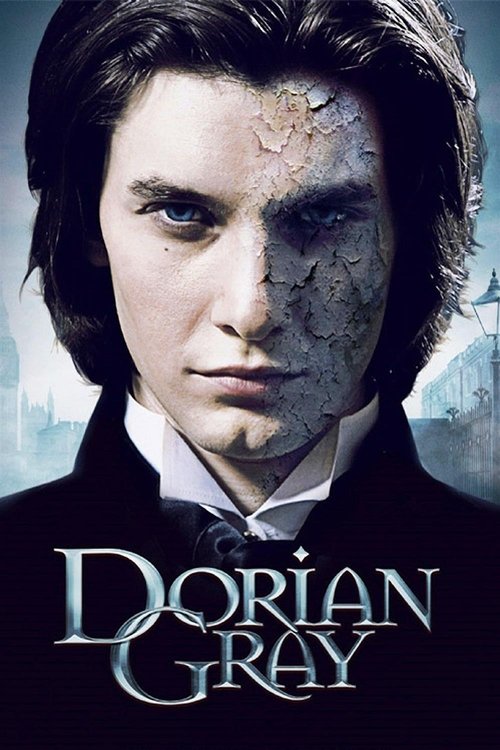



Dorian Gray backdrop
Dorian Gray poster

DORIAN GRAY

2009 GB HMDB
September 9, 2009

Seduced into the decadent world of Lord Henry Wotton, handsome young aristocrat Dorian Gray becomes obsessed with maintaining his youthful appearance, and commissions a special portrait that will weather the winds of time while he remains forever young. When Gray's obsession spirals out of control, his desperate attempts to safeguard his secret turn his once-privileged life into a living hell.

Directors

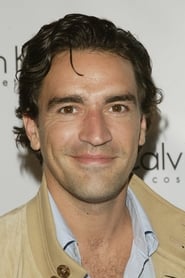
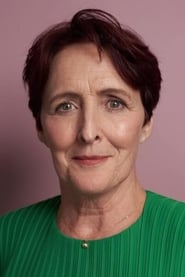
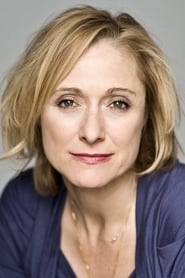
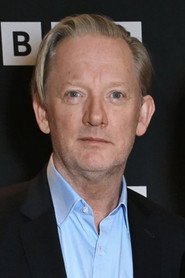
Cast

👍 👎 🔥 🧻 👑

Comments

Comments (0)

Crew

Production: Paul Brett (Executive Producer)James Spring (Executive Producer)James Hollond (Executive Producer)Xavier Marchand (Executive Producer)Tim Smith (Executive Producer)Simon Fawcett (Executive Producer)Barnaby Thompson (Producer)
Screenplay: Toby Finlay (Screenplay)
Music: Charlie Mole (Original Music Composer)
Cinematography: Roger Pratt (Director of Photography)

REVIEWS (1)

Roberto Giacomelli
The twenty-year-old Dorian Gray arrives in London after inheriting his recently deceased uncle's mansion. Soon, the ingenuous Dorian turns to the teachings of Lord Henry Wotton, who introduces him to the pleasures of life and encourages him to adopt the philosophy of 'carpe diem.' Dorian is invited to pose for a portrait by the painter Basil Hallward; fascinated by his own painted image, Dorian wishes he could remain young and beautiful forever, and, as if by magic, his wish comes true. It is the painting that accumulates the wrinkles of age and the decay of Dorian's soul, while his body remains that of a twenty-year-old. Among feature films for cinema, home video, and TV series episodes, the character of Dorian Gray has had at least twenty different faces, from Hurd Hatfield in 'The Picture of Dorian Gray' (1945) to Stuart Townsend in 'The League of Extraordinary Gentlemen' (2003), passing through Helmut Berger of 'The God Called Dorian' (1970). In recent years, an incredible amount of adaptations of Oscar Wilde's work has strangely flooded the market, hinting at a renewed interest in the character created by the mind of the noted Irish writer, which could well be read as a presage of the imminent arrival of a more production-heavy feature film. And indeed, directly from Great Britain and under the direction of Wilde specialist Oliver Parker ('An Ideal Husband'; 'The Importance of Being Earnest'), 'Dorian Gray' hits the big screen. This time, the face of the young man with the corrupted soul belongs to the twenty-eight-year-old Ben Barnes, known to the public for playing Prince Caspian in the second chapter (and soon also the third) of 'The Chronicles of Narnia.' Barnes is not an actor with great experience and does not have absolute stage mastery; he is awkward and immature, and this is noticeable in every one of his appearances. However, Barnes works; he has the physique du role to play Gray, and, despite the results, it is also noticeable that the effort on his part is complete. Not a perfect Dorian but still an appreciable Dorian, perhaps one of the few so far to appear credible in the condition of innocence and ingenuity that precedes the initiation and corruption effected by Lord Wotton, since most of the actors who have so far played Dorian Gray had a pirate-like appearance even before discovering the power of the painting. In general, Parker's work can be considered successful and appreciable both for the general spectator and for the connoisseur of the literary work of inspiration. Despite some liberties taken by screenwriter Toby Finlay, the film is rather faithful to the novel and manages to recreate some of its atmospheres that focus on the moral decay of the protagonist and, by reflection, of English society at the end of the 1880s. What Parker fails to give his work, however, is a specific personality and a true filmic rhythm: what he pays in respect to the source does not create any advantage for him on the purely cinematic level. 'The Picture of Dorian Gray' is a particular novel, very descriptive and strongly metaphorical, difficult to adapt into cinematic form while remaining faithful to the written work, and indeed the film, which aims to be faithful, proves to be at times boring, struggles to capture the spectator, and appears as a cold and distant work. It must be said, however, that perhaps this sensation of detachment and coldness is partly intended, since the same photography by Roger Pratt tends to enhance dark and sometimes glacial tones, giving the film a visually recherché coloration that is sometimes dark and sometimes solar. The story of 'Dorian Gray,' it is known, is rather audacious and should focus heavily on eroticism to explain the growth of the protagonist in his journey of immorality, from a clean-shaven and ingenuous young man to a violator of young girls and a seducer of mature women and men. Parker rightly does not shy away from this perspective, but the staging of eroticism in this film is among the most awkward seen recently in a feature film. Every embrace, every pile-up, every minimal hint at the dimension of sex is resolved timidly with a couple of shots that scream with concern 'I would but I cannot.' A strange and questionable choice, given that we are dealing with a product clearly for adults that would have certainly benefited from a pinch of morbidity and explicitness more than what was shown. To its credit, this 'Dorian Gray' really emphasizes the more horror aspects of the story. There are abundant macabre details linked to the transformation of the painting and the dreams/remorse that torment Dorian, and there are also unexpected bursts of violence that easily lead to splatter details. But what brings 'Dorian Gray' closest to the horror universe is the final climax, a well-conceived confrontation/clash between Dorian and his 'soul' that stands out especially for the visual rendering of the scene. The scenario is completed by a whole series of good English actors who fill the scene, and it is worth mentioning Colin Firth ('Mamma Mia!'; 'Girl with a Pearl Earring') as Lord Wotton and Ben Chaplin ('Lost Souls – The Prophecy'; 'Birthday Girl') as Basil. Rounded-up vote.
👍 👎 🔥 🧻 👑

Comments

Comments (0)

Where to Watch

Stream

Amazon Prime Video Amazon Prime Video
Amazon Prime Video with Ads Amazon Prime Video with Ads

Rent

Amazon Video Amazon Video

Buy

Amazon Video Amazon Video

COMMUNITY REVIEWS (4)

John Chard

John Chard

5 /10

How Ominous!

Another adaptation of the Oscar Wilde story. Film is about Dorian Gray (Ben Barnes), a man taken by the hedonism bug shown to him by Lord Wotton (Colin Firth). Upon having his portrait painted, Dorian comes to never age, but at what cost?

Clearly not faithful to the literary source, Oliver Parker's film is an interesting misfire. As a sexy chiller it kinda works, having more in common with Hammer Films of the 70s than with Wilde's prose. Yet it often feels like style over substance, blood or nudity for blood and nudity's sake. While strong performances by Firth and late in the play by Rebecca Hall hold the attention, Barnes is bland and apart from being pretty, is unconvincing. Also irritating is Charlie Mole's musical score, it's good, it's just not in the right movie!

The makers try to make a Gothic horror film from a Gothic horror novel, but never quite get to grips with the undercurrents of the story. Shame. 5/10

Gimly

Gimly

4 /10

Handballs it in on just about every important (and engaging) aspect of the actual Portrait of Dorian Gray story.

Final rating:★★ - Had some things that appeal to me, but a poor finished product.

tmdb28039023

1 /10

It's a shame that such a theoretically perfect Dorian Gray as Stuart Townsend was wasted on The League of Extraordinary Gentlemen. Sure, at 31, Townsend was arguably too old for the role in 2003, and even more so in 2009, the year this Dorian Gray was released; he was also too expressive, and based on both this film and The Picture of Dorian Gray (1945), it seems that the ideal Dorian Gray is a blank page — an unpainted canvas, so to speak, and while this makes a degree of sense, it does leave us wondering what exactly everyone sees in the titular character.

This is especially true of Ben Barnes, who’s so irresistible that he strips a young debutante of her virtue and, when her mother tries protests, he sleeps with her too, winning a bet in the process; this is a development that even Oscar Wilde would find vulgar (but, worse than vulgar, screenwriter Toby Finlay is trite, making Dorian say, when asked by Lord Henry (Colin Firth) what his secret is, the line "If I told you, I'd have to kill you." ”; I shudder to think that someone watching this film might believe that Wilde is responsible for this cliché, even if in 1890 it was not yet a one), and that we find it incredible because Dorian is nowhere near as fascinating as director Oliver Parker would like us to believe (but he is rich, though, so there’s that).

Now, Dorian is a Faustian character, and as such, he has little choice but to be a thankless role — yes, in theory he has a lot of fun (fun that the 1945 film, unlike this one, wisely left offscreen; Dorian’s vices are unspeakable, and trying to flesh them out is useless and counterproductive), but in practice he discovers, like Marcello Mastroianni, that the Dolce Vita is actually very bitter. The movie even manages to screw up the really juicy role of Lord Henry; Firth is a good actor, but wrong (especially when compared to George Sanders in the 1945 version) for this role for the same reasons that made him a poor choice for Valmont.

CinemaSerf

CinemaSerf

6 /10

I know "Dorian Gray" was supposed to be beautiful, but I doubt if Oscar Wilde would have wanted something this insipidly pretty or seedy! It's Ben Barnes who tries to step up to the plate in the title role and he falls pretty flat. "Gray" is a young man who mixes with all and aims high after inheriting a modest house in London. Quickly he falls prey to the more debauched elements of society, led by "Lord Wotton" (Colin Firth) and begins to leave behind his moderating friends like painter "Hallward" (Ben Chaplin). It's a portrait done by that man that seems to be acting as a sponge for the increasingly selfish and odious "Gray". No matter how odious his behaviour, he seems to have the gift of eternal youth and immortality. He treats everyone around him with disdain and earns the enmity of just about everyone. Things take a bit of an unexpected turn, though, when he falls for "Emily" (the unremarkable Rebecca Hall) - the daughter of his duplicitous mentor. "Wotton" is quite happy to observe his charge use and abuse, but not in his own back yard - and that's when things start to come to an head for the over-confident libertine. Is there still time for some form of redemption? Well maybe for "Dorian" but not really for this plodding drama that relies too much on our own imagination rather than present us with a strong visualisation of the epitome of evil that I was expecting. Barnes is simply too nice, Chapin too - and though Firth fares a little better it is still lacking the subtly, mischief and punch of the original book. To be fair, this is quite a difficult story to dramatise. There isn't really enough to sustain almost two hours and maybe it would have been better shortened with a more focused direction from Oliver Parker. It does look good, is worth a watch but is really rather disappointing.

Reviews provided by TMDB