











The Verdict
Parisian suburbs. In a climate of general urban disorder due to violent clashes between police and young revolutionaries, some boys take advantage of this to rob a bank.
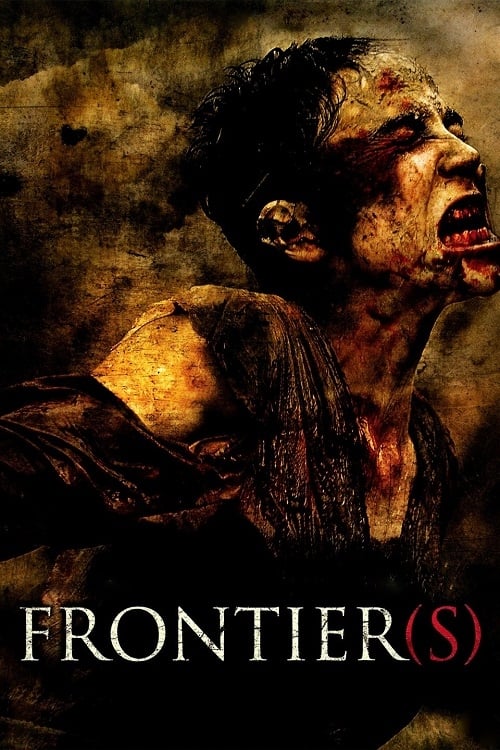
Parisian suburbs. In a climate of general urban disorder due to violent clashes between police and young revolutionaries, some boys take advantage of this to rob a bank. The heist doesn't go well, and one of them is killed. The remaining four, divided into two groups, head for the border with Luxembourg, intending to reach the Netherlands as soon as possible. When night falls, the boys decide to take refuge in an inn in the middle of the countryside, but unfortunately for them, the place is run by a family of neo-Nazis with a passion for torture and cannibalism.
If lack of originality in cinema were a crime, “Frontiers” would deserve the maximum penalty. Xavier Gens, who would soon fly to America to direct “Hitman”, actually makes a film that is considered derivative: “L’Odio”, “The Descent”, “Psycho”, “Hostel”, “La casa nera” and of course “Non aprite quella porta” are dissected, plundered, paid homage to, and sewn together to give life to a feature film that follows already trodden paths. Yes, but originality these days is a rare thing to find, and so, between an official remake, one disguised as an “original” film, and a patchwork of cult films, we often find ourselves evaluating stories that echo other stories, but the beauty is that sometimes this echo has such a sublime and hypnotic sound that it makes us forget the source and enjoy the new melody to the fullest. “Frontiers” is exactly like that!
What stands out and immediately catches the eye in Gens’ film is the explicit political component that hovers over the entire story. The film opens with pseudo-documentary videos illustrating a routine revolt, one of those that from time to time set fire to the streets of the suburbs of some major urban centers. Specifically, we are in France, in the suburbs charged with anger and violence where Matthieu Kassovitz set that small masterpiece that is “L’Odio”; this time too the clashes occur between young people and the police and with explicit references refer to the disorders that occurred in 2002 when the far-right of Le Pen did not come to power by a hair’s breadth. But fear generates monsters, the director and screenwriter seems to tell us, who with an ironic and grandguignolesque leap of reality embodies the French far-right in a terrifying nonapritequellaportian family, composed, obviously, of a group of neo-Nazis eager to perpetuate the purity of their race. The family led by Father Von Geisler (a fantastic Jean-Pierre Jorris) is a sort of mad particle within a collapsing society, a signal of derailment and at the same time a conscious reality anchor that moves backward in time to eliminate, in its own way, the evil of society, with iron rules, respect for hierarchy and sense of sacrifice (alrui).
In a certain sense, one could consider the neo-Nazi family of “Frontiers” the exact opposite of that of “Non aprite quella porta”: on the one hand, fanatical purists of the race who distance themselves from the deformed and literally feed on the “not pure”, Aryan-speaking; on the other hand, we have instead the proletarian family displaced and made “dangerous” by progress and industrialization, a tabernacle of freaks who, on the contrary, vent their anger against young, beautiful and vital people to make them like themselves. In both cases there is a sense of grotesque and horrific transfiguration of power, which thus has a “monstrous” correspondent for both political sides, as if to demonstrate that the political difference is only apparent, because in substance it is always the mass (the young, the future of society) that is cannibalized victim.
It is interesting to note in “Frontiers” also an explicit reflection on violence. The film makes the violence shown its flagship, as much as contemporary horror cinema, reaching excesses that earned it the ban for minors in almost every country. But violence seems in this case the only language that the actors understand: rebels and law enforcement use clubs and batons to communicate hate, justice and repression; the young protagonists physically attack those who block their escape; the family of psychopaths expresses themselves solely through acts of internal-repressed violence and towards strangers. Until we reach Yasmine, the female protagonist (played by the brilliant and intense Karina Testa), future mother who is forced to learn the same language of violence to make her voice heard in a world dominated by chaos.
To have a complete picture of the value of a work loaded with content, spectacle and violence, just look at the excellent packaging that combines an inspired direction with a convulsive and nervous editing ideal to express the anger, hatred and madness of the characters, and a very careful photography that prefers the alternation of dark, cold colors, to bright, warm colors, with however some excesses of darkness that make some scenes unclear.
“Frontiers” has already been said; “Frontiers” has already been seen; “Frontiers” is a completely new story.
Comments
Comments (0)


Comments