
The Verdict
A writer, who dedicates herself to publishing legends and popular traditions, travels to a small Friulian village in search of material for her new book. Upon arriving and being hosted in an old inn, the writer learns that the village is governed by the myth of the beast: a legend that tells of a ferocious beast that wakes up on full moon nights and roams the streets of the village to satisfy its blood thirst.
A writer, who dedicates herself to publishing legends and popular traditions, travels to a small Friulian village in search of material for her new book. Upon arriving and being hosted in an old inn, the writer learns that the village is governed by the myth of the beast: a legend that tells of a ferocious beast that wakes up on full moon nights and roams the streets of the village to satisfy its blood thirst. Soon, the writer will discover that what she thought was just a legend has a basis in reality.
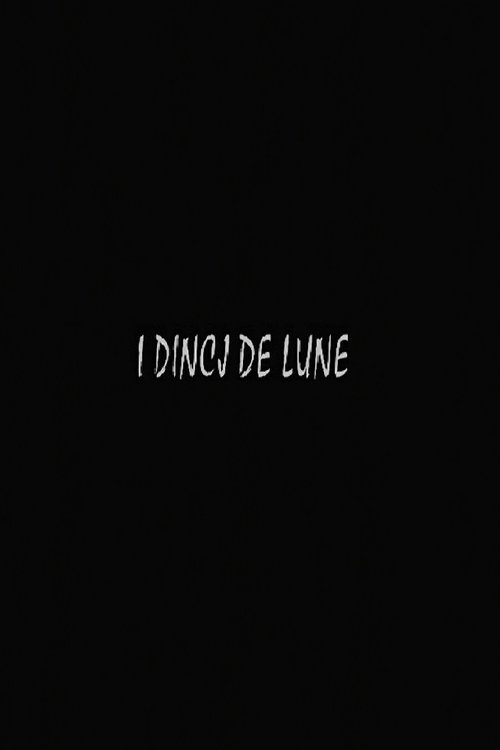
With "I dincj de lune" we are not dealing with a real film, but rather a medium-length work of forty minutes, but given the excellent result achieved and the professionalism with which it was made, it undoubtedly deserves to be included among the many established feature films.
The medium-length work in question is one of the rare cases of a werewolf movie made in Italy; in fact, it is difficult to come across all-Italian films on the "werewolf" theme. The idea of making a horror medium-length film came to Lorenzo Bianchini in 1999, who made this film his true debut, with the aim of participating in a Friulian film festival; and this is why this "I dincj de lune," the first example of horror made in Friuli (followed by the feature films of the same Bianchini "Lidris cuadrade di tre" and "Custodes Beastiae"), is entirely performed in the Friulian language with Italian subtitles.
Bianchini with "I dincj de lune" (which in Italian means "The Teeth of the Moon") not only succeeded in making one of the best films about the beast that lives thanks to the pallor of the full moon, the werewolf, but also brought to life one of the most unsettling and terrifying works set under the moonlight. Here, terror is not transmitted to us directly as John Landis did in 1980 with "An American Werewolf in London" or Joe Dante with "The Howling" (just to name a few examples), showing us clearly the horror through terrifying hairy creatures that mutate and howl at the moon, on the contrary Bianchini decides to unsettle the viewer differently, never showing the horror in its most revolting forms; and so we never see clear representations of the beast (although perhaps it was not even a choice of the director but only an obligation due to the budget), but for Bianchini the terror consists in an increase of tension and suspense suggested to the viewer through a decidedly realistic and unsettling story, in which terror reigns but is almost never shown (only a very quick frame at the beginning of the film, depicting the jaws and the back of the terrifying werewolf), where nothing is clearly seen but everything is suggested. We see the protagonist writer "plunge" slowly into an abyss of terror, always suspended between legend or reality, but only at the end will she discover if the beast's legend is just one of the many popular legends that haunt the minds of the superstitious villagers, or if, conversely, the legend is inspired by real and existing facts.
Decidedly good is the acting performance offered by Annalista Gaudio, who, in addition to being the protagonist of this medium-length film, is also the cousin of the director Lorenzo Bianchini, so much so that she can be found in other minor works always by the director (in the beautiful short film "Paura dentro," always in the role of the protagonist) or in Bianchini's first feature film "Lidris cuadrade di tre" in the role of an extra.
It is impossible not to identify and find the passion that Bianchini has for the horror genre, so much so that in this medium-length film he cites great icons of Italian horror cinema: from the father of Italian horror Mario Bava, Bianchini reprises the figure of the ghostly girl dressed in white and playing with a ball, just like little Melissa Graps in "Operazione Paura"; while from Pupi Avati the director draws inspiration for the settings and for the way the film's narrative progresses.
In conclusion, this "I dincj de lune" is an excellent medium-length film, a great directorial debut for Bianchini who has immediately demonstrated his great competence in the world of cinema. Absolutely worth seeing, albeit very difficult to find.
Comments
Comments (0)
Comments