





The Verdict
Barbara and her brother Johnny go to the cemetery to visit a relative's grave, but they are attacked by some zombies. Johnny loses his life in the struggle, while Barbara manages to reach a seemingly uninhabited farm.
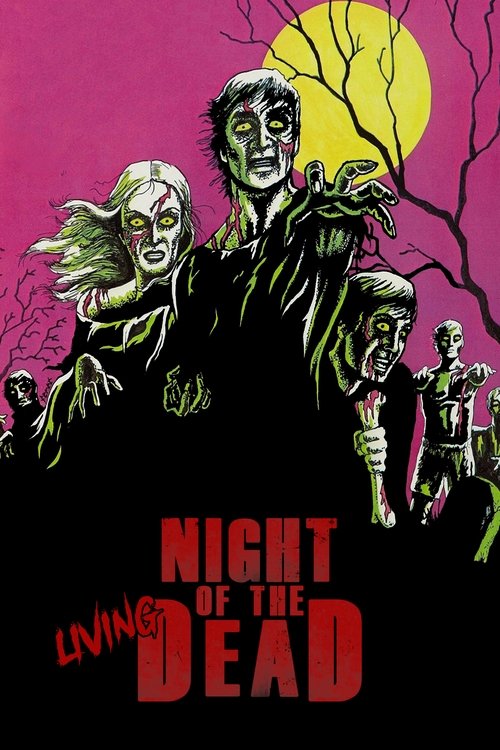
Barbara and her brother Johnny go to the cemetery to visit a relative's grave, but they are attacked by some zombies. Johnny loses his life in the struggle, while Barbara manages to reach a seemingly uninhabited farm. Shortly afterward, a young black man, Ben, knocks on the farmhouse door and proposes to barricade themselves to avoid the attacks of the zombies, who in the meantime are surrounding the farm. The two fugitives will soon discover that in the cellar of the house there are five other people hiding, but instead of helping each other, tensions arise among the inhabitants of the house.
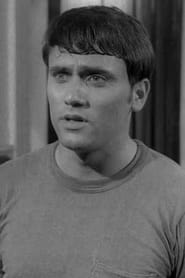
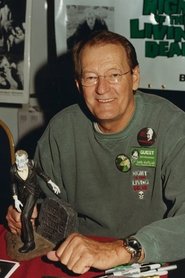
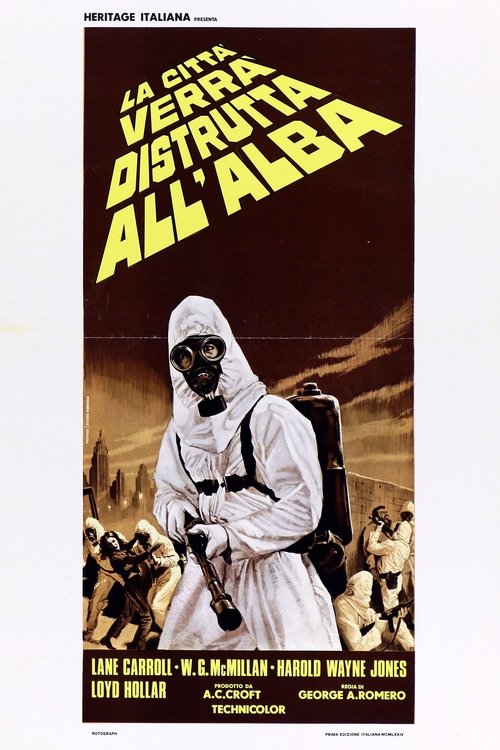
A fundamental work of horror cinema, a film that goes beyond simple genre cinema and stands as a notable example of Cinema tout court. Despite its importance, 'Night of the Living Dead' was made by chance, thanks to the decision of the twenty-eight-year-old George Romero, a young documentary filmmaker, and his friend John Russo, to produce a low-budget science fiction film. The first subjects written by Russo, almost Ed Wood-style science fiction, were fortunately discarded, and the final screenplay was based on an idea by Romero derived from Richard Matheson's novel 'I Am Legend'; a literary work already adapted for the big screen in 1963 by Ubaldo Ragona with 'The Last Man on Earth.' Finding a financier in the advertiser George Hardman (who played the odious Mr. Cooper and was also responsible for the film's music), filming began in June 1967. It was shot on weekends whenever money and film stock could be gathered; the actors, with the exception of Duane Jones and Judith O'Dea, were all non-professionals. After 7 months and a final investment of just $117,000, the film was completed.
It was not easy to find a distributor, given the characteristics considered unappetizing for the work, such as the choice of black and white, the absence of a love story, a tragic ending, and 'even' a black protagonist. The interest of the Walter Read Organization allowed the film to circulate in suburban theaters and the drive-in circuit. Thanks to word of mouth, the film quickly became a cult, it was even included in a review dedicated to the best cinematic debuts organized by the Museum of Modern Art in New York and in the end managed to guarantee a worldwide box office of 30 million dollars (a figure from which Romero and his associates saw very little, most of it was pocketed by Mr. Walter Read). With 'Night of the Living Dead,' the old strand of gothic horror, exemplified by Hammer films, comes to an end, and the season of so-called new horror begins. This leap in quality is not to be sought so much in the gruesomeness of the images shown, in the film there is blood but it is not shown with particular ostentation and the choice of black-and-white photography inevitably tends to depower the gore images (from this point of view Romero will do qualitatively and quantitatively much more with subsequent films, especially in the finale of 'Dawn of the Dead,' a real orgy of offal in the air). The change in the way of understanding horror is mainly a matter of content. We move from conventional haunted castles and dusty crypts, a picturesque and alien world, a sort of comforting elsewhere, to our world. In the tragic odyssey of the 7 characters in the film, in their mutual brawling with each other, we see ourselves and the world in which we live. Regarding the plot, Romero extracts from 'I Am Legend' the theme of the siege by nightmare creatures. While in Matheson's novel the besieging beings are vampires described in a rather conventional manner: they move at night, have an aversion to mirrors and garlic, and are eliminated by piercing their hearts; in Romero's film the so-called 'monsters' are imagined in such a way as to be very similar to humans, a similarity that is their most unsettling characteristic. The Romerian zombie is not simply a 'monster,' it is above all a 'symbol,' a particularly powerful icon, readable at different levels. The living dead have been interpreted in various ways. The representatives of a new society that devours the old (depending on the point of view, the thing can be seen in a positive or negative light). The disinherited and marginalized, or in other words, most human beings, who rebel against the status quo. The symbol of conformism: they are many and they are stupid, but they are the majority and sooner or later everyone becomes like them.
In the documentary 'American Nightmare,' Romero also provided another interpretation, according to him the zombie represents the thing he fears the most: people. Multiple and contradictory readings, it is not said that one should be privileged, and it is also this that makes the film great (this ambiguity reminds one of another great example of fantasy cinema 'Invasion of the Body Snatchers' by Don Siegel, in which the body snatcher could be seen both as the bogeyman of communist massification and as the emblem of the conformism of 1950s American province). 'Night of the Living Dead' is a film made in 1968, a historical period rich in political and cultural ferment of which the film consciously reflects certain themes. The institution most targeted is that of the family, between vague incestuous impulses between Johnny and Barbara and family nuclei symbolically 'in decomposition' like that of the Coopers, whose daughter Kate, bitten by a zombie, progressively turns into a zombie intent on tearing her parents apart. The media do not fare well either: considered extremely valuable by the protagonists, they only spread confused and substantially useless news. Overall, the film is burdened with Romero's anthropological pessimism; unlike classic siege films, the precarious situation does not manage to unite the characters, who instead of joining forces attack each other and make their condition even more desperate; as if to say that the much-praised human rationality is actually useless against selfishness and the innate destructive impulses of human beings. Beyond all the messages present, intentionally or not, in the film, the main merit of 'Night of the Living Dead' is that it is a genuinely terrifying film.
A terror that insidiously creeps in until the viewer realizes that in the fear of dying of the human characters and in the death already in progress of the zombies there is nothing but the reflection of oneself and one's destiny. An extraordinary film, an example of what horror cinema can be in the hands of a great director.
Comments
Comments (0)






















Comments