









The Verdict
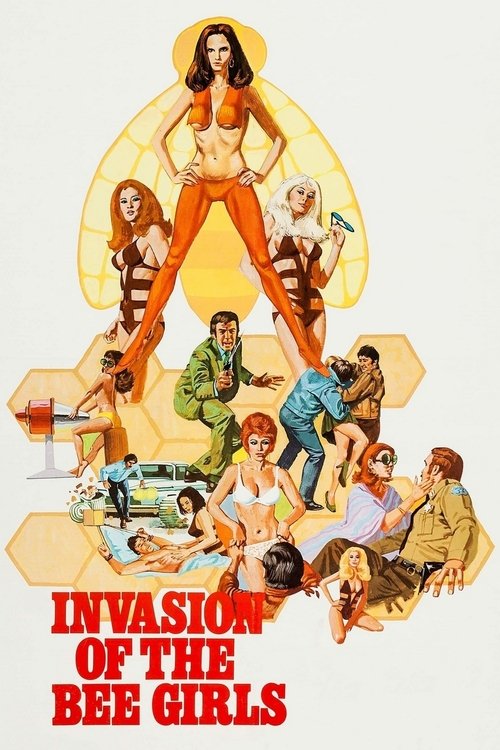
In a small town in the southern United States, strange deaths from cardiac arrest occur, caused by too "intense" sexual relations. The victims are all men, and their numbers grow with each passing day.
In a small town in the southern United States, strange deaths from cardiac arrest occur, caused by too "intense" sexual relations. The victims are all men, and their numbers grow with each passing day. To clarify the situation, a plainclothes police officer is sent to the scene of the deaths, who discovers that the cause of everything might lie in a genetic mutation affecting some women in the town.
There was a time when horror and science fiction cinema found interesting themes in everyday social reality to interpret the fears and concerns of modern man. The 1950s and 1960s were marked by a rich science fiction production that, through giant monsters, genetic mutations, and alien invasions, managed to exorcise and ridicule the fears of the technological process, war, and the ecosystem changes that often followed. The socio-cultural changes that affected man from the late 1960s with cultural revolutions offered new fuel and new themes to stage real fears in the form of fantasy/horror films.
"The Invasion of the Bee Women" follows this trend, representing the classic science fiction product with a dash of horror, which combines social metaphor with genre entertainment.
The film was directed by Denis Sanders in 1973, during a period when the movements for women's emancipation and gender equality, which had already begun in the previous decade, were becoming more militant and beginning to achieve important practical results. Protests and movements that destabilized the now-consolidated gender division in society and the family, thus offering inspiration to create a story in which the role of the male and his virility were threatened. A bit like what happened in Brian Forbes' cult film "The Stepford Wives," "The Invasion of the Bee Women" also draws inspiration from the 1968 feminist movements, but while in Forbes' film everything revolved around the possibility of repressing the desire for female emancipation, in "The Invasion of the Bee Women" emerges the danger that such movements of sexual liberation could represent for the male. Unfounded fears, naturally, but still dictated by waves of social change and innovation that undermined the certainties accumulated over centuries of social mapping.
The film in question portrays a group of mutant women generated by radiation produced by a pharmaceutical industry, aggressive women eager for extreme sexual experiences that lead to cardiac arrest in their partners. The anti-feminist theme thus combines with the fear of scientific progress, adding to three different film genres: science fiction, horror, and erotic. From science fiction, "The Invasion of the Bee Women" has the plot and atmosphere of mystery/disaster; from horror, it has elements such as strange murders and a certain taste for the macabre; while eroticism emerges from the numerous scenes of female nudity and the " risque " situations that characterize much of the film.
Beyond the undeniable charm that this film can evoke, however, no particular artistic merits are found. Sanders' direction is not particularly memorable, limiting itself to documenting the entire affair with a certain detachment.
The actors are not exactly top-notch, so little attention will be given to the protagonist, played by the wooden William Smith ("Conan the Barbarian"; "Maniac Cop – Sadistic Cop"), to focus more on the charms of the numerous scantily clad young women who populate the feature, from Anita Ford ("The Messiah of the Devil"; "The Porno Detective") to Victoria Vetri ("Rosemary's Baby"; "When Dinosaurs Bit Their Tails"). Modest special effects, catchy musical theme.
It is watched with amusement and a certain nostalgia for a certain type of poor but honest cinema now extinct, but in general "The Invasion of the Bee Women" is certainly not a must-see film.
Warning! There is a DVD edition of the film edited by EMIfilm inexplicably cut off the last few minutes, so you can only rely on the newsstand edition (edited by Mosaico media) or the recent reprint by DNC, both complete.
Comments
Comments (0)











Comments