












The Verdict
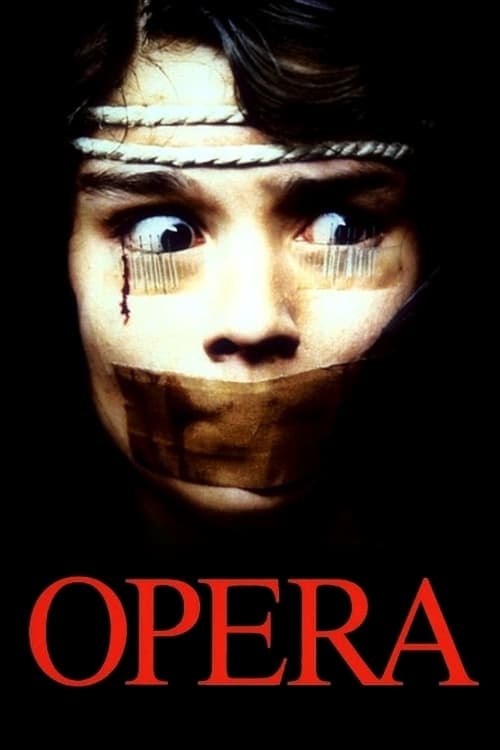
Among the films from the final phase of Dario Argento's so-called "golden and classic period," Opera is often seen as a visually extraordinary but narratively imperfect film. We are faced with one of the purest examples of Argento's style: a cinema that privileges aesthetics, camera movement, and sensory experience over narrative coherence.
Among the films from the final phase of Dario Argento's so-called "golden and classic period," Opera is often seen as a visually extraordinary but narratively imperfect film. We are faced with one of the purest examples of Argento's style: a cinema that privileges aesthetics, camera movement, and sensory experience over narrative coherence. The sequences set in the opera house are particularly praised: the direction transforms the space into an almost abstract place, where the viewer becomes a voyeur alongside the killer. Therefore, we can openly speak of an "artistic" film, closer to a visual experience than a classic thriller.
The most celebrated aspect is indeed the direction: impossible tracking shots, disturbing subjective perspectives (such as those of the raven), and a hypnotic use of music that blends opera and rock. This style is often defined as "extreme" and "baroque," but it is also what makes the film unique in the genre landscape.
Unfortunately, the film is not free from rather evident and obvious limitations, made apparent by a rather fragile plot, with unconvincing developments and associated characters that lack particular depth.
The acting is also sometimes weak, lacking, and uneven, while the ending comes across as confused and excessively out of place.
It is worth noting one of the film's strengths: the theme of forced gaze. The protagonist forced to witness the murders becomes a metaphor for the viewer themselves, trapped before violence.
This element has led some critics to interpret Opera as a reflection on voyeurism in horror cinema.
Ultimately, Opera can be defined as a watershed experiment between the master's golden period and his decline, since after this work, he would never again direct films of notable quality worthy of his illustrious and undisputed name.
Comments
Comments (0)











Comments