














The Verdict
Lawrence Talbot returns to his hometown upon hearing of his brother Ben's death, devoured by a beast in the woods. The hunt for the beast is on: the villagers are convinced it's a bear and for this reason they go to the gypsy camp to stone the beast, an expedition Lawrence also joins.
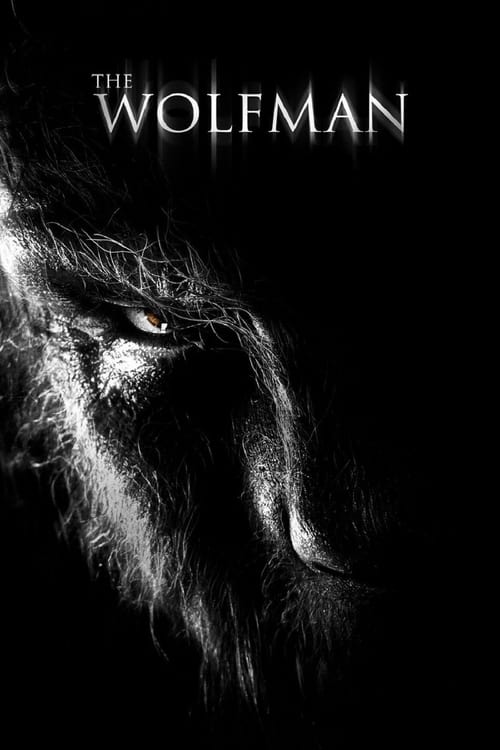
Lawrence Talbot returns to his hometown upon hearing of his brother Ben's death, devoured by a beast in the woods. The hunt for the beast is on: the villagers are convinced it's a bear and for this reason they go to the gypsy camp to stone the beast, an expedition Lawrence also joins. But the killer beast is not the bear, but a giant wolf that appears at the camp and causes a massacre, biting Lawrence as well. Now everyone is convinced that the enormous wolf was actually a werewolf and since Lawrence was bitten by it, he is destined to transform during the full moon. The man now has to face the villagers' superstition and the impending curse, as well as all the ghosts of the past he had learned to forget, such as the tragic suicide of his mother when he was just a child.
In the early 1990s, Columbia-Tristar Pictures had the great idea of bringing back the characters of classic 1930s and 1940s horror cinema to the big screen. Francis Ford Coppola's "Dracula" led the way with enormous success, followed by Kenneth Branagh's "Frankenstein," "Mary Reilly," an unprecedented viewpoint on the story of Dr. Jekyll by Stephen Fears, and a modern revision of the werewolf myth with "Wolf - The Beast Is Out" by Mike Nichols. The formula was clear: take an icon of past fantastic cinema, with literary origins or not, and bring it back to the big screen with considerable production effort that included major stars in the cast and an authoritative director. At least a decade passed and the invisible man also returned to visit us with "The Invisible Man" by Paul Verhoeven, always under the Columbia label and still respecting the usual formula. The sample of monsters was almost complete, only the Phantom of the Opera was missing from the roll call, which had not been absent from the screens with Dario Argento's reworking, the Creature from the Black Lagoon, and the Mummy, creatures owned by Universal Pictures. Stephen Sommers took care of the latter in 1999 (and again in 2001), who, under the protective wing of Universal Pictures, also brought all the other monsters back to the big screen in 2004, from Dracula to the Frankenstein creature, in that somewhat indigestible "Van Helsing." In short, in just over a decade, all the icons of classic horror returned to the big screen, even more than once, as if to sanction the immortality of these "monsters" and at the same time the lack of original ideas in Hollywood.
But it was inevitable that in a period of convulsive remakes and the return of old glories like the current one, one of these black-and-white satanasses would not come back to life, so almost seventy years after its first appearance on the big screen, the original Wolf Man returns, the one who, in the registry office and without excess hair, answers to the name of Lawrence (Larry to friends).
In 1941, it was the versatile son of an artist Lon Chaney Jr. who wore his clothes (and fur), today it is the talented Benicio Del Toro, who personally took an interest in the project producing it. The result of this troubled remake - lasting several years with changes of directors and scripts - is surprising and unexpected, a perfect popcorn movie that contains more than any other modernization of old classics the spirit of the original work from which it takes inspiration.
What the "new" old monsters had not managed to convey until now was that sense of genuine, almost exploitative entertainment that characterized the originals in black and white and the subsequent rewrites (mostly Hammer), they went from the elitism of the first Columbia-Tristar productions (which nevertheless gave rise to real milestones, see "Dracula" by Coppola) to the carnival shows for younger audiences of Universal, the only one who had succeeded in evoking a bit of healthy 'genre' until this moment was Verhoeven with his "The Invisible Man." But with "Wolfman" we have reached the stylistic and content perfection of the B-movie for large audiences, the ideal re-proposal of the ancient formula that gave birth to all the monsters mentioned here.
The story told in "Wolfman" faithfully follows that of the original written by Siodmak, making substantial changes in the evolution of the plot, especially deepening and complicating the relationships between the characters. Thus, the screenplay by Andrew Kevin Walzer ("Seven"; "The Misery of Sleepy Hollow") and David Self ("Haunting - Presences"; "It Was My Father") tries to focus more on the family relationships of the Talbot household than on the torment of a man afflicted by lycanthropy. The strength, on a narrative level, of "Wolfman" lies precisely in the complicated father-son relationship, a conflictual relationship that seems to want to found its roots in Greek tragedy; Lawrence Talbot thus appears as a modern Oedipus, a son who gradually becomes aware of his rivalry with his father, a rivalry almost written in destiny that originated from a trauma and a subsequent distancing and that has made the parent practically a stranger in the eyes of the son. The tragic reading given here to the family story of the werewolf has a theatricality as obvious as it is accurate, enhanced by a meta and intertextual dimension that places Talbot literally as a Shakespearean actor: Talbot, in fact, in the film is a theater actor specializing in Shakespeare who thus finds himself living in reality the situations of inner and parental conflict so dear to the characters he portrays on stage. Nuances that give value to a film that in other respects shows itself to be too simplistic and with secondary characters not deeply developed, perhaps missing some scenes discarded to give more rhythm by favoring action over reflection scenes. It is not a mortal sin, however, considering the original material that, although subject to different retroactive readings of a metaphorical nature, was nevertheless simple, linear, and popular entertainment.
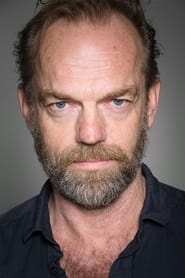
Curiously, the film offers us an 'intruding' character in the story of the Wolf Man but perfectly functional in the context, namely the detective Abberline (played by Hugo 'Agent Smith' Weaving), historically known for being the nemesis of Jack the Ripper and here sent by Scotland Yard to investigate the case of the werewolf. A singular choice to create a sort of spin-off of the story of the Whitechapel serial killer and thus give an aura of realism and at the same time of seriality to the new story of the Wolf Man.
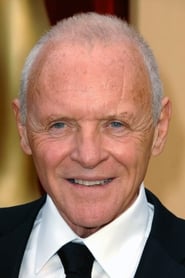
Another merit goes to Benicio Del Toro, a great fan of the 1941 film, who does everything to bring Lon Chaney Jr. to mind, from appearance to somewhat subdued acting, a great actor of the present who pays tribute with feeling to an equally great actor of the past. The cast also includes Anthony Hopkins, who plays Lawrence's father, and the beautiful Emily Blunt ("The Devil Wears Prada"; "Wind Chill - Red Blood Ice") as Gwen, Lawrence's sister-in-law.
A special mention to the magnificent werewolf makeup by Rick Baker (who also carves out a cameo, he is the first gypsy to be killed!), who manages to pay tribute to that of the original film (which was the work of Jack Pierce, an idol of Baker) while maintaining a specific personality. Too bad for the massive use of computer graphics, especially in the transformations, which nevertheless does not compromise the success of the special effects. Unexpected is the level of hemoglobin and violence, decidedly massive for a mainstream product like "Wolfman," which in some points smoothly flows into pure splatter, an added value always welcome in a film that tells of werewolves.
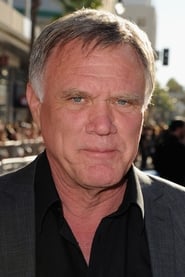
We are certainly not facing a perfect film, especially if we take as a reference point the series A production of which this "Wolfman" has the external appearance, but the spirit and intentions of the film by Joe Johnston ("Jumanji"; "Jurassic Park III") belong to what we simplistically (and ignorantly) are used to defining as series B, a magnificent series B, which meticulously re-proposes the intentions and atmospheres of the progenitors.
Comments
Comments (0)














Comments