Horror subgenres
The strands of horror cinema explained by the HorrorCult editors, each with its essential films and every film we have reviewed.
-
Italian horror
361 films reviewed
Italian horror is the wave that began in the late 1950s with Riccardo Freda and Mario Bava and gave the world colour Gothic horror, the giallo, Lucio Fulci's zombies and the cannibal film. It is marked by bold use of colour and light, scores that take centre stage and a taste for visual excess that has influenced generations of filmmakers worldwide.
-
Giallo
19 films reviewed
The giallo is the Italian thriller-horror of the 1960s and 1970s, named after the yellow covers of Mondadori's crime paperbacks. A mysterious killer, often wearing black gloves, commits elaborate, stylishly staged murders until the protagonist uncovers their identity: Mario Bava set the rules and Dario Argento made it famous worldwide.
-
Slasher
170 films reviewed
The slasher is the horror strand in which a killer, often masked and all but unstoppable, picks off the members of a group, usually young people, one by one until a single survivor is left: the final girl. Its forerunners are Psycho and Mario Bava's A Bay of Blood; it exploded with John Carpenter's Halloween (1978) and Friday the 13th, and was reinvented in the 1990s by Scream.
-
Vampire films
137 films reviewed
Vampire films tell of creatures who survive by feeding on the blood of the living, from Bram Stoker's Count Dracula to his countless variations. It is one of the oldest strands of horror cinema, from Nosferatu (1922) to the Hammer films and on to modern reinterpretations that turn the vampire into a metaphor for desire, illness or exclusion.
-
Zombie films
130 films reviewed
The zombie film tells of the dead who return to life and feed on the living, usually in an apocalypse that tests the survivors more than the monsters themselves. The modern template was set by George A. Romero's Night of the Living Dead (1968); in Italy, Lucio Fulci's Zombi 2 (1979) gave it one of its most extreme and imitated forms.
-
Possession and exorcism
85 films reviewed
Possession films tell of a person, often a child or a woman, taken over by a demon or a spirit, and of the attempt to free them, almost always through an exorcism. William Friedkin's The Exorcist (1973) defined its imagery, later revisited by dozens of films that play on the conflict between faith, science and family.
-
Haunted houses and ghosts
121 films reviewed
Haunted house and ghost stories tell of places inhabited by the presence of the dead, revealed through noises, apparitions and moving objects until the past secret that binds them comes to light. It is a strand that lives on atmosphere rather than gore, from The Haunting (1963) to The Shining and on to modern series such as Insidious and The Conjuring.
-
Found footage
47 films reviewed
Found footage presents the film as recovered material, shot by the characters themselves on camcorders, phones or security cameras, with no apparent director. Ruggero Deodato's Cannibal Holocaust (1980) is its forerunner, The Blair Witch Project (1999) made it a phenomenon, and Paranormal Activity and [REC] revived it.
-
Cannibal films
45 films reviewed
The cannibal film is a mostly Italian strand born in the 1970s, in which Westerners end up in a remote jungle among cannibal tribes. From Umberto Lenzi's Man from Deep River (1972) to Ruggero Deodato's Cannibal Holocaust (1980), it caused scandal with its explicit violence, including real animal killings, and remains one of the most controversial chapters of genre cinema.
-
Body horror
31 films reviewed
Body horror finds terror in a body that transforms, sickens, mutates or is violated: mutations, infections, implants, metamorphoses. David Cronenberg is its acknowledged master, from Shivers to The Fly, and the strand has returned to prominence with films such as Titane and The Substance.
-
Gothic horror
99 films reviewed
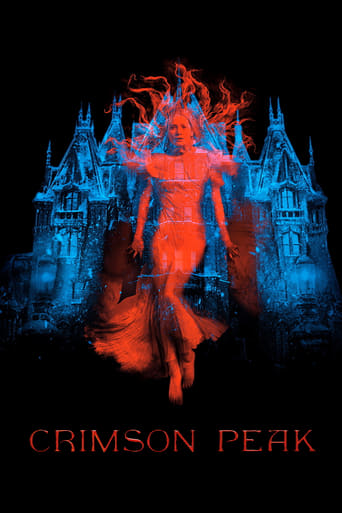
Gothic horror is the strand of crumbling mansions, castles, crypts and family curses, born from the novels of Walpole, Shelley, Stoker and Poe. Cinema brought it to colour with Hammer's films (Terence Fisher's Dracula, 1958), Roger Corman's Poe cycle and Mario Bava's Black Sunday (1960), and it keeps coming back, all the way to Guillermo del Toro's Crimson Peak.
-
Killer animals
98 films reviewed
Killer-animal horror pits people against nature in revolt: sharks, birds, spiders, crocodiles and swarms turned into predators. Hitchcock's The Birds (1963) set the template and Spielberg's Jaws (1975) made it a worldwide phenomenon, followed by a wave of imitations in the 1970s and 1980s, many of them Italian, and a steady return ever since.
-
Occult and Satanism
80 films reviewed
This strand is about cults, pacts with the devil, secret rites and the coming of the Antichrist: evil does not enter a body, as in possession films, but organises and plots in the shadows. Roman Polanski's Rosemary's Baby (1968) and Richard Donner's The Omen (1976) are its cornerstones; Ari Aster's Hereditary (2018) brought it back to the centre of contemporary horror.
-
Aliens and sci-fi horror
73 films reviewed
This is horror that comes from space or is born from science: invaders who take the place of human beings, creatures hiding inside a ship or an isolated base. The Thing from Another World (1951) and Don Siegel's Invasion of the Body Snatchers (1956) made it a mirror of Cold War fears; Ridley Scott's Alien (1979) and John Carpenter's The Thing (1982) turned it into a classic.
-
Witches and witchcraft
61 films reviewed
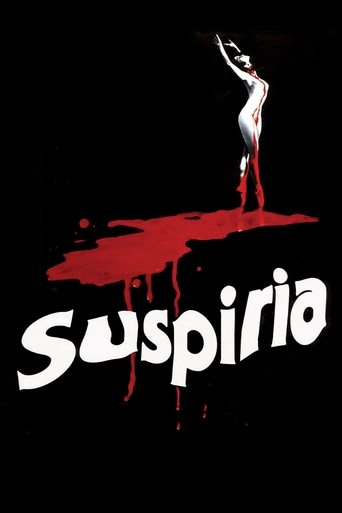
Witch films weave together folklore, persecution and female power: covens, curses, trials and revenge that span the centuries. From the silent Häxan (1922) to Mario Bava's Black Sunday (1960), from Dario Argento's Suspiria (1977) to The Blair Witch Project (1999) and Robert Eggers' The Witch (2015), the witch is one of horror's most enduring figures.
-
Werewolves
54 films reviewed
The werewolf is the man who turns into a beast under the full moon: a curse that speaks of the animal, uncontrollable side everyone hides. The Wolf Man with Lon Chaney Jr. (1941) set the myth; in 1981 John Landis' An American Werewolf in London and Joe Dante's The Howling revolutionised the transformation with special effects, and the strand runs on to Ginger Snaps and beyond.
-
Folk horror
23 films reviewed
Folk horror is born in the countryside: isolated communities, surviving pagan cults, seasonal rites and a landscape that turns against outsiders. Its core is the British 'unholy trinity' of the late 1960s and early 1970s: Witchfinder General (1968), The Blood on Satan's Claw (1971) and The Wicker Man (1973); Ari Aster's Midsommar (2019) and The Witch brought it back to the fore.
-
Video nasties
30 films reviewed
'Video nasty' was the label the British press of the early 1980s gave to horror films sold on videotape without any classification. A moral panic followed: the Director of Public Prosecutions published a list of 72 titles, many seized and prosecuted, and the Video Recordings Act arrived in 1984. The list includes a great many Italian films, from Cannibal Holocaust to Zombie Flesh Eaters and Lucio Fulci's The Beyond.
-
Christmas horror
18 films reviewed
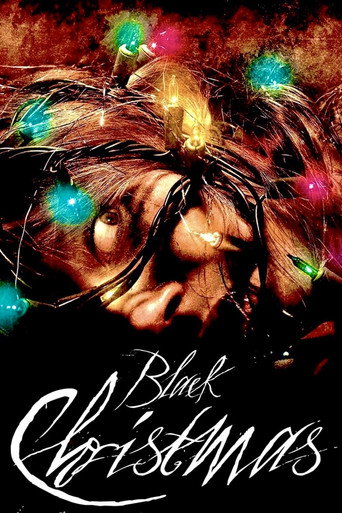
Christmas horror turns the most reassuring holiday of the year upside down: decorated houses, killer Santas, presents that become traps and folklore creatures like Krampus. Bob Clark's Black Christmas (1974) is considered one of the first slashers; Silent Night, Deadly Night (1984) caused an outcry in America, Gremlins that same year brought it to a mass audience and Krampus (2015) renewed the tradition.
-
British horror
140 films reviewed
British horror has given the genre some of its most recognisable eras: Hammer's colour Gothic from 1957, with Peter Cushing and Christopher Lee, the Amicus anthologies and the birth of folk horror. After the video-nasty panic of the 1980s, it was reborn in the new century with 28 Days Later (2002), The Descent (2005) and a new generation of filmmakers.
-
French horror
78 films reviewed
French horror swings between elegance and brutality: from the classics Les Diaboliques by Henri-Georges Clouzot (1955) and Eyes Without a Face by Georges Franju (1960) to Jean Rollin's dreamlike vampires, and on to the 'New French Extremity' of the 2000s, with High Tension (2003), Inside (2007) and Martyrs (2008). Today it is represented by directors like Julia Ducournau, with Raw and Titane.
-
Spanish horror
72 films reviewed
Spanish horror had its first boom between the late 1960s and the 1970s, with Paul Naschy's werewolf Waldemar Daninsky, Amando de Ossorio's blind dead Templars and Narciso Ibáñez Serrador's Who Can Kill a Child? (1976). In the 2000s it took the world stage again with The Others (2001), The Orphanage (2007) and [REC] (2007).
-
Japanese horror
30 films reviewed
Japanese horror is rooted in the ghost stories of theatre and folklore, brought to the screen by Masaki Kobayashi's Kwaidan and Kaneto Shindō's Onibaba (1964). In the late 1990s 'J-horror' changed the genre worldwide: Hideo Nakata's Ringu (1998), Takashi Shimizu's Ju-on and Kiyoshi Kurosawa's Pulse, with their long-haired ghosts and a fear built on waiting.