
The Verdict
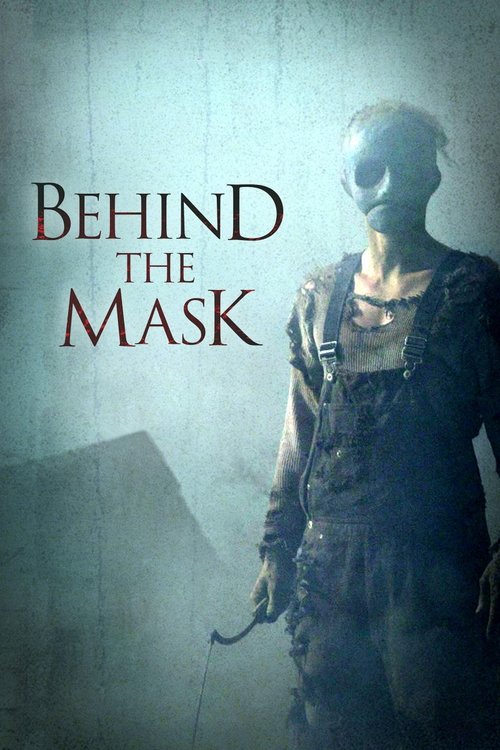
A television crew is invited by Leslie Vernon to follow him as he prepares for his next massacre of a group of teenagers who want to have a good time in his hometown. Leslie Vernon is, in fact, a new serial killer, a local legend feared and fueled by the superstition of the inhabitants, not unlike Freddy Krueger and Jason Voorhees.
A television crew is invited by Leslie Vernon to follow him as he prepares for his next massacre of a group of teenagers who want to have a good time in his hometown. Leslie Vernon is, in fact, a new serial killer, a local legend feared and fueled by the superstition of the inhabitants, not unlike Freddy Krueger and Jason Voorhees.
The mockumentary is a subgenre much explored by horror in recent years: "[Rec]", "Diary of the Dead", "Cloverfield", very different horror films in terms of themes, but similar in the technique used, namely trying to involve the viewer with a work of fiction that gives the appearance of reality through the use of shots more suited to the documentary genre. The mockumentary is exactly that, a fake documentary. But before the infected of "[Rec]" and the sea monsters of "Cloverfield" invaded theaters worldwide (with notable and deserved success), young debutant Scott Glosserman experimented with this technique, drawing inspiration from two fundamental films: "The Cameraman and the Assassin" and "Scream". From the 1992 Belgian film, Glosserman borrows the basic idea that serves as the subject of the entire work, namely the daily stalking of a serial killer (or alleged such) by a television crew, while from Craven's film, he borrows that metafilm-dissacratory aura that is actually a declaration of love for the horror genre. The director of "Behind the Mask" combines the two sources not only in terms of intent but also in terms of narrative-figurative level, thus creating a film that shifts with nonchalance from mockumentary to pure fiction from one frame to another, changing point of view and video resolution.
In reality, "Behind the Mask" appears more convincing in its mockumentary part than in its fiction part simply because it is there that it collects the originality and the true reason for the existence of the operation. When the crew follows and interviews the self-proclaimed killer, the clichés of the slasher movie are ridiculed thanks to a punctual analysis that deconstructs, often scene by scene, this type of film, explaining some of the most famous socio-psychological meanings and does so with intelligent and funny dialogues; noteworthy in this regard is the theory on the phallic value of the weapons chosen by the designated victim and his rebirth from the womb.
The fiction part is necessary to show, as a practical exercise, the analysis previously provided but in fact appear moments taken from any slasher among those that followed the success of "Scream" and that show young men intent on "having fun" and spied in intimate attitudes.
Let's say that the documentary strength of "Behind the Mask" lies entirely and exclusively in the rowdy and winking approach to the subject matter; indeed, little credible is the relationship of trust that exists between the crew and the serial killer, as well as it appears from the beginning completely unbelievable the motivation that leads the journalists to deal with the "subject". Not surprisingly, the film opens precisely with the punctual documentation of the reporter on the various serial killers of the caliber of Freddy Krueger, Michael Myers, and Jason Voorhees, about whom we are told as if they were real characters, with a brief geographical excursion from Sprigwood, Haddonfield, and Crystal Lake, so that the intent of explicit documentary falsity is made clear from the beginning.
The major flaw of this fun and amused docu-slasher is the absolute lack of gratuitous violence that instead usually characterizes the films that "Behind the Mask" sets out to explain. Everything is respected with punctuality, even the necessary dose of nudity, but strangely the gore is lacking: the murders (however numerous) always occur off-screen and not even the bloody consequences are shown. Unpopular choice and difficult to share for an operation of this kind.
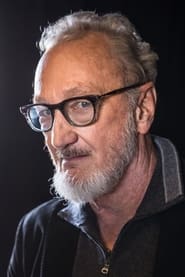
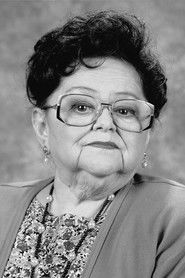
In the cast, Nathan Baesel ("Invasion"; "C.S.I.") and Angela Goethals ("24"; "Presumed Innocent") stand out, the former in the role of the sympathetic psychopath Leslie Vernon, endowed with genesis from "monster", mask, and modus operandi, the latter in the guise of the unscrupulous journalist Taylor. Part similar to Dr. Loomis for Robert Englund and cameos for former Jason Voorhees Kane Hodder and the medium of "Poltergeist" Zelda Rubinstein.
In short, "Behind the Mask" is a real filmed thesis on the slasher movie, a film often funny and quite intelligent, not exempt from defects but worthy of a viewing.
Comments
Comments (0)





Comments