
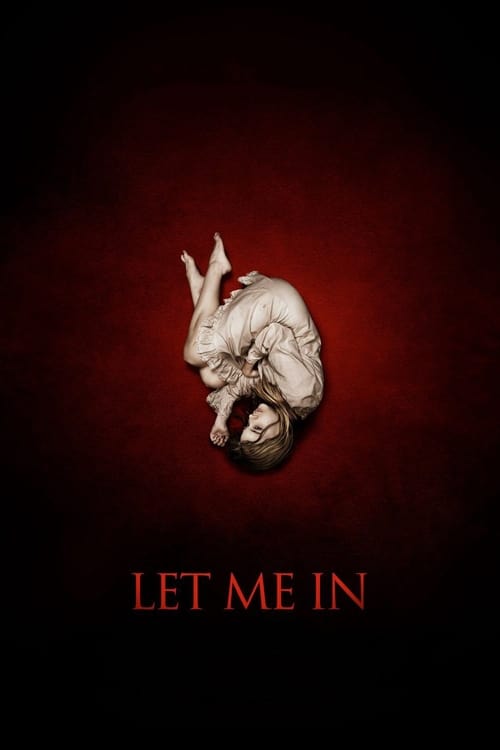







1983. Twelve-year-old Owen lives with his mother in a building in Los Alamos, New Mexico. The boy's life is spent in solitude, between long moments in the courtyard of his home and the terrible bullying of three bullies who bother him every day at school. One night, in the apartment next to Owen's, Abby moves in, a strange girl who walks around barefoot in the snow and is only seen when the sun sets. Initially distrustful, Abby begins to approach Owen and a friendship develops between them. But Abby is a vampire and has a constant need for blood.
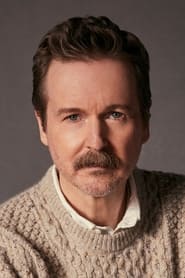
The Hammer Film Productions, the historic and glorious Anglo-Saxon production company, has been revived, changed ownership but seems to have started with similar intentions to those of the past. In "The Resident" they wanted Christopher Lee, the historic face of Dracula and many other Hammer films, as a co-star, with "Blood Story" they have acted on a dual aspect: recovery of the vampire icon and remake of an existing film. But this time we are not talking about films made a couple of decades earlier or more, as was the case with Dracula, Frankenstein or the Mummy, but a freshly produced work, the beautiful and innovative "Let the Right One In" that the Norwegian Tomas Alfredson derived in 2008 from the successful novel by John Ajvide Linqvist. Furthermore, unlike what happened with the aforementioned icons, this time the Hammer did not decide to completely reformulate the original story but allowed the director and screenwriter Matt Reeves to build a remake-photocopy, which is not so much another version of Linqvist's novel as a real and proper remake of Alfredson's film, given the same small infidelities to the original paper also proposed here.
Therefore, as happened with quick remakes like "Quarantine," we reflect more than anything on the usefulness of operations like these up to trying to understand the why, which is to be found only and exclusively if we look at everything from the American perspective. In the States, foreign films are not dubbed and therefore those that arrive have the mother tongue with subtitles, and it goes without saying that products under these conditions have limited distribution/visibility and certainly are not for everyone. "Let the Right One In" by Alfredson had the same fate and "wasting" such a beautiful story in this way would have been a shame, so the remake operation started and this procedure applies to every recent non-American film remade by Americans. Obviously, we Europeans, or rather Italians, who have the possibility of enjoying both versions indistinctly, given the cinematic tradition entrusted to dubbing, we are indignant in front of these operations and it is not rare that we start with accusations of racism and/or the globalizing power of the American cultural industry without knowing in reality how the market works. With this I do not want to totally justify operations of this kind, but we must also think about the fact that "Let the Right One In" is a beautiful film and "Blood Story" only loses the comparison because we have already seen the previous one and we are stimulated by the sensation of total déjà-vu, otherwise the quality of Reeves' film is still very high.
The director of "Cloverfield" rewrites the story of the little vampire setting it in Reagan-era New Mexico and smoothing out the morbid/sexual ambiguities that were hidden in the other film and especially in the novel. This is the main difference: Abby is a female vampire, there is no longer any element that can testify to her previous sexuality, just as that halo of budding homosexuality that seemed to surround the character of Oskar is not reproduced in Owen, thus defining the sexual roles of the two children in a more distinct way. Also, the pedophilic aspect that there linked the little vampire to her guardian is here slightly reduced by Owen's discovery of "proof" that clarifies the undefined relationship that exists between the elderly man and the girl. In turn, however, Reeves accentuates the more purely horrific aspect, giving the vampire a more monstrous appearance when she is hungry, making her move in an unnatural and more animalistic way when she is hunting and spreading more blood in the killings that thus result more violent.
Reeves proves to be excellent behind the camera, preferring fixed shots, strange and "uncomfortable" angles, reflections and spreading an fascinating atmosphere of static resignation that fits well with the theme of solitude, predominant in the story. In many aspects, Reeves' style, completely opposite to that of the previous "Cloverfield," reminds of the first Shyamalan, that of "The Sixth Sense" and "Unbreakable," for example, giving the film a clear vintage connotation. Good work by Greig Fraser on the photography, which tends to enhance the warm colors despite the film being set during a snowy and very cold winter and also very good the soundtrack by Michael Giacchino, which prefers atmospheric sounds, often also non-musical.
It is interesting to note how Reeves has well characterized all the characters focusing more on the childish universe. In practice every character present in the story is framed from Owen's point of view, hence the absent mother is never framed in the face, the father is only a voice on the phone, the physical education teacher is essentially a good-for-nothing albeit willing, the neighbor an unattainable object of desire and the policeman an impotent victim to be sacrificed. Obviously all this also happened in Alfredson's film, Reeves however managed to readapt and perhaps exaggerate everything.
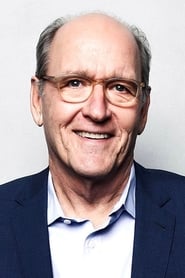
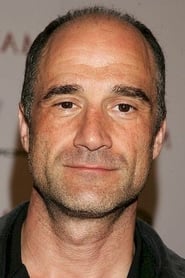
Nothing to say about the work of the actors: perfect the two child protagonists Kodi Smit-McPhee, already seen alongside Viggo Mortensen in "The Road" and Chloe Moretz, unforgettable Hit Girl in "Kick-Ass." At their side it is a duty to mention the always great Richard Jenkins ("The Guest") in the role of Abby's guardian and Elias Koteas ("The Messenger") in that of the policeman who deals with the case of the mysterious deaths.
"Blood Story" is as beautiful as it is unnecessary. Stephen King defined it as the best horror film of the last twenty years, a statement perhaps a bit exaggerated but understandable...only that Stephen King is probably one of the many Americans who have not seen "Let the Right One In."
Watch the Backstage of BLOOD STORY
Comments
Comments (0)










Comments