







The Verdict
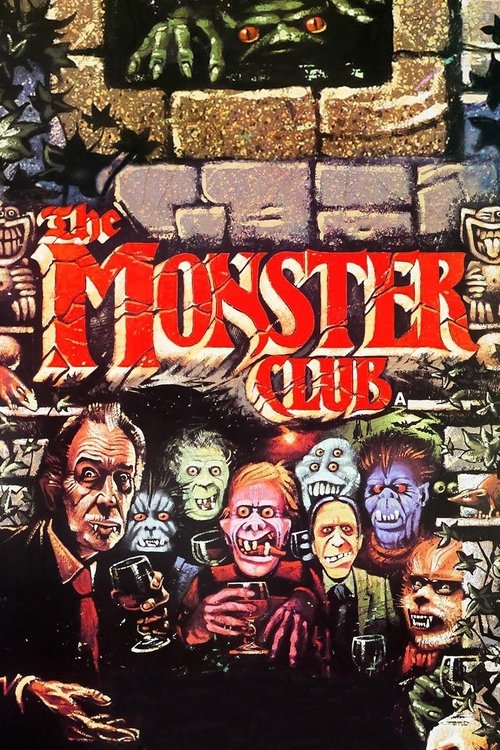
A horror novelist is approached in an alley by Erasmus, an old and hungry vampire who feeds on some of his blood. To repay the small "meal," the vampire takes the writer to an exclusive nightclub frequented only by monsters, where he tells him three stories that could serve as inspiration for his next books.
A horror novelist is approached in an alley by Erasmus, an old and hungry vampire who feeds on some of his blood. To repay the small "meal," the vampire takes the writer to an exclusive nightclub frequented only by monsters, where he tells him three stories that could serve as inspiration for his next books.
In the first, a woman gets hired as a secretary by a rich and mysterious man with the intention of stealing the money he has in the safe, but the man is a "Whistler of Death," a creature who can kill with a simple whistle. In the second, a vampire slayer targets the family of a highly sought-after fugitive vampire. In the third, a film director searches for locations for his next movie and arrives in a village inhabited by malevolent creatures that devour the dead.
Between the 1960s and 1970s in England, horror films were made in industrial quantities. The most prolific and successful production company was the well-known Hammer, but the market was still crowded with a variety of different productions that left us with true milestones in genre cinema. Among the many production companies, one that stood out was Amicus, which many considered the true direct competitor of Hammer. Amicus's specialty was episodic horror, a profitable practice that suited them quite well, as some of the most well-known and successful films of this type bear their signature (think "Taste of Fear," "Torture Garden," or "The House That Dripped Blood"). In 1980, relying on the classic episodic structure, Amicus produced its final film, "The Monster Club," a swan song that shows the exhaustion of a genre exploited to the bone. Indeed, "The Monster Club" is a very inconsistent product, visibly "old" for the period in which it was produced, despite the director Roy Ward Baker ("Vampires Love Blood," "Blood of the Vampire") trying several times to renew the formula.
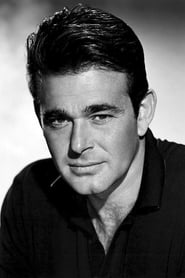
Of the three stories proposed, we have a perfect ladder that shows a high point and a very low point, naturally separated by the classic middle ground. The best of the three is undoubtedly the last episode, in which the misadventure of a director who stumbles upon a town inhabited by lethal ghoules is told with great effectiveness. The protagonist is effectively played by Stuart Whitman ("The Beach Girls," "That Night in the Lake"), the classic "yes man" introduced into a macabre world that seems like the set of one of his films. The decadent corpse-eaters are several times called vurdalak, a kind of Russian folklore vampire, but they do not properly have the characteristics of these beings, but are certainly closer to the Arab ghoules. Several naivetes are scattered here and there (the monsters fear the cross wielded by the protagonist but wander calmly in the cemetery, full of crosses!), but overall this episode has a good macabre effect and a really spot-on atmosphere.
In the middle is the first episode dedicated to the singular figure of the Whistler of Death, a strange being who has the ability to reduce anyone to ashes simply by emitting a whistle. The episode, which benefits from the beautiful performance of James Laurenson, has an original starting idea and an interesting development, supported by the touching and successful figure of Mr. Raven, the Whistler of Death, a lonely and melancholic being trapped in a decaying and dilapidated environment, where only the love of his pigeons and the female presence of his guest can cheer him up. Unfortunately, the episode continues with a bland pace and completely neglects any element to focus attention solely on the protagonist; the too rushed ending also leaves a bit of a bitter taste in the mouth.
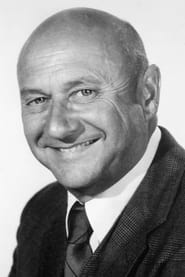
The second episode, which centers on a family of vampires pursued by a group of vampire slayers, is undoubtedly the weakest. The premise of showing the story through the perspective of a child, unaware of the supernatural nature of his father and therefore unable to understand the reason for some events, was certainly promising, but the strength of the approach is immediately abandoned to channel it right away into territories already trodden many times, moreover mixing in a vein of humor that is at times embarrassing and not funny. Donald Pleasence as the leader of the vampire slayers is particularly anonymous.
The three short films are connected by a frame that features a funny (and amused) Vincent Price as an old vampire who acts as Virgil to the almost Dante-esque John Carradine, a writer in search of stories. The scenes inside the club are devoted to irony and the grotesque, sometimes successful (see the TOTAL striptease scene of the stripper) other times less so (the carnival masks worn by the actors to appear "monsters"). It is precisely in the framing episode that the film is sought to be characterized within its era, using humor and music typical of the period. Above all, the music seems to play a fundamental role with the insertion of real singing performances to comment on each episode, performed on stage by real artists of the English beat scene of the late 1970s.
In conclusion, "The Monster Club" can be considered a product only partially successful, certainly watchable and rewatchable, and strong with a team of top professionals, but also very mediocre, especially if we consider the standards of similar products from Amicus (but not only). Only for cultists.
Comments
Comments (0)



Comments